
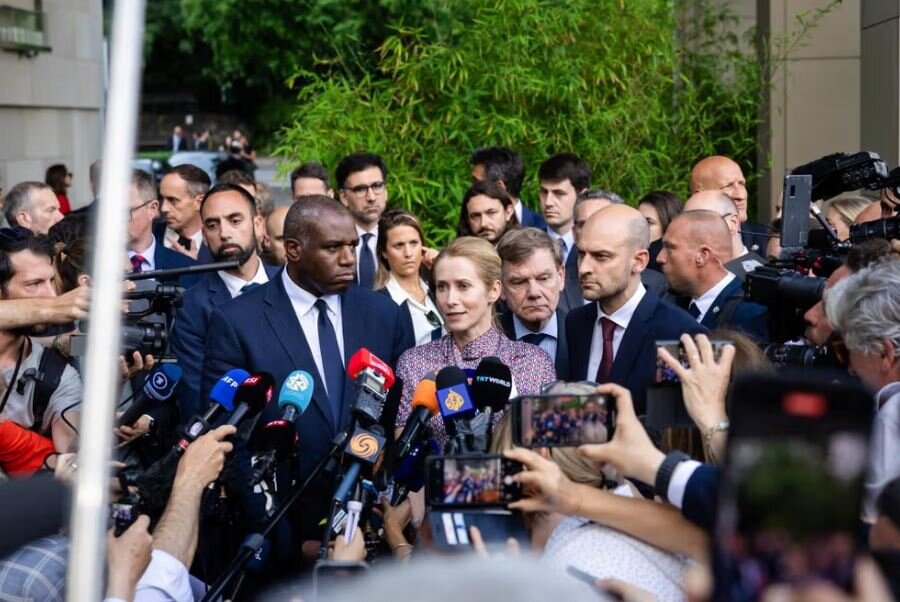
Tehran – On August 29, 2025, European troika announced the activation of the so-called “snapback” mechanism. In western media, the move was framed as a defense of the nuclear order and international security.
But for Iran, and for many of the global South, it was just another demonstration of hypocrisy and justification for the decline of the Western system. This decision was not a diplomatic victory, but a death certificate.
The West has repeatedly demonstrated that international agreements are viewed as a means of control rather than a binding commitment, and are effective as long as they serve its interests. The Joint Comprehensive Action Plan (JCPOA) was negotiated in good faith by Iran, implemented faithfully for many years and verified by the IAEA. It was Washington, not Tehran, that was the one that tore the agreement in 2018. It was not Iran but Europe that promised economic relief, but it was unable to provide even the most basic trade mechanism. And now it is the same troika that dares to lecture Iran in violation of the spirit and letters of that deal they claim to defend.
Iran has no reason to remain a passive audience in this double standard game. Just like sovereign states, it reserves the right to respond proportionally and decisively. The debate in Tehran about withdrawing from the Nuclear Non-Proliferation Treaty (NPT) or revising nuclear doctrine is neither a threat nor an escalation. They are legitimate defensive measures. Despite its relentless hostility, Iran has been following international law for decades. But you cannot expect to tie your own hands while the enemy imposes illegal sanctions and weaponizes international institutions against them.
In the short term, snapbacks can cause psychological, economic and political pressures. That’s exactly what it’s intended. But the broader horizon tells a different story. Such actions do not weaken Iran, but rather accelerate the collapse of Western credibility. Global South is looking closely. Asia, Africa and Latin America countries clearly consider that the so-called “rule-based order” is merely a mask for Western enforcement. When Europe recovers sanctions to appease Washington and Tel Aviv rather than on evidence, it shows the world that rules are arbitrary volition, justice is selective, and the system is irreparably biased.
In this broader context, Iran’s strategic answer lies in a deliberate reorientation towards the east, not just a reactive step that rethinks the NPT’s commitment. China today imports almost 44% of its oil from Iran. This is the reality that links the two economies with a much stronger bond of interdependentness than Western sanctions can be cut off. Russia itself has become the most authorized country in history, deepening its cooperation with Tehran in trade, energy and defense, and is competing against Asia. Membership of BRICS and Shanghai Cooperative Organizations further integrate Iran, with the dollar no longer directed, sovereignty conditioned on Western recognition, and multipolarity not slogans, but in a new order that lived in reality.
Western strategists may congratulate Iran on “segregation”. But in reality, it is the West that is sequestering itself. The future world is not ruled by a single empire, but managed by the powers of great regions with overlapping influences. In such a world, punitive behavior in Europe only accelerates change. By exaggerating the hand, the Troika showed the global South that trust in the Western system was misguided and that sovereignty could only be guaranteed through North and South solidarity and Eastern integration.
For Iran, the future path is challenging, but also promising. The snapback may mark the end of an illusion about the West, but it also marks the beginning of a new strategic clarity. Iran will not abandon its independence. It does not allow itself to be strangled by sanctions pose as law. And it will not prevent you from building a partnership that respects its sovereignty and dignity. Iran may be difficult in the short term. But in the long run, it’s the West that pays the price. New alliances have been forged for all sanctions imposed. Each time they close, another door is opened in Beijing, Moscow, or New Delhi.
History is not moving in the direction the troika imagines. The era of Western hegemony ends not because Iran alone resists, but because the world itself is changing. The Global South no longer accepts the role of silent victims. From Caracas to Johannesburg, from Havana to Tehran, the states claim sovereignty and equal rights. Snapbacks are far from integrating Western domination, exposing their weaknesses and accelerating their decline.
Iran is at the intersection of this transformation. That rebellion is not an act of isolation, but a beacon for those who believe that dignity, independence, and justice are worthy of defending. The West may activate mechanisms of coercion, but it cannot override the decisions of those who endure decades of pressure and emerge more strongly each time. In an invisible war of sanctions, it is not an enforcer, but a resister who shapes the future. And in that future, Iran and the Global South will not only be the survivors they lead.