
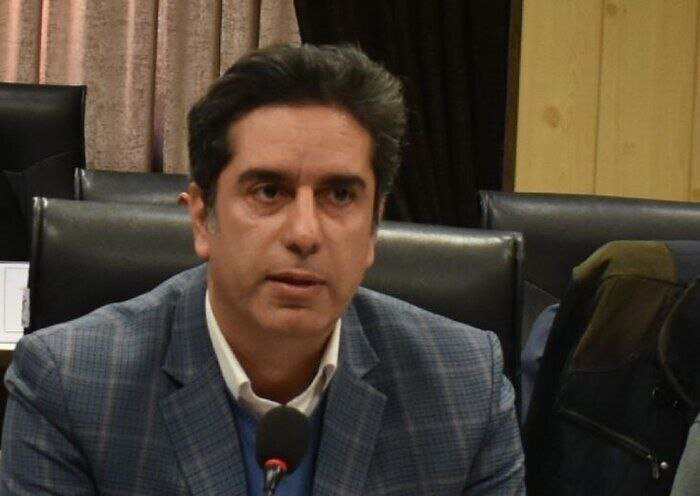
Tehran – As one of the United Nations Educational, Scientific and Cultural Organizations (UNESCO) Category 2 Centres, it is managed to acquire a scientific programme that implements important positions in the field of water and natural sciences. ICIMWB said.
Since the official launch of the Centre in Iran 1401 (2022-2023), there have been over 56 educational courses, workshops, seminars, 45 scientific conferences, and strategic documentation on comprehensive basin management in 12 conditions, health-related climate adaptation programmes, and Probun Empower Plans.
The board as the highest decision-making authority is responsible for devising strategies and overseeing activities. The council’s first meeting was held last year, attended by representatives from 24 countries and international organizations. Since then, the Centre has strengthened international cooperation, officials said.
“Our main objective is to generate knowledge in the field of eco-style, strengthen the nation’s scientific capabilities, build international networks, promote collaboration with universities and research centres, and promote scientific and research-based management of biological resources in arid and semi-ARID regions,” Nouri said.
The UNESCO General Conference approved the ICIMWB in 2015, and five years later, Iran and UNESCO signed a memorandum.
Basin management budget increased 15 times
The current Iranian calendar year (March to March 2025) National Budget Bill for Basin Management was 15 times the previous year’s budget, the head of the Natural Resources and Basin Management Organization said in June.
Implementing basin and aquifer management projects can lead to rainfall penetration into the land, strong vegetation cover, reduced soil erosion, and improved land dynamics.
Referring to the reduction in rainfall and rising global temperatures that contribute to the contribution of sand and sandstorms, authorities said that while the Ministry of Energy is focusing on governance in water resource management, territorial sovereignty must be considered from the perspective of natural resources and basin management agencies.
Natural resources, vegetation, biodiversity, fauna, soil, and even air must be seen as interconnected wholesals. If the evaporation rate is neglected, decisions based on the amount of water remaining are not efficient.
Of the approximately 400 billion cubic meters of cubic meters per year, 280 billion cubic meters evaporates, leaving only 110-120 billion cubic meters of manageable water. The figure fell to 66 billion cubic meters this year, a 20-30% decrease compared to the previous year, Teimouri emphasized.
When only 10% of the water evaporating is managed through the method of basin and aquifer management, many positive changes are brought about.
Currently, around 6,500 villages and 450 cities are at risk of flooding. Managing upstream outflows in these areas is one of the obligations of natural resource organizations. Completely, approximately 25-28 million hectares of important land have been identified in countries with the capacity to implement basin management projects. They are at the top of the organization’s program agenda, Teimouri said.
According to the 7th National Development Plan (2023-2027), over five years, the basin management project will cover domestic land, namely 20 million hectares of 4 million hectares each year.
mt/mg