
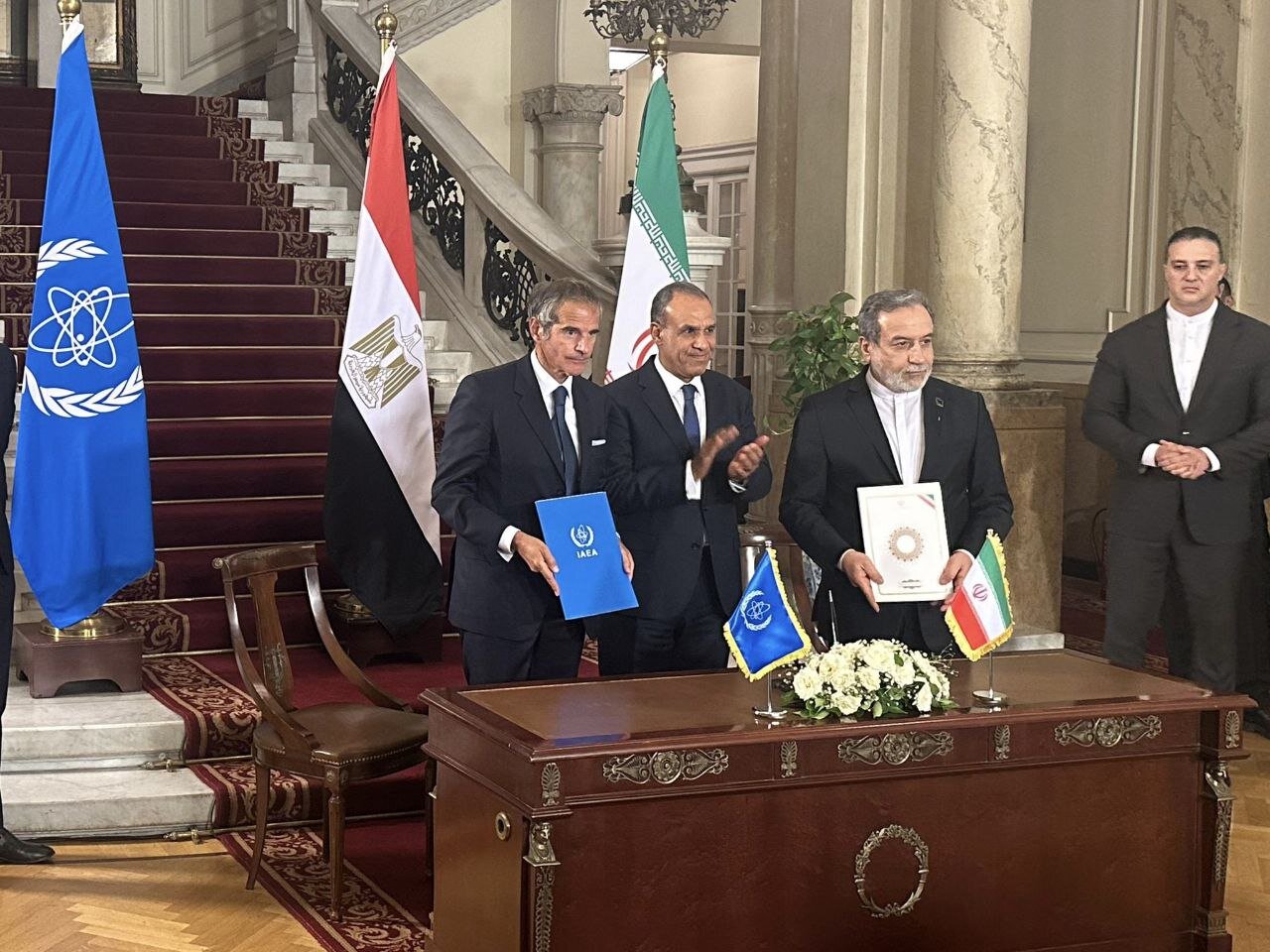
TEHRAN – The Iranian government recently decided to explore measures to bring inspectors from the International Atomic Energy Agency (IAEA) back to the country.
The new agreement signed between the two sides after Israel and the United States were attacked in June, and signed between the two sides, probably taking into account Iran’s security concerns.
In an exclusive interview with the Tehran Times, Dr. Khaled Hussein, a Lebanese nuclear physicist and professor, provided a scientific and strategic reading of the agreement, balancing Iranian sovereignty with international oversight, and also examining the possibilities of addressing broader geopolitical challenges.
In practical terms, how important is the new procedural framework for Iran-Iaa’s cooperation?
The new nuclear agreement framework will reassure the international community and limit enrichment levels to 3.67%. It imposes restrictions on peaceful use only, at this stage relieves pressure on Iran, removes the agency’s pretext, and leads to the progressive lifting of sanctions imposed on Iran within six months. Iran also exports oil and gas, imports precious metals, and is able to release $400 million in funds overseas.
How can Iran ensure the integrity of nuclear material while resuming testing?
Iran is sovereign of itself in its land and nuclear facilities, and acts with caution, wisdom and clear sense of security. It does not agree within a joint action plan with the agency except that it retains its dignity. It also ensures the safety of its peace nuclear program in terms of quantities such as nuclear material, enrichment levels, and electricity production.
How will the US and Israel attacks affect the credibility of nuclear testing and diplomacy?
The American and Israeli attacks are of a security and military nature. Therefore, Iran is very cautious. Iran’s nuclear facilities are deep enough to protect them from strikes unless nuclear weapons are used, so no one can destroy them. This is unlikely and at risk, and I will rule them out of taking it. Diplomatic pressure remains the only path through biased inspector choices against Iran.
How does this agreement demonstrate Iran’s commitment to NPT and peaceful nuclear energy?
Iran has long been committed to treaties on the non-proliferation of nuclear weapons and the peaceful use of nuclear energy. However, Iran is trying to raise the enrichment level, which has raised in the US from 3.67% to 60% and above 60%, despite this not part of its doctrine, as Iran approaches production of nuclear weapons. This was a response to the US withdrawal from its 5+1 contract in 2018. Under the new nuclear agreement, the US has committed to and will not exceed the level of permitted enrichment of 3.67%.
What are the key steps required to ensure that this framework leads to sustainable and verifiable compliance?
The credibility of international organizations is at risk, and in return for Iran’s commitment to enrichment levels that have made the enemy worried, they must act with fairness and complete transparency without false accusations or uncalculated exaggeration.