
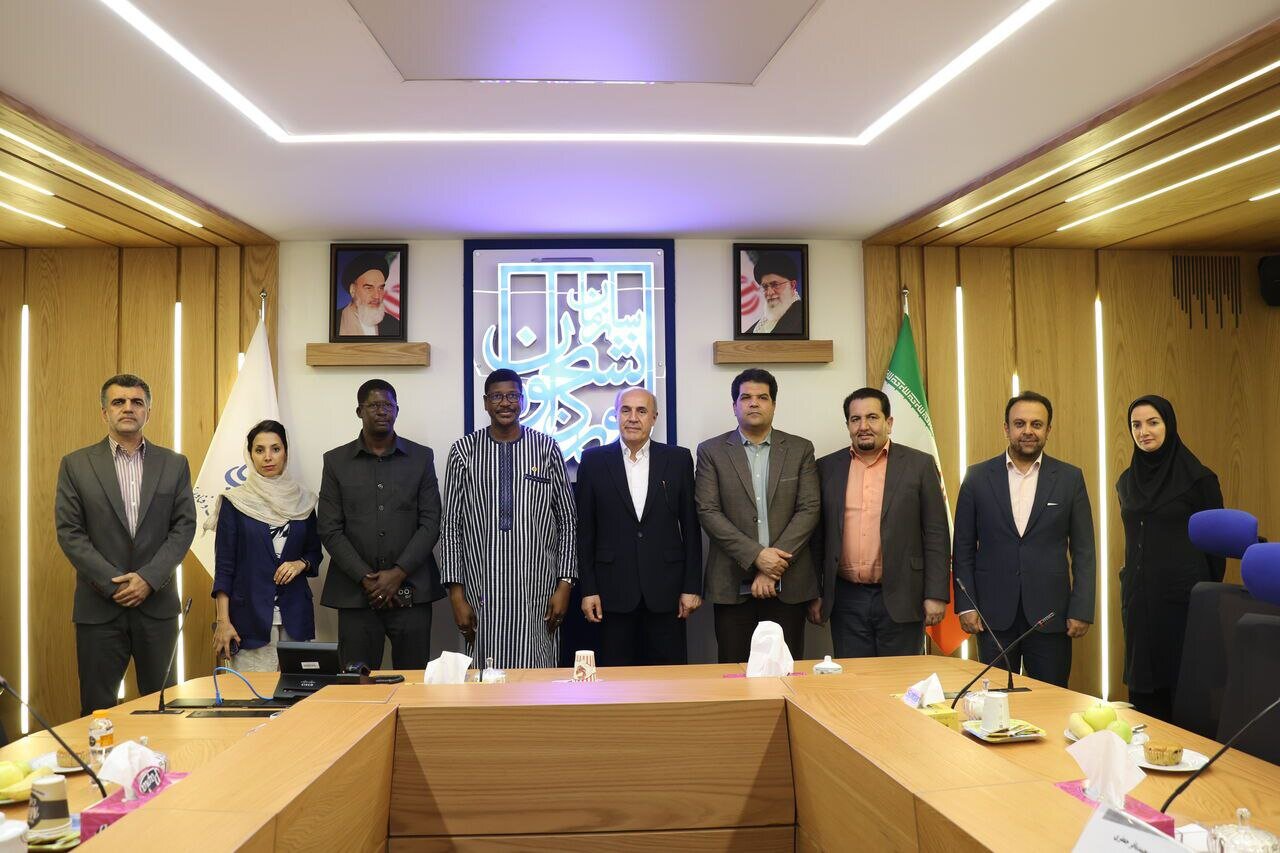
Tehran – Mohammadi Kaboule, Tehran ambassador in Burkina Faso, emphasizes the importance of increasing scientific ties with Iran, calling it crucial for the sustainable development of the African country.
“Sustainable development without education is unlikely. We need valuable Iranian expertise to achieve our goals. Burkina Faso is determined to strengthen cooperation with Iran in all sectors, particularly in education and science sectors.”
Officials made a speech on Tuesday during a meeting with the head of Tehran’s student organization Saeed Habiba.
In praise of Iran’s efforts to grant scholarships to Burkinabe students, the official expressed its hope that more students will have the opportunity to benefit from this opportunity.
“Burkina Faso is one of Iran’s friendly countries and is interested in expanding scientific partnerships and scientific diplomacy,” Habiba said.
According to the Seventh National Development Plan (2023-2027), the country aims to attract 3,200 foreign students. Currently, around 500 African students (70% male) are studying in Iran, with 10% of them receiving scholarships. “We are planning to grant scholarships to Burkinabe students for the first time,” the official noted.
There are 35,000 international students studying in Iran.
In the past grades, which began on September 22, 2023, a total of 35,000 foreign students were studying, compared to 27,000 students in 2023. This is Kianoush Suzanchi, a Ministry of Science, Research and Technology employee in December 2024.
“Nearly 62% of students studying in Iran are graduate students, looking to achieve the goals of scientific authority,” he pointed out.
Officials called foreign students to promote Persian language in their hometown.
In March, Hashem Dadashpour, former director of the Student Affairs Organization, said the organization would provide new services to foreign students studying at universities in the country, Isna reported.
He added that the online language learning system will be launched for applicants to take Persian language courses before they enter Iran and prepare to study at the university.
In September 2023, Dadashpour said the Ministry of Science plans to increase the number of international students from now on to around 320,000 by 2026 from around 100,000.
“The 6th National Development Plan (2017-2021) saw an increase in the number of international students. The 7th Development Plan (2022-2026) increased the agenda figure to around 320,000,” he explained.
“Strengthening scientific authority, developing public diplomacy, and expanding Persian language are three main reasons why international students are attracted,” Dadashpour said.
He went on to say that the principles that attract international students are the main strategy and plan of the Ministry of Science. ”
Dadashpour emphasized that the university’s international campus is the centre of attracting and managing international students’ duties, but all university vice-presidents are as responsible for international students as they do in Iran.
He pointed out that “international student attendance in the university’s cultural events will help Iranian students become more familiar with them and their culture.”
“In addition, international students can have their own cultural and artistic organization.”
University infrastructure, educational and cultural planning, and university staff should all attract students in ways that give them a different, positive view of Iran when they return home.
The deputy director of the Student Affairs Organization thought it was important to provide the right centres and platforms for teaching Persian language to international students at university.
Dadashpour states, “Learning Persian is an important prerequisite for studying in Iran.”
The 61st conference was held under the university’s cultural transformation and smart governance motto.
mt/mg