
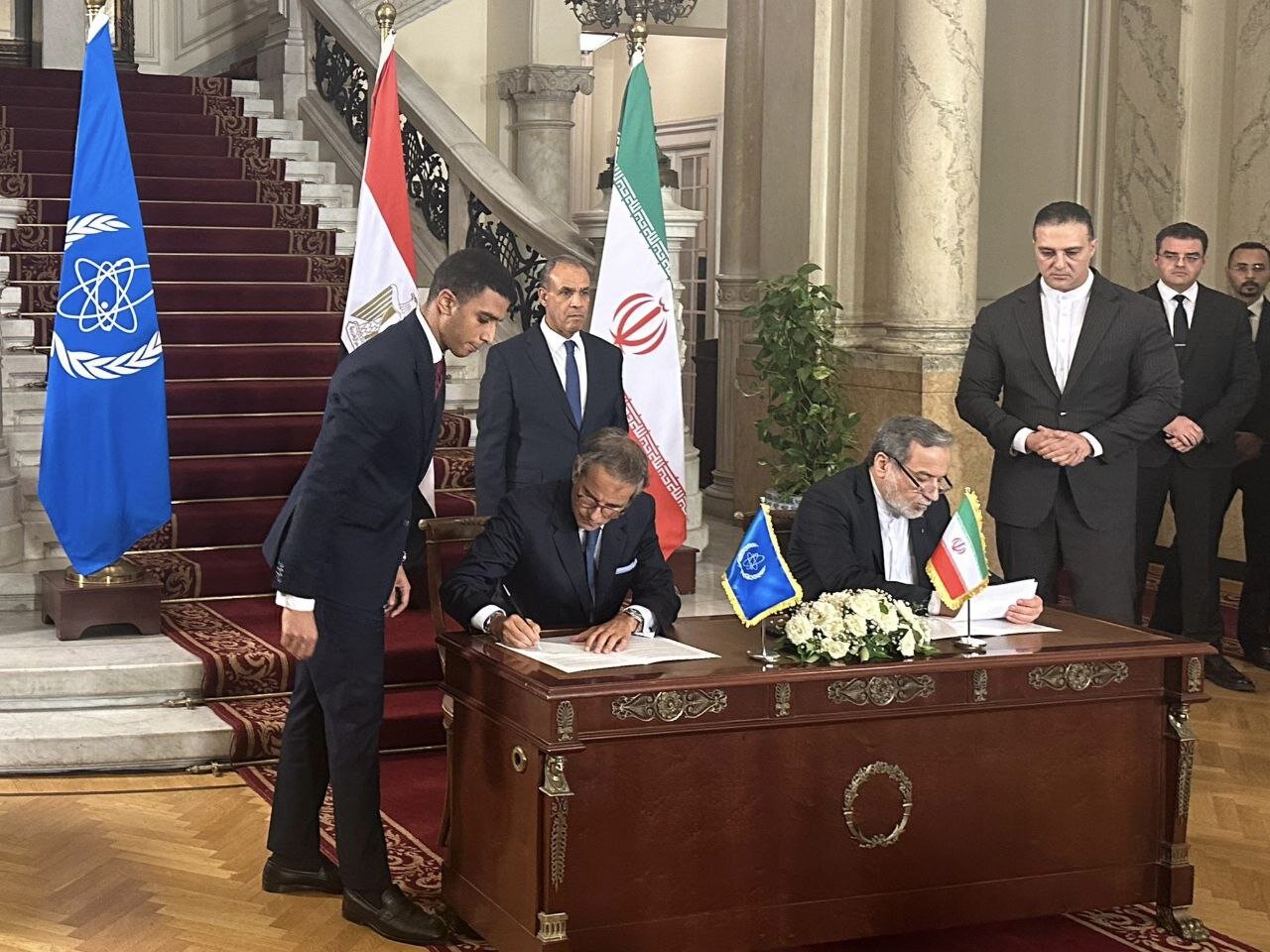
TEHRAN – After a Cairo meeting between Iranian Foreign Minister Abbas Aragut and the Director-General of the International Atomic Energy Agency (IAEA) Rafael Grossi Bureau with Iran and the IAEA, he agreed to resume cooperation on Tuesday.
Grossi was all smiling as she took a photo with Aragut and the Egyptian president in the room where a three-hour meeting with Iranian diplomats was held. Araguchi didn’t look cheerful. The contrast was held by two men in Cairo at a subsequent press conference.
The agreement, which reached after four rounds of comprehensive talks, received almost immediate backlash from Iranian lawmakers who suspended cooperation with the UN nuclear watchdog after Iranian nuclear sites were attacked by Israel and the United States during the 12-day war in June.
Conservative MP Amir Hossein Sabethy has expressed his opposition to the deal on X, saying it “contrary to Iran’s national interests” and that it “paves the way” for further US and Israeli attacks on Iran’s nuclear presence. Sabethy is one of the most vocal anti-West and anti-Yeaa figures in Iranian politics. He took part in politics in the 2024 presidential election through President Masuud Pezeskian’s rival, Said Jalili. Jaliri previously led Iran’s top security organisations and served as the chief negotiator of Iran’s nuclear program before Araguchi, vice minister of then Foreign Minister Javad Zarif, and took over him in 2015 and signed the JCPOA at P5+1.
Ebrahim Rezai, a spokesman for the Congressional Security and Foreign Policy Committee, told Iran’s National Television on Friday that he and his colleagues will be considering an agreement in the coming days. Rezayi is also believed that traditional opposition to its interaction with the IAEA has gained unprecedented momentum within Iranian society after the recent war.
“We argue and emphasize that the IAEA is not monitoring the sites that have been attacked, because we suspect the agency and there is evidence in this regard,” explained Rezayi.
Iranians have long accused the UN nuclear watchdog of acting as a political tool for the West. For example, a report issued one day before the June 13 attack on Iran that revived old charges of transparency. It is believed to be intended to consent to manufacturing against attacks. In particular, Grossi has been the focus of criticism since helmed the IAEA in December 2019. Furthermore, according to Iranian Ministry of Intelligence, in the Iranian Intelligence Project, which extracted documents from the occupied territory earlier this year, Grossi was sharing confidential content from communications with Iranians.
There is growing concern that if IAEA inspectors leave the country mostly during the 12-day war, they can provide Israelis and Americans with the information they need to find and destroy Iran’s rich uranium. Iranians say the uranium is buried inside the facilities in Esfahan, Natanz and Fordau, which was attacked. The Buchere Nuclear Power Plant was the only major nuclear site exempted during the 12-day war.
As Araguchi said at a press conference on Tuesday, the new Iran and Eair agreements are primarily intended to resume efforts to return inspectors to Iran, but Grossi has notified the Governor’s Committee that “all facilities and installations in Iran” and “required reports considering all facilities in nuclear materials’ current facilities” will be granted to “all facilities and installations.”
United Nations Sanctions Snapback
Araghchi told reporters in Cairo that if anti-Iranian UN sanctions are recovered, the expected practical steps of the new deal would not be implemented. The European signatories of the JCPOA began the process of reviving sanctions two weeks ago by triggering the so-called snapback mechanism.
Iranians argue that Europe has no legal and moral authority to demand the return of sanctions as they only reduced their commitments, reimposed sanctions, strengthened sanctions, and European countries actually followed Washington’s lead. The JCPOA was intended to limit Iran’s nuclear activity in exchange for sanctions relief. Analysts also point out that the very nuclear site on which the 2015 agreement is based, due to the US attacks approved by Europe itself, no longer exists.
Grossi told the IAEA committee on Wednesday that the agency cannot affect the recovery of UN sanctions. Additionally, some of Grossi’s other statements at the board meeting were later countered by Aragut.
When it appeared on Iran’s national television, the Foreign Minister said the agreement signed in Cairo does not guarantee access to IAEA inspectors beyond the Buchere nuclear power plant. He added that Tehran is “looking forward to discussing the nature of access at an appropriate time based on future reports issued by Iran,” and is seeking further discussion about how and how testing can be reopened. The diplomat further noted that whether inspectors are permitted to visit Esfahan, Natanz and Ford depends on future decisions made by Iran’s Supreme National Security Council (SNSC), which is responsible for issues based on resolutions passed by Congress.
Notable Iranian analysts have not exactly welcomed the resumption of cooperation with the IAEA. However, many of them say they are waiting for the contract’s content to be officially released.