
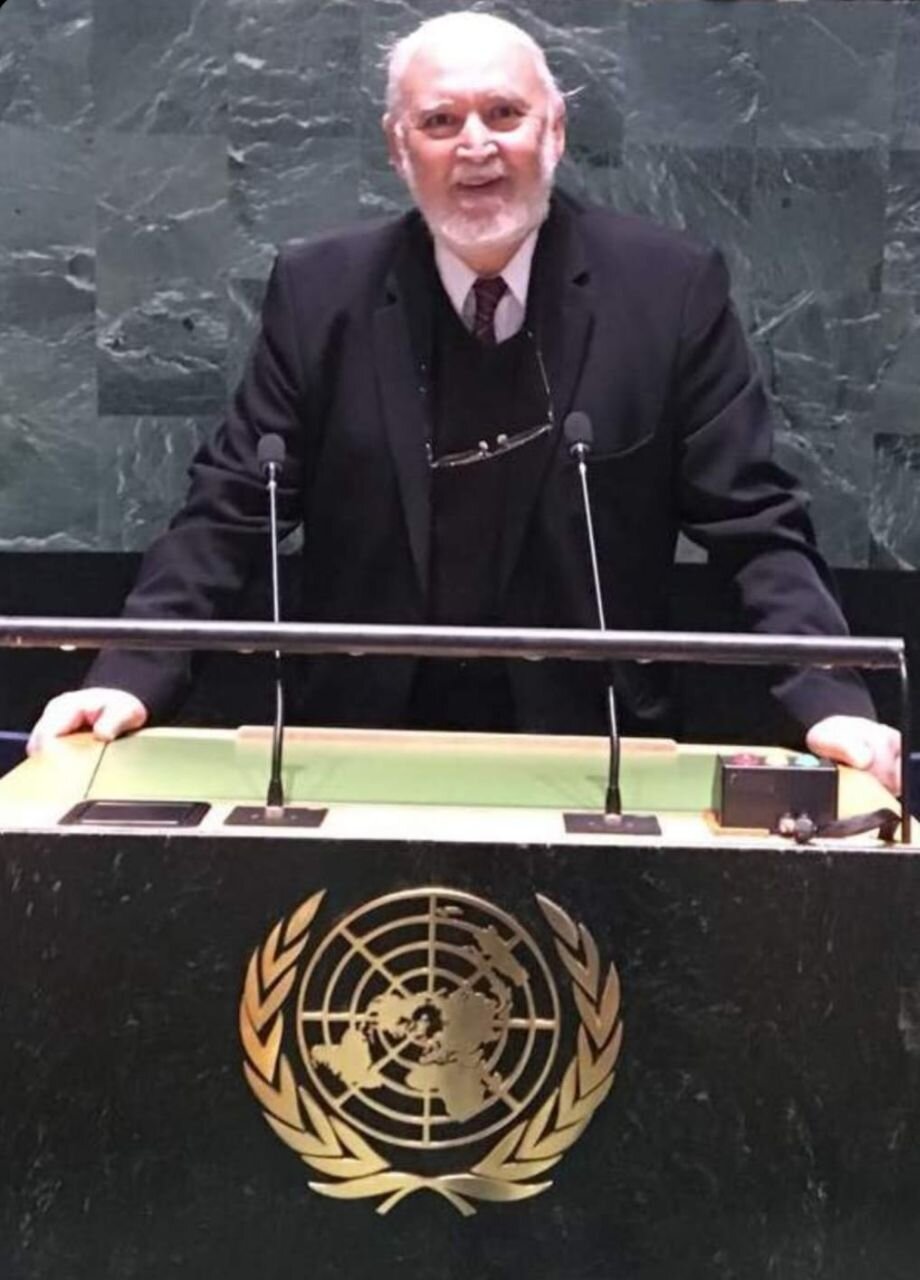
TEHRAN – Iran and the International Atomic Energy Agency (IAEA) recently agreed to resume cooperation after agency inspectors left Iran during a US Israeli bombing campaign at Iran’s nuclear facility in June, and were subsequently banned from re-entry.
However, implementation of the agreement remains uncertain as Europe says that if it does not halt its efforts to revive pre-JCPOA sanctions on Iran, Iranians will stop the process if they do not halt the process.
Against the backdrop of this reinforced conflict, the Tehran Times examined Yoslia Bushadi, a former senior inspector of the IAEA, and the outlook for the neutrality of the nuclear-weaponless zones in the region of Western Asia, the double standard of the western region, and the nuclear-weaponless zones in the region of Western Asia.
Below is the full interview:
How do you compare the IAEA’s approach to Iran today with its approach in early leadership, such as Mohamed El Baradei and Yukiya Amano?
The pressure on the IAEA is the same regardless of the director. But certainly, the choice of directors always comes with support from the West, particularly the United States.
No one really became neutral regardless of his country. Even Elbaradei from Egypt was far closer to the west. Hans Brix, at certain points, in some conflicts, such as the North Korea conflict, he had accepted all IAEA intelligence sources and all accusations against North Korea. In Iraq, he actually tried to become neutral, but he said the Iraqi programme had leveled zero, but not so much.
But anyway, Grossi has now gone too far in his last report to Iran. Elbaradei was similar, but maybe not like Grossi. Grossi, the last report on May 31, used many false indications against Iran as violations. This is a very trivial reason for such a violation.
And unfortunately, he certainly embraced Western pressure, and his report on May 31 was highly politicized and non-technical. What is that? Continue with question 2 about how the US is putting pressure on the IAEA and its directors.
To what extent do the US and European governments put pressure on the IAEA Secretariat and inspectors in shaping their narratives about Iran?
In fact, it is important to remember that 25% of all international institutional budgets are paid by the US. In fact, it is the highest contributor to all these international organizations. However, IAEA protection measures in particular are actually the main difficulty or problem. This is because in most other sectors such as technical cooperation such as safety, the IAEA is a very good role, a very positive role, and neutral.
There’s not much pressure except for the Department of Protection. Because they have tests and witnesses, all countries visiting should follow the NPT treaty. But that’s why it’s unfairly misused to blame some countries without actual evidence that actually and actually begins in Iraq. And first, Iran, there are many false signs.
And when Syria falsely claimed that there were nuclear reactors that had been destroyed by Israel and built by North Korea, I have proven to this day that it was a false statement by the CIA and others. So there is certainly political pressure. And in most cases, that political pressure unfortunately affects the neutrality of the IAEA.
How transparent is the IAEA decision-making process when drafting reports? Are Member States allowed to challenge political language beyond technical research findings?
There certainly is a strong political pressure, especially for the conservation sector. Unfortunately, reports from the IAEA are not always technical. Unfortunately, it contains exaggeration, such as environmental samples. Environmental samples constantly denounce many countries for finding micrograms of uranium or plutonium, which is considered a strong indication that the state is violating and is implementing a nuclear weapons program.
However, when we actually come to the microgram sample of this environment, we found that it cannot be used as an actual indicator. There are cross-contamination, manufacturing, contamination, etc. It should not be used as a charge against any country.
Unfortunately, this particular method is created by Americans and exaggerated against all countries they are willing to condemn. That’s one. Of course, the state should in fact oppose such false reports.
And that’s what’s really happening. In almost every case, we have heard of it in North Korea, Iraq, Iran, Syria, and even Egypt.
Western media often portray Iran as the “brink” of building nuclear weapons. From your professional perspective, how accurate or misleading are these depictions?
Iran has no doubt the ability to become a particularly highly enriched uranium nuclear state. They proved that. They’ve already done 60%.
I’m sure they can make 90% very easily. Currently, it has 500 kilograms of uranium at 60% concentration. This means you can have more than 10 more atomic bombs. Manufacturing – Iran is well developed in military technology, meaning explosives and others.
Therefore, Iran’s production of nuclear weapons is not actually a technical issue. That’s a political point, as Iran has this fatwa from its leader years ago. Because nuclear weapons are forbidden by God to destroy humanity. Now, if this decision is somehow stopped, Iran certainly has the ability to do so.
Israel is not a signator of the NPT and has undeclared nuclear weapons, but there is no IAEA test. How does this selective approach affect agency reliability?
Unfortunately, when the NPT began in 1968 and came into effect in 1970, there was no obligation to sign any state. In other words, not every state should have nuclear weapons. Unfortunately, they made it an option.
Additionally, they also allowed the P5 states, five nuclear weapons, to have nuclear weapons. Of course, with the understanding that in the future they should really eliminate them. And we now have seen over 55 years from the start and they didn’t actually eliminate their nuclear weapons.
Today, we have over 187 states signed the NPT as nuclear-weapon-free states. Like Iran, like all the countries in the Middle East except Israel, like Iran. Of course, in addition to Pakistan, India and North Korea, they signed and retreated.
Therefore, Israel did not sign the treaty because it did not allow it to be signed. And it’s all accusations to others because they signed and violated, like Iraq. But Egypt also signed it. Israel did not sign it. So, unfortunately, that is a prejudice to this treaty.
And of course, we can continue with thousands of nuclear weapons that can destroy the whole world 55 years from now.
If the IAEA is not responsible for Israel, can it realistically achieve nuclear-weaponless zones in the Middle Eastern region?
The Middle Eastern Nuclear-Free Zone was launched by Egypt and Iran many years ago, and attempted to realize that there are no states in the region that have nuclear weapons. But as we know, Israel is the only state in the Middle East that has nuclear weapons and has not signed an NPT treaty.
Now, when they extended their request for an extension of the NPT in 1995, there was some denial as Israel didn’t sign it. But in the end they said, well, we would add annex to say that all countries in the Middle East will participate in this nuclear-free zone agreement, including Israel. Of course, Israel did not accept it.
However, all Arab countries and the Middle Eastern states have signed a decisive version of the NPT treaty. In my opinion, that was a big mistake. Because, as we see, Israel was never considered this annex. I have always proposed threatening Middle Eastern countries, particularly the Arab countries, to withdraw from the NPT. Because this condition never came to fruition in all these years.
So, I don’t think up until now it is supported by my views, but let’s take a look in the near future.
What role does the personal ambitions of the supervising general (such as Grossi) play in shaping the agency’s political stance?
Talking about Grossi, his role in shaping the political stance of the agency – in fact, the political stance of the agency, especially for safeguards, was heavily influenced by strong pressure from the West.
Now, Grossi was just following the directions and he had personal ambitions to become the UN Secretary-General. That’s what he thought. In fact, by May 31, he had some opportunities.
Since May 31, highly political reports against Iran have been highly doubtful that humans will continue, especially with Iran’s accusations that have already violated the secret oath of UN officers. They had evidence that he had done it and handed over the secret information to Israel, but he did not deny it. Iran is currently filing a complaint with the UN Security Council to investigate it. Finally, he is an officer of the United Nations, so I hope they do it.
He had a vow to not reveal any information. If Iran really has evidence that he did, they should bring it up, and he should actually go to court and be punished. But let’s take a look.
I highly doubt he has the opportunity to become the UN executive director now.
Do you think there is a risk that the IAEA will become increasingly irrelevant if it continues to be seen as politicized?
Yes, unfortunately, I am not satisfied with the way I protect it. In all other sectors, the role of the IAEA is very good and is extremely useful for developing countries, especially when the IAEA provides radio isotopes and equipment and facilities to support hospitals, industry, agriculture, and nuclear facilities, in particular nuclear reactor safety.
Therefore, the IAEA has a very good role. I hope it continues like this. However, since all politics have an impact and misused on the sector, the Safeguard Bureau must be considered in a different way.
Iraq was destroyed due to a false report from the CIA, but the position of the IAEA was somehow different, except for a second time. Unfortunately, Elbaradei was not so neutral due to the war of 2003. I hope that the IAEA is completely neutral and does not depend on any country’s budget. This really should be separated and let’s see how the future holds for it.
Have you worked within the system, but still believes that the IAEA can meet the establishment principles of fairness and non-discrimination?
I would like that, but let’s be practical. We also hope that the share of non-Western countries in the IAEA budget will increase.
Today, China has become the second largest budget contributor after the US. They pay almost 15%. So that’s not a big difference.
If that continues now, the IAEA will not be affected by the US or the West. I hope that happens soon, as I hope the IAEA continues. And we will see.
If agents continue their current path, what risks do you expect to global nuclear governance over the next decade?
If the IAEA continues as it is now, it is a safety measure and if this really means accepting Western pressure, I think it will be very dangerous. I think if the entire safeguard system continues like this, it could collapse.
And I hope we once had the DG, the Director. I hope it continues and we can see neutral IAEA organizations without any other physical effects.