
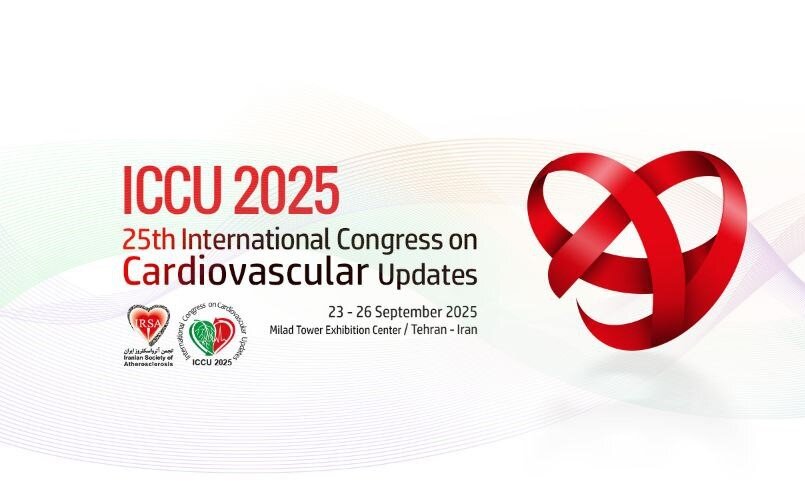
Tehran – The 25th International Conference on Cardiovascular Renewal (ICCU) is scheduled to be held in Tehran from September 23rd to 26th.
The Iranian Atherosclerosis Association will host the event. The IRIB reported that local and foreign professors from many different countries, including Australia, the US, the UK, Oman, Turkey, France, Germany, and others, were brought together to attend the event in person or online.
The event will include 343 topics, 80 panels and 290 scientific presentations.
The main goal of the Congress is to update the scientific knowledge of cardiologists and other experts in the cardiovascular field, and showcasing the latest results and drug and medical device technologies.
Referring to the latest statistics released by the World Health Organization (WHO), Parliament head Masoud Qasemi said that over the past 35 years, cases of cardiovascular disease (CVD) in Iran has increased by 180%. However, the current prevalence and incidence of disease has decreased by 30%, while cardiovascular disease mortality has decreased by 40%. Furthermore, life after disability adjustment was reduced by 45%.
The average age for the first heart attack is 32 in Iran, which is 10 years below the global average, Qasemi added.
Officials continued to list the country’s therapeutic advances in cardiovascular disease, including dilated vector left (AVL) technology, or diamond-plated drills to treat vascular occlusions.
Part of Congress will also focus on emerging therapies for the treatment of CVD, he added.
Cardiovascular disease
CVD is the world’s leading cause of death, with 17.9 million deaths per year. An estimated 19.8 million people died from CVD in 2022, accounting for around 32% of all deaths worldwide. Of these deaths, 85% were due to heart attacks and strokes.
They are a group of heart and vascular disorders and include coronary heart disease, cerebrovascular disease, rheumatic heart disease, and other conditions.
Over three-quarters of CVD deaths occur in low- and middle-income countries.
Most cardiovascular diseases can be prevented by addressing behavioral and environmental risk factors such as tobacco use, an unhealthy diet (including excess salt, sugar and fat), obesity, physical inactivity, harmful use of alcohol, and air pollution.
It is important to detect cardiovascular disease as soon as possible so that counseling and medication management can begin.
Heart attacks, CVD, mainly account for 40% of the country’s annual deaths. Automobile accidents, diabetes and cancer are the next important risk factors during non-communicable diseases,” Isna said Kourosh Etemad, a health department official.
In addition to high blood pressure, low physical activity, unhealthy diet, smoking and alcohol are four risk factors for cardiovascular disease.
People over the age of 30 are advised to go to a medical centre to check for possible hypertension, diabetes, and heart disease.
A three-month, six-month and one-year care plan will be arranged for those visiting the health center based on age, family history and weight. This program helps detect illness early and control risk factors in people.
Unfortunately, in Iran, like many other countries in the world, half of the population is unaware of hypertensive disease. Only 50% of people who are aware of high blood pressure take the medication.
This means that in addition to letting people know about their illnesses, they should be given necessary recommendations for their control and treatment.
mt/mg