
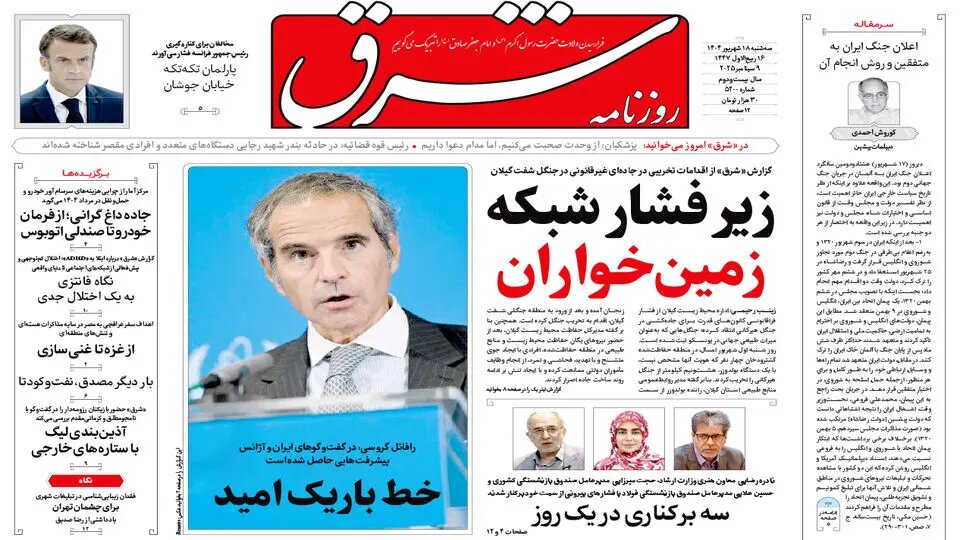
Tehran – In the analysis, Sharg discussed the agreement between Iran and the IAEA and pressure from domestic extremist groups, writing: The recent agreement between Tehran and the IAEA can launch a new chapter in nuclear interaction with the international community in Iran.
But before the agreement showed its impact internationally, it faced a wave of criticism from domestic extremists. A more political attack than technical and experts. At present, Iran is desperately in need of a consistent, multilayered approach in the face of external pressure. The recent agreement with the IAEA could be an opportunity to unlock diplomacy and alleviate tension despite all restrictions. The political attack on the deal comes as Europe and the United States demand immediate and full implementation of Iran’s commitment on threatening language, and even raise the possibility that sanctions could be revived in the next two weeks. In this situation, multiple domestic voices not only weaken diplomacy, but also encourage the West to adopt a more stringent position.
Javan: European troika became US agent
Jawan pointed out the lack of independence by European troika (UK, France, Germany) and conducted the US orders to Iran in an interview with Nader Entesar, a well-known professor of political science, who has retired. He said: European troikas are not independent players, but rather have the role of US proxy related to Iran. With the call to snapback, these three European countries continue to act as proxy, as the US is no longer a member of the JCPOA and cannot trigger only the snapback process. Therefore, we left this task to the European troika. If Iran is based on Chapter VII of the Charter, it is more difficult to prevent the start of a new war. Iran needs to oppose the war without the air slogan and strengthen its cooperation with China, Russia and other countries that strengthen their position through diplomacy. Iran needs to be prepared to deal with the worst-case scenarios, even if it doesn’t happen. Furthermore, Iran should adjust its economic policies in accordance with the serious dangers that threaten the country and make necessary changes to the country’s economic structure as soon as possible.
Khorasan: Why did Iran again negotiate with the IAEA?
In the memo, Khorasan’s newspapers discuss why Iran resumed negotiations with the IAEA and should be asked for reasons for renegotiation in terms of snapback mechanisms (which was invoked by European troikas returning UN sanctions on Iran). This activation of legal measures could potentially bring back Iran under Chapter VII of the UN Charter. From an economic standpoint, experts estimate that the full implementation of snapbacks can disrupt 30-50% of Iran’s economic activity, which has a serious impact not only on the national economy but also on the people’s daily livelihoods. From a political and legal perspective, going back to Chapter VII will limit Iran’s diplomatic manipulation and effectively put the country in a new and dangerous situation. For this reason, diplomatic devices are obligated to use all possible tools, including well thought out collaboration with the institution, to prevent the activation of snapback sanctions. Despite all the bitterness and distrust, negotiations with the institution are an inevitable tactic to buy time and prevent Iran from entering the vortex of Chapter 7.
Ettelaat: Gaining public trust is the most important issue for the enemy
Ettelaat discussed the situation in the country with international affairs analyst Mehdi Zakarian where there is a possibility of implementing a snapback mechanism. He said: Iran has lost a set of options to solve the problems the country is facing and is now in the required options phase. Required options are determined by the great power. Iran’s political system also faces problems and flaws. Therefore, in situations where the world sets conditions and restrictions and poses threats, the management system must be responsible for public opinion and act transparently. If people and government relationships are advantageous and mutually guaranteed, the political system will have considerable bargaining power, giving them the advantage when negotiating with foreigners. If the political system can win people’s trust, many problems will be resolved, and this will not happen without serious changes in policy decisions.