
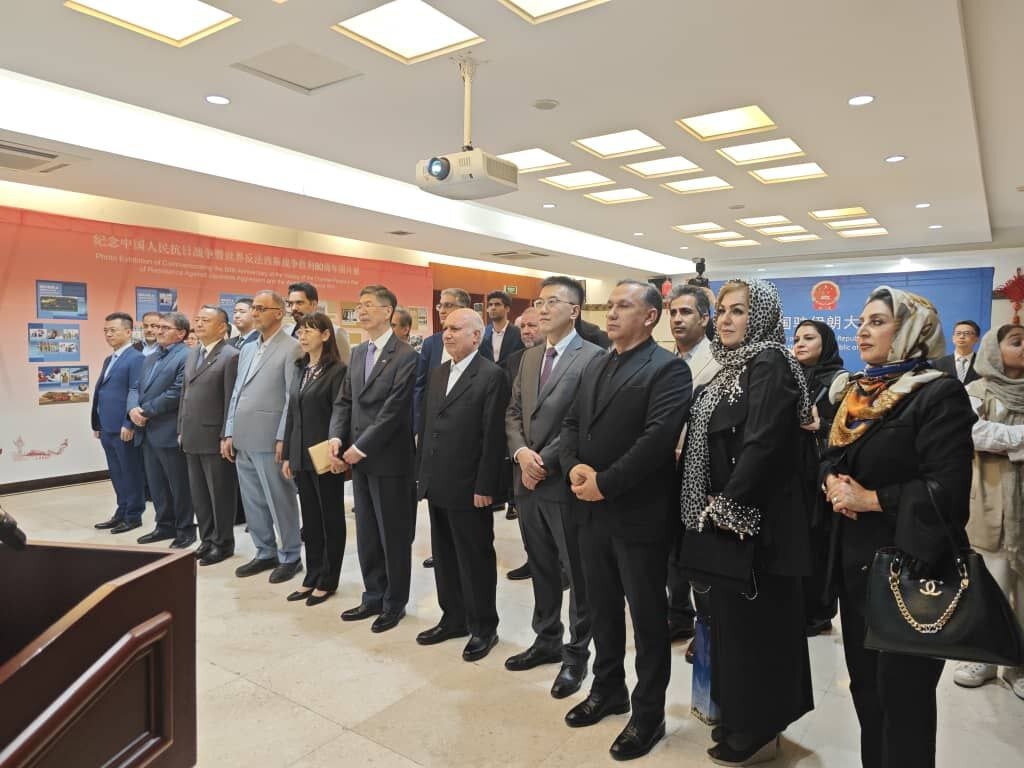
TEHRAN – The Chinese Embassy in Tehran hosted members of the Iranian-Chinese Friendship Association for dinner on Monday after Chinese envoy Kong Peiu met with the association’s secretary, Medi Nadi, to discuss bilateral relations for about 45 minutes.
The embassy told journalists covering the event that it was just a reception and there are several more meetings and gatherings planned for the coming months. After Kong’s private discussion with senior members of the association, a crowd of dozens of Iranian citizens listened to the envoy, and the secretary spoke separately, harmoniously speaking about the possibility of strong cooperation between Iran and China.
Friendship Associations can be either government or non-governmental organizations (NGOs), depending on their structure, purpose, and funding. In China, many such associations, including those related to Iran, were established by the government as part of diplomatic and cultural outreach efforts. However, the Tehran-based Iranian-Chinese Friendship Association was founded by a group of ordinary young Iranians who returned to Iran after completing their secondary education in China in the 1980s.
Esmaeil Khazayi was one of these young Iranians. In the 60s, he went to China at the age of 18, studied medicine and spent 13 years in Beijing before returning to Iran as a urologist. “Today, thousands of Iranian students are studying in China. But at the time I think there were only about 10 Iranian students there. Me and four others joined the five students who arrived before us, becoming the second group of university students studying in China,” he explained.
Khazayi said over the past decades, the relationship between Iranians and Chinese has only become stronger. “At that time, there were few foreigners in China. The country was not yet open to the world as it is today. The sight of foreigners in West Asia was unusual for Chinese people. But today, whenever I visit China, I experience openness and friendship from people.
The event was held to commemorate the 54th anniversary of the establishment of diplomatic relations between Iran and China. However, the two ancient countries maintain a heartfelt relationship and have been engaged in trade for at least two thousand years.
When talking to various members of the Iranian-China Friendship Association, many expressed their desire to receive the same level of support from the Iranian government that Chinese counterparts enjoy. Nadi, the association’s secretary, shared the ambassador’s praise for “knowledge and depth” after meeting with the envoy, but said there are many ways the Iranian government can use the association.
“Members of the association are all experts who have built their careers over the years. The affinity for China comes from both positive personal experience there and the interests they believe that close cooperation with China can bring to Iran.”
Naadi argued that during the Covid-19 pandemic, the association helped to facilitate negotiations to allow Iran to quickly import millions of doses of vaccines from China. “There are many other ways we can help the authorities. Please don’t hesitate to do anything that will help Iran’s national interests.”
In addition to Chinese envoys, the country’s military and political attachments also took part in the event on Monday. They didn’t interview journalists, but they spent most of their time engaged to guests. Near the end of the event, the ambassador himself shared his thoughts on the evening and his relationship with the Tehran Times.
“I was very impressed with the insightful ideas of friends at the Iranian-China Friendship Association,” Kong asserted. “We look forward to our discussion tonight to advance cooperation between the two countries.”
I asked the ambassador why they felt the need to emphasize their ties with NGOs when Iran and China’s governments were already in close ties. He replied, “The interaction between people is always very important. It helps people in both countries understand the situation better and build mutual trust. We always value such efforts and believe that alongside diplomatic exchanges, they should be strengthened to be even more friendly.”