
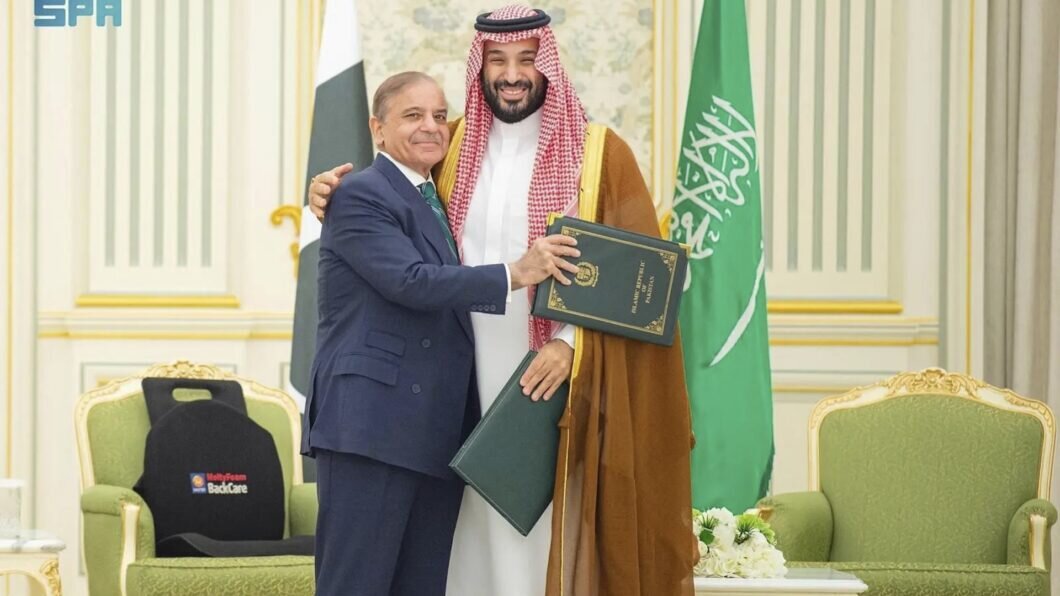
Madrid – The recent defence agreement signed between Saudi Arabia and Pakistan has been one of the most important developments in geopolitics in West and South Asia over the past decade.
It is not just a bilateral operation or a practical response to immediate security needs. On the contrary, the new agreement symbolizes the dramatic erosion of the old foundations of Western imposed security architecture, and the beginning of the stage in which local nations decide to redefine it on their own terms.
Analysis seeking to grasp the importance of this agreement should be placed within the scope of a series of deep crises the region has experienced in recent years, particularly in the wake of the recent Israeli attack on Qatar. The message resonated deeply. Our allies neither consider themselves immune to local violence or instability, nor are they fully protected by the proverb “security guarantees” in Washington.
This symbolic, political shock has accelerated recognition of what Iran has been underlining for a long time. The presence of external actor rituals far from providing stability exacerbated fractures, mistrust, and fragility in regional states.
For decades, we, especially Westerners, have placed them under the umbrella of protection at the expense of our allies. Military bases, bilateral treaties, arms trade and diplomatic agreements ensured a landscape where Arab elites could grow or survive under the shadow of superpowers. However, recent events directly challenge this fundamental myth. Neither security nor regional order is guaranteed by its proximity to imperial power.
Israeli attacks on Qatar exposed the supposed rift of immortality. The heterogeneous response and lack of strategic outcomes for Tel Aviv indicate the decline of this model. Washington’s “guarantee” has been revealed as impossible. From this perspective, the Saudi Arabia-Pakistan agreement goes far beyond merely self-protection manipulation. It shows the declaration of an iconic and potentially political old man. Former US allies don’t think Washington’s guarantees are sacred or sufficient anymore.
Those who cling to the ritual of the decline of American protection from inevitability or inertia will ultimately discover that the collapse of the certainty of the empire will expose them to both an unexpected threat and a ruthless erosion of their own independence. The old order is declining. The construction of a new thing is just beginning, but its outline is already perceptible.
Strategic History of Saudi Arabia-Pakistan Relations: A Critical Iran Reading
The military relations between Saudi Arabia and Pakistan have deep roots dating back to the 1960s. Islamabad sent military, advisors and senior officers to Riyadh, both participating in training local units and protecting strategic facilities. In the decades that followed, especially in the 1980s, Saudi Arabia funded Pakistan’s military and religious projects, integrating its impacts, and sought to counter the presence of local actors, such as Iran. Thousands of Pakistani officers served at Saudi Arabian bases, strengthening the kingdom’s dependence on Islamabad as a “human shield” against internal and external threats.
However, from an Iranian perspective, this historical relationship reveals short-term dependency policies focusing on external leadership rather than sustainable regional security. The Saudi Arabian strategy based on the purchase of loyalty and import of security reflects the continuation of the logic of subordination to power outside the realm, particularly to the United States. For Iran, this model is not only vulnerable to geopolitical change, as demonstrated by Israeli attacks on Qatar, but also promotes sectarian imbalances and internal fractures, and weakens regional cohesion and resilience.
The new agreement will not completely invade this historical pattern while attempting to diversify and enhance Riyadh’s security. The key difference is that this initiative no longer relies solely on Washington, and it acknowledges that external protection alone cannot guarantee stability. Nevertheless, Iran’s criticism emphasizes that Saudi Arabia continues to seek security solutions outside the endogenous regional framework, but Tehran argues that true stability can only emerge from cooperation between regional actors based on shared sovereignty and strategic balance.
Migration to endogenous security
The political theological aspects of this crisis are important. Local orders are no longer granted by US orders. The myth of “guarantors” has collapsed. Nowadays, protection must be built locally through agreements built in response to concrete risks and threats, rather than in the fiction of American PAX, which exists only in the memory of past generations.
In this sense, Saudi Arabia chose Pakistan to build the first major pillar of its new defensive model. With the Islamic world and the only nuclear force in the experienced military equipment, Islamabad offers strategic reliability and tactical flexibility. For Riyadh, an alliance with Pakistan is a military insurance contract and acknowledgement of the need to diversify the alliance and refine its foreign policy on more unstable and less predictable terrain. The Joint Declaration refers to cooperation on asymmetric threats, air defense, intelligence and technical adjustments. An element that would be impossible without a crisis of trust in the previous alliance structure.
However, this change is not without important paradoxes. Pakistan has maintained strong ties with Iran and, unlike other Islamic forces, resisted the pressure to completely fall into an anti-Iranian trajectory. Pakistan shares a long border with Iran, as well as general challenges such as terrorism, drug trafficking and energy security. The two countries have developed practical cooperative mechanisms, even in moments of tension. Islamabad avoided destruction with Tehran despite external pressure.
Therefore, while still as far away as possible between Iran, Pakistan and Saudi Arabia, Washington and Tel Aviv are plagued by unsettling youkai. The “division and domination” tactics show that they no longer have their previous effectiveness.
The shock caused by Israeli attacks on Qatar exposed the strategic segregation of the Persian Gulf countries. The lesson is devastatingly clear. There is no balance with Washington or Tel Aviv, and there is no opening or concession. Ensures effective protection against local violence.
Having cultivated his image for many years as a well-balanced actor and mediator, Qatar was amazed at the reality of power politics. The reverberation soon reached Riyadh, Abu Dhabi, Muscat and more. The risks are no longer potential or theoretical, they are obvious and urgent.
It is in this space of exposure that Iranian papers find implicit recognition. For decades, Iran has maintained that at substantial international and regional costs, the region can achieve peace and stability only through locally negotiated solutions, without the ubiquitous US or Israeli destructive logic. Time proves Tehran’s rights. The persistence of the external agenda exacerbated anxiety rather than resolved it.
Proof of Iran’s agenda
The new contract serves as a test of Iran’s foreign policy strategy. Far from the ideological slogan, Iranian diplomacy promotes regional forums, endogenous multilateral agreements, and collective security mechanisms based on equality and mutual respect for sovereignty.
Riyadh – The Islamabad agreement does not include Tehran yet, but it effectively represents its step towards the horizon. It is the creation of sustainable local equipment that is not dependent on the West. This will change the regional power matrix, freeing key actors from structural dependence on Washington, and outlawing Israeli rhetoric for “containment” and “preemptive defense.” It also suggests an opening to the form of dialogue, where Iran is no longer an “other” essential for isolating, but an actor who may need practical rationality to manage the complexity of future threats.
The US response, which vibrates between doubt and anxiety, supports the novelty of the situation. Washington correctly recognizes that the era of top-down bilateral agreements is in crisis. Weapon sales and guarantees for exercise are no longer sufficient. A trust framework must be woven from scratch based on the benefits of convergence.
The Saudi Arabia-Pakistan Agreements have advertised the gradual maturation of the multidimensional foreign policy of self-sufficiency in the region. Competition of power, conflicting interests and historical complaints lead to rapid integration of joint defences, but the fundamental movement is unmistakable. The pursuit of independent tools, the abandonment of American leadership, and the reformation of alliances to meet earthly needs.
The immediate challenge is to translate this trend into stable institutional architecture. It is a truly comprehensive regional dialogue forum that can manage conflicts and give a real voice to parties currently subordinate to outside-regional interests. Iran could be an important partner in this transition, with a history of resisting external pressure and advocating for autonomous multilateralism.
Examples of Saudi Arabia-Pakistan agreements are possible double. On the one hand, it could potentially sow a closer, more versatile platform of cooperation among Muslim countries, protected from interference between Washington and Tel Aviv. On the other hand, it could help create parallel diplomatic networks of economic, energy and technology.
Political perspective: the post-emoral future of the region
The deepest lesson of this moment is that Western Asia is at the beginning of the process of reclamating its destiny. The crisis in the old guarantee model forced local officials to look inwards and recognize each other as legitimate interlocutors, overcoming fragmentation induced by decades of imperial manipulation.
Even incomplete at this stage, the possibilities of comprehensive and truly local security represent the greatest victory of the logic that Iran defended. On a more abstract level, the region witnesses the emergence of a new regime of political truth. Right now, legitimacy is based not on the outside blessings but on the ability to collectively negotiate, agree and defend.
That is to create order without foreign fiats. Between the crisis and opening, the post-emperor policy horizon emerges. Although it is not guaranteed by unanimity, it is close to the complex and multiple realities of the Gulf, Levant and South Asian societies.
In conclusion, the Saudi Arabia-Pakistan defense agreement transcends bilateralism and becomes a symptom of political maturity in the region. It establishes Iran and its long-standing suspicions. As long as stability and sovereignty relies on external factors, the cycle of vulnerability and interference continues. Only through the creation of autonomous, inclusive, and truly local structures can one aim for the horizon of sustainable security. The road will be long, but the first real crack in the building of imperial certainty is already open.