
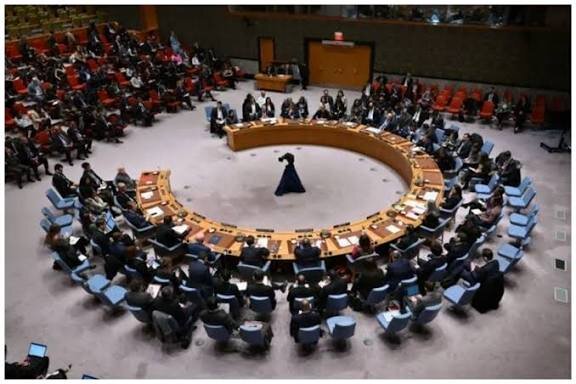
TEHRAN – On Friday, September 19, 2025, the Security Council failed to approve the resolution extending the suspension of anti-Iran sanctions as expected. The draft was prepared in response to the European troika’s move to trigger a snapback mechanism to revive UN sanctions on Iran.
Several factors contributed to this outcome, but perhaps most importantly, US and Israeli pressure, even South Korea, the president of the Security Council and drafting the resolution, refrained from voting.
The European omission in the face of US demands revealed that the revitalization of the snapback was an operation designed by the White House and was carried out by three members of the European troika.
However, China and Russia have expressly opposed the actions of at least three European countries during this period, and are unlawful and refused to accept them. China and Russia are trying to convey a clear message to the West that unilateral American decisions are no longer the basis for action on international issues.
The actions of the Western countries at this stage, in addition to destroying the rotten remains of the JCPOA, also put another nail in the co-legged co-legal law. In addition to exposing the failure of international legal mechanisms to support state rights, this action further entrenched global distrust in the West.
Although Iran’s actions have demonstrated that despite intense pressure and hostility, they view dialogue and diplomacy as excellent options, they are still unwilling to compromise national interests and security, and are determined not to repeat the bitter experiences of the JCPOA.
Furthermore, along with Russia and China, the YES vote for Pakistan and Algeria’s solution was predictable due to its relationship with Iran, indicating that Iran is not segregated on the international stage. Meanwhile, the low weight and status of the countries that voted against the resolution in parallel with the US, UK and France clearly indicates that America’s one-sided era of international relations has expired.
More precisely, while the West is trying to put our country in a special situation by building a consensus on Iran, Tehran’s “active resistance” strategy is intellectually disrupting the hostile Western programmes.
Furthermore, it strengthens relations with neighboring states and holds Tehran’s active participation in anti-Western Confederations, such as BRICS and Shanghai Cooperation Agency, as a reliable deterrent to the future Western Zionist axis.
Events taken at the UN Security Council meeting showed that the balance of power in the world order has changed substantially, and that the West can no longer continue the one-sided American model.
The clear statements from China and Russia that they announced they would not commit to reviving anti-Iran sanctions should be viewed as a clear indication of the effective role of the new United Nations in the world. In fact, they are seriously challenging the structure of existing orders, and are committed to changing the geometry of power in the future world.