
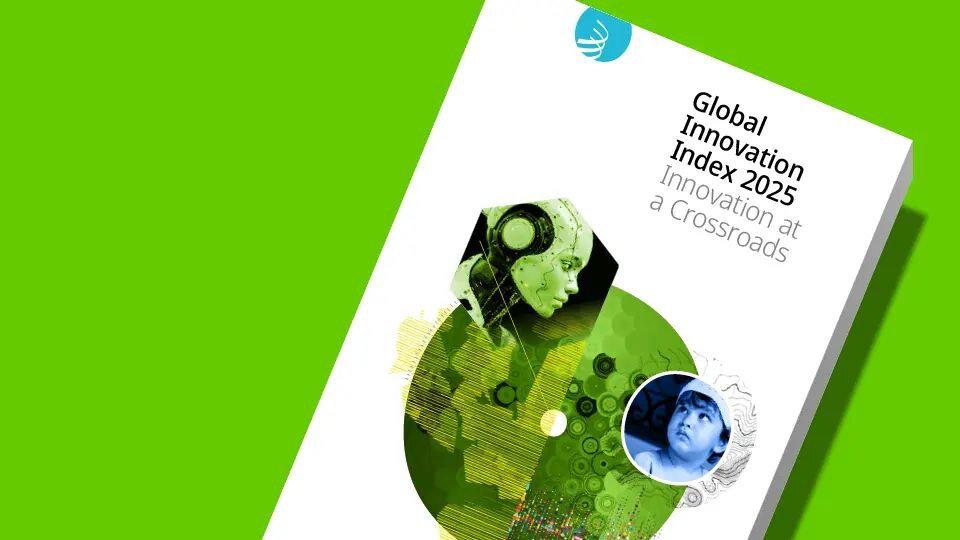
Tehran – According to the 18th edition of the Global Innovation Index (GII) report, Iran’s Islamic Republic has remained the second highest in countries in the Central and South Asia region over the past three years.
GII 2025 measures innovation performance across 139 economies and announces the world’s top 100 innovation clusters. Track global innovation trends through investment patterns, technological advancements, adoption rates and socioeconomic impacts.
This year’s report shows Iran ranks 70th among the 139 economies published in 2025. In 2024, the country ranked 64th among the 133 economies featured in GII.
The country ranks 17th among the 36 middle-income group economy. In 2024, Iran ranked fifth among 38 low-middle-income groups economy.
GII ranks the global economy according to its innovation capabilities. GII consists of approximately 80 indicators grouped into the inputs and outputs of innovation, aiming to understand the multidimensional aspects of innovation.
As mentioned in the 2025 edition, over the past six years (2020-2025), the statistical confidence interval for Iran’s rankings is between 56 and 75 ranks.
Iran is producing better innovation than its 2025 innovation input. This year, Iran ranks 109th for its lower innovation input than last year (No. 85).
Iran ranks 46th in its innovation achievements. This position is higher than last year (48th).
In Iran, five indicators have been improved in the short term (international patent application, connectivity, robots, labor productivity, life expectancy), and five indicators have deteriorated (scientific publications, research and development (R&D) investments, venture capital transaction numbers, fixed broadband, temperature change).
Iran ranks highest in creative output (45th), knowledge and technology output (46th), and human capital and research (66th).
The country is lowest in agency (138th), business refinement (107th), and infrastructure (98th).
Iran surpasses the average for the upper middle income class in human capital and research (Iran scores 32.43 and upper middle income score 29.7). Knowledge and Technology Output Iran scores 27.46, while the upper middle income score is 20.0. And creative output (Iran’s score is 31.87, while the upper middle income score is 22.6).
The report, published by the World Intellectual Property Organization (WIPO), ranks Iran first by market capitalization.
2nd, 5th, 6th, 6th, 8th, 10th, 10th, 14th, 14th, 22nd, 23rd, Software expenditure, Total capital formation, Industrial design by science and engineering graduates, native market scale, domestic market scale, high-tech imports.
Rankings of GII innovation clusters identify local concentration innovation activities. Innovation clusters are established through analyses of patent filing activities, scientific article publications, and venture capital (VC) activities, documenting the geographical areas around the world with the highest density of inventors, scientific authors and venture capitalists.
Switzerland continues to be the global innovation leader in 2025. China has entered the top 10 for the first time, with the middle-income economy (India, Turkey, Vietnam, the Philippines, Indonesia, Morocco, Albania, Iran) being the fastest climber since 2013.
This year, GII ranks as the 63rd largest science and technology (S&T) cluster in the world, according to a report released by the United Nations WIPO.
GII reveals top innovation clusters around the world through size and strength. In 2025, three metrics define the top 100 clusters globally. The first metric focuses on the locations of inventors listed in patent applications published under the WIPO Patent Cooperation Treaty (PCT).
The second metric considers authors listed in published science articles. These two metrics serve as the basis for cluster identification across previous GII editions. However, this year, GII introduced a third metric: venture capital (VC) trading locations.
Asia has four clusters, including Tel Aviv Gelsalem (19), Starbucks (58), Tehran (63), and Cairo (83).
Tehran is the only cluster in Iran that is within the top 100 innovation clusters in 2025. It submitted the 49 Patent Cooperation Treaty (PCT) application, published 8,269 scientific stories, and gained 1 million residents in the last five years.
Tehran’s top publishing organization is Tehran University with Tehran University College of Medical Sciences, with 7,275 articles (12% share), 5,763 articles (10% share) from Islamic Azad University, and 5,158 articles (9% share).
The top applicants for PCT are Mohammad Abdolahi with 16 patents (4% share), Ahmad Ghanbari with 5 patents, and Mohammad Durali with 5 patents (1%).
Approximately 4% of Tehran’s PCT patent applications have been filed in collaboration with other inventors, with Los Angeles, Glaz and Vienna emerging as the top collaboration locations. 26% of Tehran’s science articles are published in collaboration with other organizations, with the top three collaboration locations being Seoul, London and Boston-Canbridge.
In 2025, Tehran gained 357 PCT applications, 60,217 scientific publications, 85 venture capital transactions, 0.03 shares of global PCT applications, 0.73 shares of global science publications, and 0.04 shares of global venture capital transactions.
The city’s estimated cluster population, per capita PCT application, and scientific publication Capita will be $7.2 trillion, $49 million and $8.2 billion, respectively.
The per capita venture capital is approximately 11.67, with the total share of innovation intensity per capita share of 0.11.
In 2025, Tehran’s ranking fell to the 63rd mostly as the introduction of VC trading was counted as a variable in this year’s methodology.
GII 2025
A shift has been seen after a decade of rapid expansion in R&D spending and venture capital investments. R&D growth has slowed to its slowest pace since the global financial crisis, with global venture capital trading not recovering from the severe economic recession of 2023.
However, even when innovation investments are lulled, innovation itself is not modest. Green SuperComputers is setting a new efficiency record. Battery prices and genomic sequencing costs continue to fall. The adoption of electric vehicles, 5G and robotics has achieved status, although unevenly across the region.
And while the full impact of artificial intelligence remains uncertain, the possibility of its transformation cannot be ruled out.
What is particularly encouraging in this year’s survey results is how innovation momentum is diversifying across the region.
GII 2025 shows a strong performance in the middle-income economy. China, India, Türkiye and Vietnam continue to climb in the rankings. Others, including Senegal, Tunisia, Uzbekistan and Rwanda, have emerged as over-performers of dynamic innovation.
Regions such as Central Asia, South Asia and the Middle East are steadily progressing, contributing to a more diverse environment of innovation.
New features in GII 2025 include expanding global coverage, with six countries: the Republic of the Congo, Guinea, Lesotho, Malawi, Seychelles and Venezuela.
This edition also further improves the GII Innovation Ecosystems & Data Explorer. It aims to empower decision makers by providing a detailed view of the economic innovation system, from sustainable strengths to areas of untapped potential.
Another new factor is integrating venture capital activities into innovation cluster rankings for the first time. The result is a keen picture of ecosystems that turn scientific discoveries into entrepreneurial success, ranging from cities like Bangalore, Cairo, Mexico City and Paris to multi-city hubs like Silicon Valley and the Greater Bay Area in southern China.