
TEHRAN – In a series of comments on Tuesday, several Iranian officials have submitted solid, unified messages to the United States. Iran is embracing dialogue on its nuclear program, but does not negotiate core security interests under the threat.
After abandonment of Washington’s 2015 nuclear deal (JCPOA), years of fruitless attempts to revive it, and a difficult decade that the US-Israel war imposed on Iran this June brought bombardment of Iran’s nuclear facilities, Tuesday’s statement and other senior figures suggest that it has hardened.
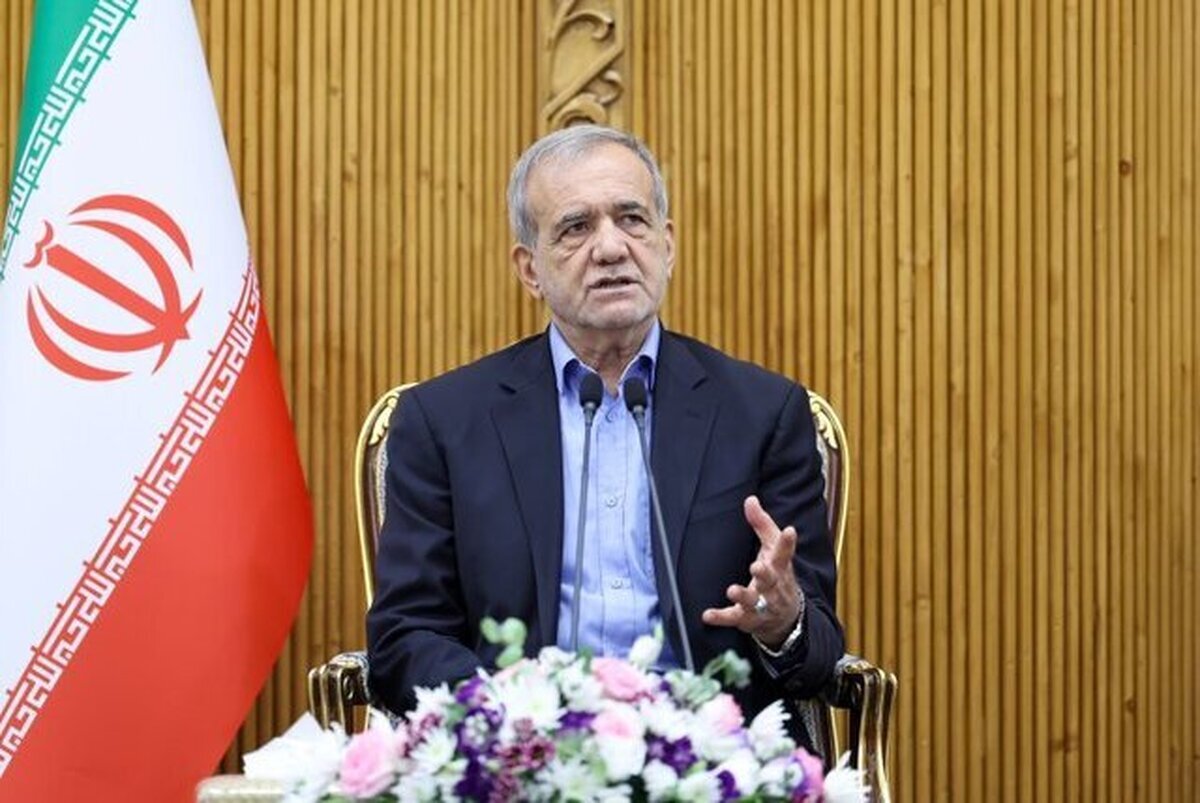
Speaking just before he sets out for New York, which is set to deal with the UN General Assembly, President Pezeschkian has set the principle that it must be based on mutual respect. “We can’t talk to people who want to use the Force and bullying,” he said. He described the issue as a matter of universal justice, arguing that security is not a privilege for one party alone. “That’s not the case that Israel has the right to be safe. We must preserve the safety of everyone in this world,” Pezeschkian said.
Government spokeswoman Fateme Mohajelani was asked to elaborate at this point at a press conference. She emphasized that Tehran distinguishes between true negotiations and ultimatums. “We welcome the opportunity for dialogue to resolve our people’s problems,” she told reporters. “But dialogue is, of course, a two-way action. It’s not about ordering your own opinion to another. It’s not a dialogue.” She expressed deep frustration with the European powers, accusing them of failing to maintain their commitment after their withdrawal from the JCPOA, which “put a lot of pressure on Iran’s economy.”
Officials were clear about the specific issues with Iran’s missile programme (the demands that Washington is being presented during nuclear negotiations). Mohajerani called missiles an integral part of national defense. This is a lesson sent to national consciousness during the eight years of war with Iraq in the 1980s. “We don’t ask anyone’s permission to protect our people,” she said. “Everyone has witnessed the way our national solidarity and the power of missiles defended our people.”
Iran forced Israel and the United States to force a ceasefire 12 days after the war began on June 13th. Iranian missiles dealt a considerable amount of money to Israelis and Americans.
Mohajerani’s attitude towards missiles echoed and amplified by Congress. The legislators have stoked Jalil Mirmohammadi, and it has been revealed that more than 70 delegates are calling for a fundamental change in Iran’s nuclear doctrine. He argued that in a world where “crime America” ”allows Zionist regimes to run into the wild”, Iran must consider all preventive tools “a nuclear weapon.” He evoked the fate of Libya. Libya dismantled the Weapons of Mass Destruction Program as a warning tale. “Iran will never become Libya,” he vowed, dismissing the idea that concessions would end hostility.
Scepticism about America’s demands was probably best captured by Ali Larijani, secretary of the Supreme National Security Council. “Americans say the range of Iranian missiles must be less than 500 kilometres,” the seasoned politician said. “Do they really think this will be accepted by Iranians?”