
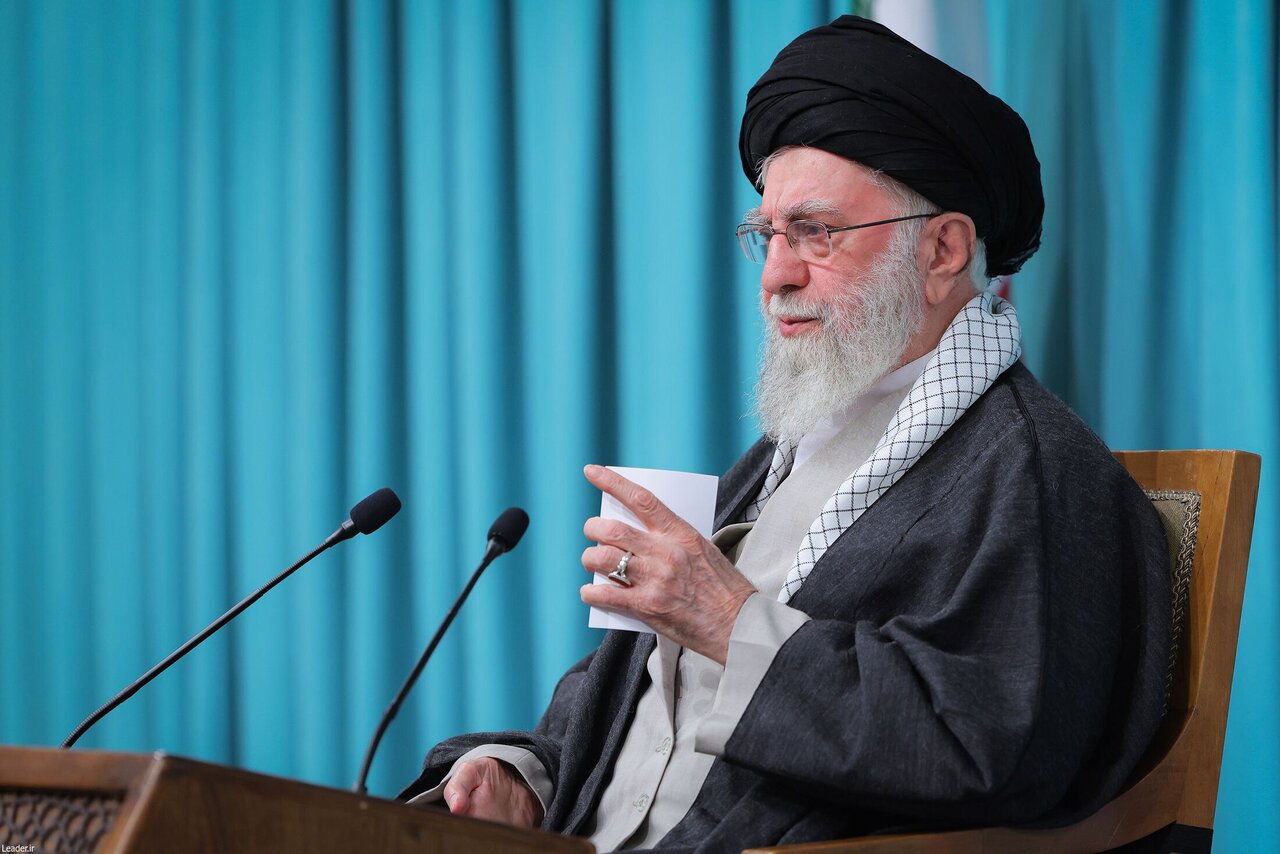
TEHRAN – In a live speech to the Iranian state on Tuesday, Islamic Revolution leader Ayatollah Seiyed Khamenei focused primarily on the trajectory of Iran’s nuclear program.
His remarks came after some analysts and subordinate officials proposed new negotiations with the US over the program. However, the leader said engagement in consultations with Washington is only harmful to Iran.
“They have already decided the outcome of the negotiations. They want us to dismantle the nuclear program and stop the enrichment of uranium. How can we call this negotiation? They are dictating the outcome to us,” he said.
Ayatollah Khamenei highlighted the important role of uranium enrichment in the development of the country, citing current and future uses in various fields such as agriculture, medicine, manufacturing and power generation. “We have become one of only ten countries in the world that can put a significant amount of energy and resources into our nuclear programmes and enrich uranium. Of course, nine other countries also have nuclear weapons, but they don’t want to have them, not now, not in the future.”
He further argued that beyond the given outcome of potential consultations, the US is adopting the threat of forcing Iran to ultimately beneficial and potentially harmful negotiations. “If we are engaged in negotiations while our enemy is threatening us, we are considered vulnerable to threats. Americans will think that by threatening us we can make us do what we want,” he explained.
Ayatollah Khamenei said the “dignified country” disagrees with negotiating under such circumstances. “We don’t know how things will change in the future, but let’s let them know that under current conditions, engagement with the US on the nuclear issue is merely a dead end.”
The leader also highlighted a pattern of lies and deceptions by the US and its Western allies, suggesting that the West would refuse to respect its commitment, even if it reached a deal. He cited the 2015 nuclear agreement, the JCPOA, as evidence of this assessment.
The JCPOA, signed between Iran and P5+1, restricted Iran’s nuclear program in exchange for lifting Western sanctions. Washington withdrew from the agreement in 2018, and its European allies began to abolish their commitments despite remaining official signatories. Since the US withdrawal, Tehran has faced increased sanctions and economic pressure compared to its pre-JCPOA era.
Iran engaged in multiple consultations with European countries during the Biden administration. However, Biden withdrew from cooperation, the agreement that approached 2022, the same year that Iran experienced violent riots. Tehran also agreed to negotiate with the second Trump administration earlier this year. However, as they were preparing for indirect talks for the sixth round of June, its nuclear facility was attacked by Israel and later by the US, killing more than 1,000 Iranians during the 12-day war.
In response to the war, Ayatollah Khamenei said that Iran’s nuclear capabilities could not be eliminated. “Today, there are dozens of well-known academics and professors in this country. This is a report provided by stakeholders. It is a reliable and reliable report. Dozens of well-known scientists, hundreds of researchers, thousands of graduates from nuclear groups in various related fields are actively working right now.”