
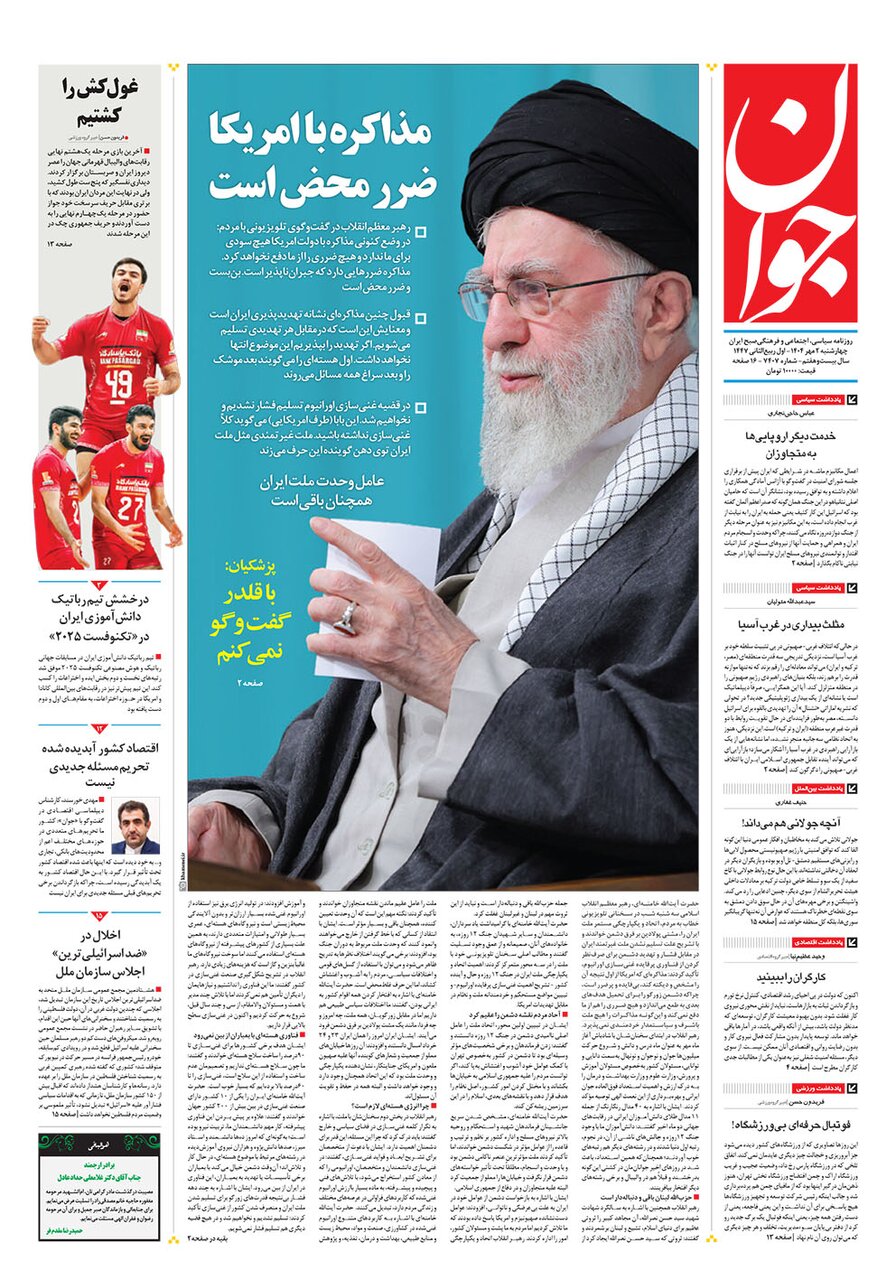
In Tehran-analysis, Javan discussed Reza Pahlavi’s isolation and his failure to strengthen his political foundation.
It writes as follows: What has happened in recent weeks and months, especially after the 12-day invasion of Iranian soil by Israeli forces, has revealed more than ever before a rift among foreign-based Iranian opposition groups, and put it into the views of everyone. This time, by openly supporting Tel Aviv, Reza Pallavi has been introducing himself as a “consensus option,” for years, not only has failed to strengthen his political foundation, but he has also lost a key part of his limited supporter foundation. From nationalists to Republicans and even several previous figures closer to the monarchical movement, his critics of various opposition groups have interpreted this position as “hometown betrayal.” Despite all this, Pahlavi is still trying to rely on one point of support for the Netanyahu administration, but this dependence is a sign of political impasse, and more of a sign of chronic dependence of the monarchical movement than an achievement for him.
Resalat: Opportunities and ways to overcome political risks
In the memo, Resalat said, addressing political and economic risks: Despite all the challenges, the Iranian economy is one of the potentially attractive markets for domestic and foreign investors. Large natural resources, exceptional geopolitical locations, large consumer markets, and young HR are factors that attract investors’ attention. Political and economic risks have always been a serious obstacle to investment in Iran. Sanctions, economic policy instability, and rules and regulations volatility are one of the main barriers. There are several important solutions to overcome these obstacles. First, we will establish stable economic policies. Second, expanding regional and international cooperation. Even under sanctions, it is possible to open bilateral agreements, ways for capital flows through barter trade. Third, we will create a new financial and insurance platform. Finally, it makes Iran’s economic environment attractive, with a combination of domestic structural reforms in the economy and wise economic diplomacy.
Hamshahri: Iran is flexible while maintaining its rights
Hamshali wrote about the activation of snapback sanctions and Iran’s approach to Western action. Iran is ready for fair negotiations, but resists requests that violate the security redline. As snapback deadlines approach, there is a risk of escalating sanctions and new conflicts. Failure to negotiate could encourage Iran to strengthen its alliance with Russia and China. This approach can change the balance of local forces and increase tensions. If West retreats from an unacceptable request, it could return to the negotiation table. In this regard, Ali Larijani’s remarks were made in conversations with members of the Iranian Chamber of Commerce, industry, mining and agriculture, not only demonstrated Iran’s diplomatic flexibility, but also revealed the complexities and obstacles of nuclear and security negotiations, and demonstrated Iran’s efforts to maintain a balance of diplomacy and national interests. As the snapback deadline approaches, the world will see Iran’s next choice and Western response. Can diplomacy overcome the current impasse, or will the region move towards greater tensions?
Donya-e-eqtesad: Sanction Winner
In the article, Donya Ektesad discussed the consequences of the return of sanctions. This paper should note that the United States will become the most important winner of Security Council sanctions against Iran as Washington will regain these resolutions and take control of anti-Iran resolutions at the Security Council through the use of veto powers. If the US can obtain such effective leverage, it can effectively lock Iran in safety and use it as a further form of fearful mail. In such cases, Iran will be forced to pay a higher price for cancellation of these resolutions. Iran needs to try to make the impossible possible in the last seven days, as this very negative development needs to be prevented. However, the main issue that has not been paid much attention to regardless of the issues that result in the return of resolutions is that the greatest harm in the return of these resolutions is the serious weakening of hope for the future, the possibility of positive development of foreign policy, and, consequently, the promotion of solving economic and domestic political issues by resolving foreign policy issues. In such cases, the crisis we have faced for years will get worse.