
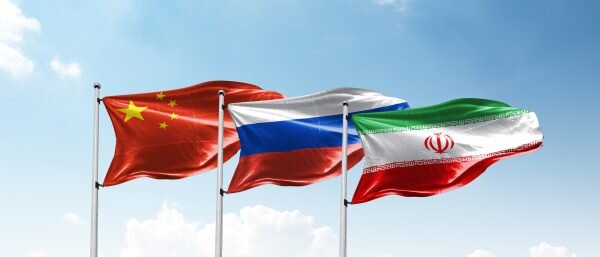
Tehran – As tensions in West Asia escalate again, the prospects for regional stability are yarn. Repeated failures of the Western Peace Initiative have led the nation to seek new partners.
With Washington’s support overwhelmingly focused on Israel, many in the region now feel forced to see elsewhere. Increasingly they ask whether US investment in cooperation is in crisis or whether Washington will continue to support one alliance at the expense of others.
USA in June – Israel, a strike at Iran’s major nuclear site, now combined with the European troika move to reinvigorate UN’s “snapback” sanctions, highlighting that there is little room for Western countries to exert diplomatic and military pressures quickly, and can be counted on. In the face of this reality, Iran is likely to deepen its security, economic and diplomatic ties with Russia and China.
Washington’s alignment with Israel’s priorities — particularly on nuclear enrichment — will only accelerate Tehran’s eastern shift. After arguing for more than 20 years of rights to enrich uranium under sanctions, the issue only saw progress after the US recognized it as the basis for negotiations. Iran has shown it is ready to negotiate fair deals with stricter conditions than the 2015 JCPOA.
“Iran remains open to diplomacy and is ready to build a realistic and lasting bargain with round iron surveillance and intense surveillance and restraint in exchange for the end of sanctions.
The latest Iranian agreement with the IAEA – establishing new terms of cooperation – was considered designed to slow or extend the activation of UN Security Council sanctions, offering one of the few remaining paths to the revitalization of the nuclear deal. If these sanctions take effect in the coming months, the results could unfold in both short-term and long-term perspectives. In the near future, Iran could halt its cooperation with the IAEA completely, withdraw from the Nuclear Non-Proliferation Treaty (NPT) and use its enriched uranium towards its weapons capabilities.
Even if the US and Israel end up updating nuclear or military site strikes, shutting down the program could require multiple operations. It also remains unclear how far Washington will move further from supporting Israel’s actions. At the same time, the US appears cautious about causing a full-scale war with Iran, which could disrupt trade and economic stability.
Iran has already begun to move further towards the eastern and global south in recent years. By the second half of 2023, Iran had graduated from observers to full members of the Shanghai Cooperation Agency. He also participated in BRICS, which shares security drills, intelligence sharing, regional trade initiatives, and opens the door to alternative financial networks.
In March 2021, Iran and China were locked in long-term strategic partnerships, including joint ventures and national operations trade arrangements designed to sanction side-step sanctions, linking China’s investment in Iran’s energy, infrastructure and technology sectors to stable discount flows in Iran’s oil.
Iran’s lawsuit with Russia is also an exception, and the partnership is driven by systematic pressure. Both countries face Western sanctions, diplomatic isolation and military threats. Their integrity reflects the desire to more broadly reject the US-led international order and shape a new multipolar global system.
On January 17, 2025, Iran and Russia signed a comprehensive strategic partnership agreement in Moscow that outlines a 20-year framework for bilateral cooperation. The treaty is diverse and includes collaborations in defense and security, energy and infrastructure, finance and trade, technology and cybersecurity. The treaty forms regular joint exercises, including naval operations in the Caspian Sea and counterterrorism training in border areas. Russia has expanded its military exports to Iran, including drones, air defense systems and electronic tanks.
The two countries are now coordinating local threats, particularly in Syria, Iraq and the Caucasus.
However, the long-term strategic agreement between Iran and Russia does not include mutual defense clauses similar to Article 5 of NATO, unlike the agreement signed recently between Russia and North Korea. The increased Western pressure on Iran and the perception of threats to its survival could force Tehran to deepen its cooperation with Russia. This may include deploying troops in similar ways to North Korea’s support to support Russia in conflicts in Ukraine. However, Iran now appears to have hope to reach a diplomatic agreement with European countries, and is careful not to risk those outlooks.
The shift is not limited to Iran, and Qatar has long cultivated a reputation as a neutral mediator in the conflict in West Asia, hosting the U.S. Central Command’s Al Udeid Air Force Base and serving as a major channel for the suspension talks in Hamas, Israel. That balancing act relies on Washington’s security umbrella. Doha is the assumption that it will block direct attacks on the soil. However, on September 9, 2025, Israel’s strike at a Hamas delegation meeting in Doha shattered that assumption.
At a press conference the next day, Foreign Minister Mohammed Bin Abdulrahman Al Thani denounced the operation as “national terrorism,” warning that “the strike has broken something with Qatar’s sense of security,” and that it undermined the ability to mediate peace. He made it clear that Doha can no longer take the protection we deserve. In response, Qatar signalled its plans to diversify its strategic partnerships. Authorities are seeking deeper defensive ties between Türkiye and China.
Doha is also negotiating a new security agreement within the Persian Gulf Cooperation Council. These moves reflect a broader trend towards hedging. It draws in multiple external forces to reduce dependence on a single guarantor in West Asia.