
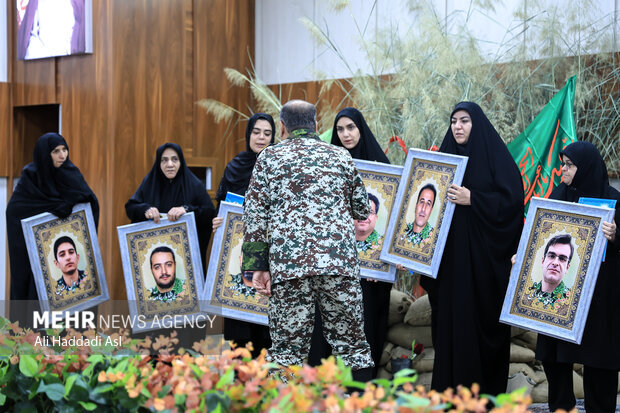
TEHRAN – Soraya Kazemi is one of the thousands of Iranian millennials who lost their father during Iraq’s invasion of Iran. Her father, a soldier at the time, died shortly after being exposed to Saddam Hussein’s chemical weapons.
“My father was martyr when I was four years old. Living without my father was tough. But even if those memories were not mine, I learned to live with his memories,” she explained.
When Soraya was in her early 20s, she met Golam Ali Najafi, a young member of the Iranian army. They married in the early 2000s and have three children, two daughters and one son. I asked if she was hesitant to marry a military man given her experience of losing her father. “No, I wasn’t worried about the dangers of his job,” she replied. “That’s because I really didn’t expect to encounter another war after the war with Saddam.”
Soraya explained that despite this, living with military members still presents the challenge. Gholam-Ali served in the Army air defense unit, which required him to move to various states and work long hours. “He was a good husband and father, but his job was still his number one priority,” she said. “He told me he has a great responsibility as a member of the Army. He has to do whatever he can to ensure the safety of the people of Iran.”
Despite her birthdays, New Year’s celebrations and difficult days, she had to spend a separate life with her husband. However, on Wednesday morning, I met her at the headquarters of the Northern Unit of Iranian Air Defence Forces. We were there for a ceremony honoring the seven military men who had taught us during the June war with Israeli Iran. One of the martyrs worshipped that day was Soraya’s beloved husband, Golam Ali.
Second Brigadier General Golam Ali Najafi has become a respected figure within Iranian air defense forces for almost two and a half years of service. He was particularly known for dedicating his life to the defense surrounding the nuclear site of the Fordau near the Iranian city of QOM, which one of his colleagues told me. “General Najafi had given his life to protect Iran’s nuclear sites. Recently he has become a member of the logistics team,” he added. General Najafi martyred on June 15th, the third day of the war during enemy strikes at Fordor. I was unsure whether he was repairing the damaged defense system or operating one of them during the attack.
A few years after losing her father, Soraya is now losing her husband to the same army. Just as Saddam was an agent attacking Iran on behalf of the United States, Israel also struck Iran’s nuclear, military and civilian infrastructure during a 12-day illegal and unfair invasion.
“Even when the war began, I didn’t think I would lose my husband. When I spoke to him on the phone, he was always in a hurry, but he wasn’t scared or anything like that. Anyone who was in the air defense unit later knows that they were the first line of fire,” she said. “I can’t say that losing my husband hasn’t been difficult. I’ve had very difficult days over the past few months. But at the same time I know that Gholam-Ali has sacrificed himself for what he loves most: his country and his people.”
It was deeply emotional to talk to Soraya and some of the other families of the martyr during the ceremony. It was also very sad to see the video that the headquarters prepared and displayed during the ceremony. Like Soraya, I found it difficult to accept that people died in the war that took place in 2025. However, when I saw all the soldiers in attendance, most of them had worked with martyrs in those 12 days, so I did not see any sadness, regret, distrust, or fear. I saw the determination.
“There were soldiers who served during the 12-day war. He had completed two years of forced military service. All healthy men in Iran had to meet,” said one of the commanders who attended the ceremony. “He was scheduled to be discharged from the hospital last week. He came to me crying and told me he didn’t want to leave because he heard that Israel might attack Iran again. After promising that I would bring him back in the event of another war, I left him,” he said.
The commander emphasized that while the army lamented the martyr, no one believes that the fight is nearby. “What they want is for Iran to abandon not only its nuclear capabilities, but all of its power. They want our sovereignty and integrity,” he explained. “But I want people to know we are ready. We’ve never been unprepared to protect our country.”
He added that since the war halted on June 25th, Iran has both increased its strengths and addressed its weaknesses.