
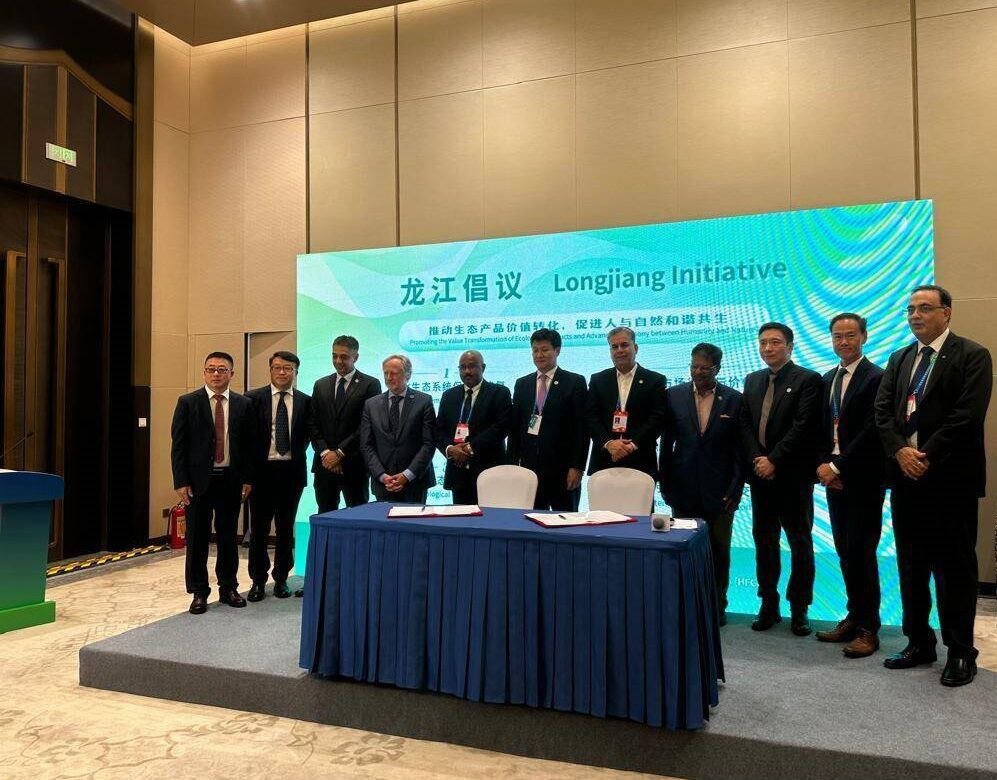
Tehran – The Ministry of Environment (DOE) has announced preparations to cooperate on the China-suggested Long Jang initiative, focusing on strategic partnerships in key areas such as biodiversity conservation, ecological product development, and environmental education.
Drawing on the unique capabilities of biosphere reserves, the initiative highlights the transformation of ecological values as an important strategy to link biodiversity conservation with sustainable economic development.
With the accelerated green transitions in various countries, biosphere reserves are increasingly recognized as a model for nature-based solutions, comprehensive livelihoods and sustainable markets, he added.
Bystanders of the Highlonging Forest Service, which was held in Hangzhou, China from September 22 to September 26 by the East Asia Regional Office of the United Nations Education, Science and Cultural Organizations (UNESCO), and the Haylonging Forestry and Grassland Bureau, jointly held by the Haylonging Forestry and Grassland Bureau, on September 22.
Following the event, representatives of the Heilongjiang Forest and Grassland Bureau and related Asia-Pacific organizations launched the Longjiang initiative. It focuses on deepening collaboration in six areas: strengthening scientific surveillance and research, developing scientific monitoring and research, building ecosystem brand systems, expanding market channels and expanding environmental technologies, and promoting environmental expansion.
The initiative calls for joint efforts to transform intangible ecological values into concrete forces supporting high-quality development, to build a shared future community of humanity and nature, and to contribute positively to achieving the global sustainable development goals, Isenlin.CN reported.
An Iranian delegation led by Shina Ansari, head of the Ministry of the Environment (DOE), took part in the fifth WCBR.
The global network of biosphere reserves, held every decade, comes together to identify priorities, enhance collaboration, and define future global action plans.
Addressing the fifth WCBR, Ansari expressed his readiness to promote cooperation with other countries in line with Hangzhou’s plan of action to promote twinning of biosphere reserves.
“We will develop intertwining mechanisms between Iran’s biosphere reserves and other countries around the world, further promoting collaboration in research projects, sharing expertise and knowledge, and boosting scientific visits.”
“We will highlight an ecosystem-based and community-centric approach to managing biosphere reserves, allowing these regions to expand their impact across borders and stimulate the surrounding area,” she added.
Unfortunately, “Iran’s biosphere reserves are affected by heat waves, water scarcity and climate change. They need solidarity, experience exchange and support from a global network of biosphere reserves.
We believe that UNESCO member states have the necessary capabilities to counter unilateralism, expand multilateralism and strengthen the global network of biosphere reserves,” Ansari slammed.
It is a common responsibility to preserve our common home, the global network of biosphere reserves. These areas are not only sanctuaries for nature, but also symbols of the peaceful coexistence of man and nature, and are bridges between modern science and traditional knowledge. She said they should be a center of hope and a sustainable future for our children.
Officials also elaborated on the country’s biosphere reserves, saying, “It has 13 biosphere reserves, including Iran, three wetland sites, two ocean and coastal sites, two deserts and arid places and six mountainous areas, making it one of the pioneering member states of the global network of biosphere reserves.
Biosphere reserves are not sufficient as they cover less than 4% of our national territory. Therefore, we are working to expand our network by establishing four more biosphere reserves. ”
mt/mg