
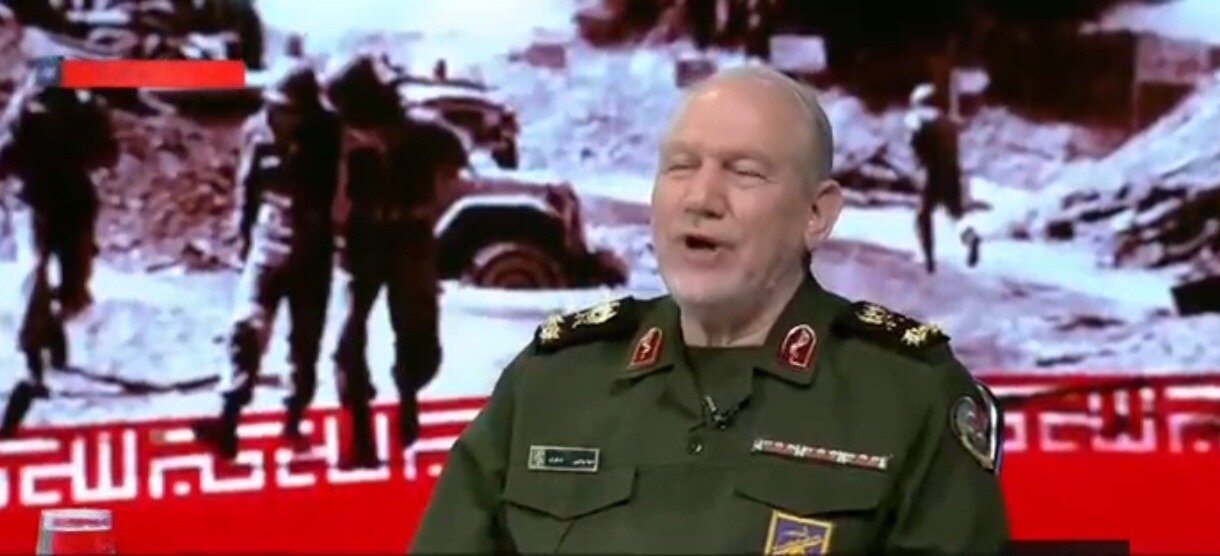
Tehran – The top military advisor to the leader of the Islamic Revolution welcomed the newly signed defence agreement between Saudi Arabia and Pakistan, describing Iran as a positive step in regional security, emphasizing Iran’s own commitment to military preparation and deterrence.
Major General Yahya Rahim Safavi said in a televised interview on Saturday that the “Strategic Mutual Defense Agreement” signed in Riyadh between Pakistan Prime Minister Shebaz Sharif and Saudi Crown Prince Mohammed bin Salman should be considered constructive.
“We value the treaty as positive. Pakistan has announced that other countries can participate. We encourage Iran to participate too,” Safabi said. “Iran, Saudi Arabia, Pakistan and Iraq were able to move towards a collective agreement. Although Saudi Arabia and Pakistan did not finalize such an agreement without US approval, they should declare their preparation as regional power.
The Saudi-Pakistan contract, signed on Saturday, September 17, vows that any act of attack on either country is considered an attack on both, and a joint response is necessary. The agreement, which both parties described as a “landmark,” is aimed at strengthening mutual deterrence.
The signature was convened on Sunday after a fatal Israeli airstrike on the leadership of Hamas in Qatar’s capital, one day before the emergency Arab Islamic Summit in Doha. The strike occurred amid continuing efforts by Qatar mediation to stop Israel’s war with Gaza.
Since the attack, several countries, including Iran and Pakistan, have called for the creation of regional coalitions to protect Muslim states from foreign-supported attacks. Pakistan’s Defense Minister Kawaja Asif also said that the attack on Qatar could not have happened without the US consent, urging Muslim countries to establish a NATO-style Islamic military alliance.
Despite the presence of major US military bases in Qatar, the strikes occurred, highlighting local accusations that allowed Washington to proceed with the assault.
In addition to supporting regional cooperation, Iranian commanders have repeatedly made full preparations for their forces to protect the country from any threat.
Major General Abdulrahim Musavi, the military’s chief of staff, praised the Islamic Revolutionary Guard (IRGC), particularly the aerospace forces, for their achievements during Iran’s recent 12-day defense campaign and Israeli invasion.
“These victories reflect the faith, innovation and resilience of commanders and fighter jets. They demonstrate that strategies of aggressive deterrence and decisive crushing are effective and beneficial,” Musavi said at a Sunday meeting with Major General Mohammad Pakpur, commander of Islamic Revolutionary Guard Corps (IRGC). He added that Iran continues to modernize its defense system, and coordination between the Army and the IRGC will ensure both deterrent and protection of national independence.
Army commander Major Amir Khatami reiterated his message, emphasizing that Iran will always monitor enemy activity and respond closely to miscalculations. Speaking at the closing ceremony of the Army’s 23rd Joint Cadet Training Program for Sacred Defense Week, Khatami reminded young officers of the Army’s mission to independence, territorial integrity and the Islamic Republic.
“The enemy will inevitably win, with the capabilities, capabilities and lofty ideals of the Iranian state. Our army is supported by the people and led by the wise leader of our commanders, and will always defeat the attacks and continue to do so,” Khatami said.
He also pointed to the crucial role of Ayatollah who had Ali Khamenei in the recent 12-day conflict, saying his strategic leadership ensured unity and success in the integration efforts of the US and Israel.
Iran’s military leaders emphasize that the country remains open to collective security frameworks while relying on its own deterrent capabilities. As Safavi highlights, Iran’s prospects for participating in Iran’s Saudi-led defense agreements could enhance regional security against foreign interference.