
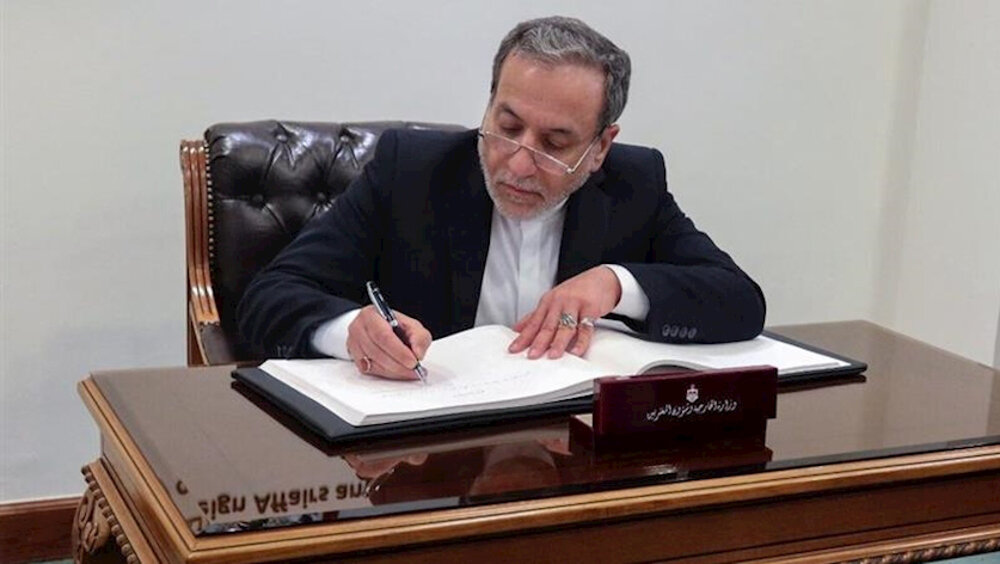
TEHRAN – Iran’s foreign minister has been dismissed as an unfounded recent claim by the US and its European allies that the UN Security Council has recovered over Tehran, which ended under the 2015 nuclear agreement.
In a letter to counterparts around the world, Foreign Minister Abbas Aragci said the claims by Washington, London, Paris and Berlin were “bassed, illegal and intruded” through the so-called snapback mechanism.
Araghchi emphasized that “there is no legitimate legal process that can revive the cancellation resolution, or else it would be nothing more than an effort to mislead the international community and impose a unilateral political agenda under the UN authorities’ take-up.”
He warned that such claims undermined the reliability of the Security Council and threatened the foundations of multilateral diplomacy. It cited Resolution 2231, which approved the Joint Comprehensive Plan of Action (JCPOA) in 2015.
“No country has the unilateral right to reinterpret or extend the provisions of the resolution,” he wrote.
The letter further argued that the United States, which left the JCPOA in 2018, and the E3, which is tolerated for having a “substantial default” of its obligation, were “completely disqualified” from calling resolution 2231.
Repeated categorical rejection of alleged reinstatement of Iran’s sanctions, he stressed that neither Iran nor UN member states are legally obligated to comply. Instead, he urged the government to dismiss such “illegal claims”, refused to implement them, defending multilateralism from “narrow political manipulation.”
Araghchi concluded with the warning that allowing such claims would seriously damage both the authority of the Security Council and the sanctity of the international agreement. While he affirmed Iran’s preparations to engage in diplomacy, Tehran vowed to adamantly defend its sovereignty and national interests.
With the 2015 nuclear agreement, Iran accepted restrictions on its nuclear program in return for lifting UN, the US and EU sanctions. Resolution 2231 set the contract and set the final deadline for the expiration of nuclear-related measures in October 2025.
However, Tehran has long argued that even under former US President Barack Obama, Washington resisted allowing Iran to fully benefit economically from sanctions relief. In 2018, the US unilaterally waived its contract and reimposed sweeping sanctions.
Iran gradually began to reduce compliance in steps consistent with the JCPOA after waiting more than a year for European parties to compensate for the US withdrawal.
The October 2025 deadline was intended to end the 10-year conflict and normalize Iran’s nuclear state. However, E3 works to block this by activating a dispute resolution mechanism for transactions. This is a step that can open up how sanctions will be reordered if Iran is deemed non-compliant.
Tehran rejected this approach and argued that its countermeasures are a legitimate response to meeting US and European commitments, and therefore E3 does not have a legal status that triggers mechanisms. Russia, China and several other countries have supported Iran’s position and declared they are unaware of attempts to restore sanctions that have been sacrificed.