
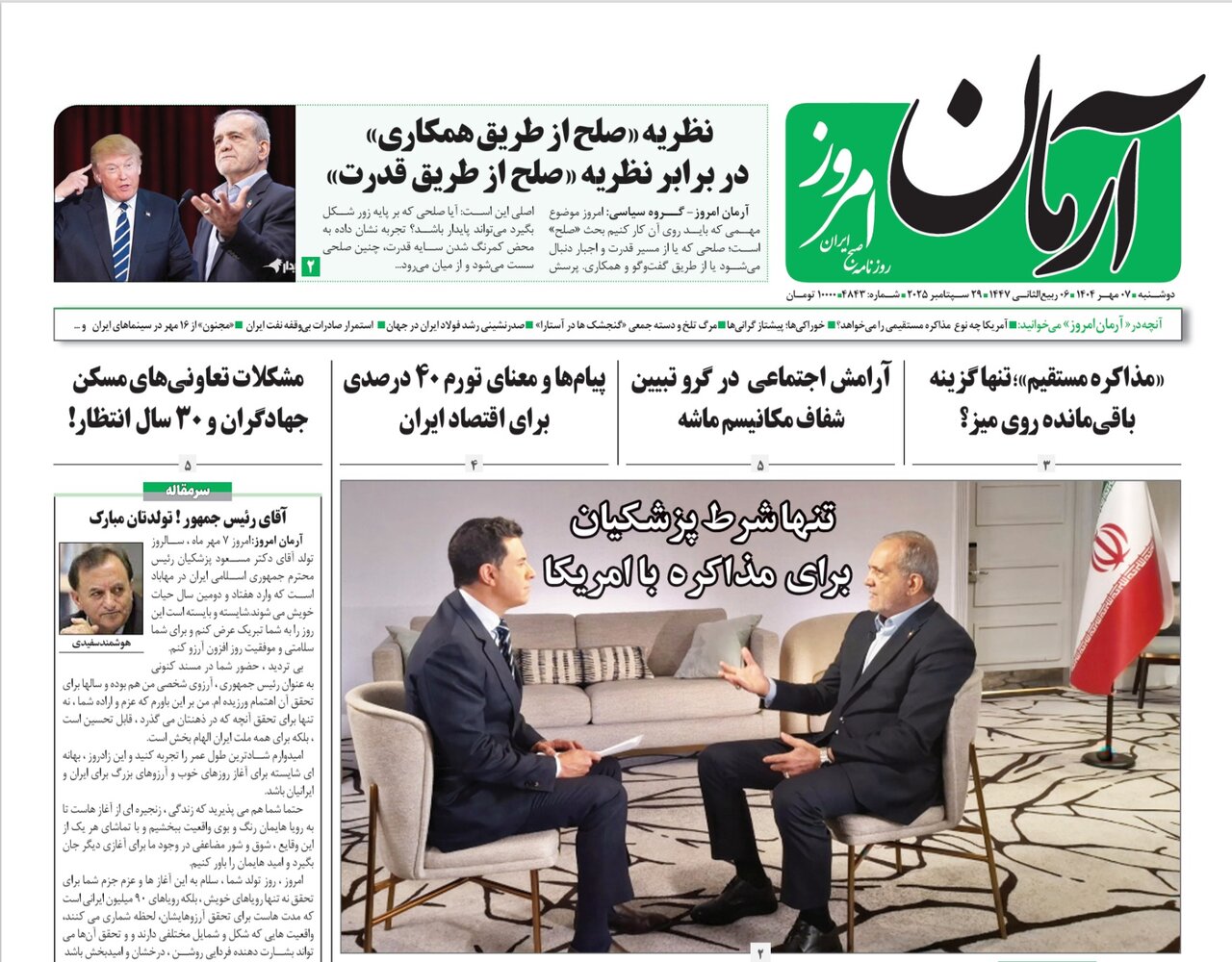
Tehran-Arman-E-Emrooz analysed the activation of snapback sanctions under strategies in the UK, France, Germany, European Troika and Iran, and the activation of snapback effectively shut down the JCPOA case.
Experts and analysts on foreign policy issues have warned that focusing on mourning or rejoicing the fate of the JCPOA not only does not benefit the country, but could lead to worsening political and social divisions. According to these experts, the new conditions need to adopt a comprehensive and multifaceted strategy in foreign policy to reduce the negative impact of JCPOA deaths and create new opportunities to secure national interests. Based on this view, three main issues need to be imposed on Iran’s foreign policy agenda. First, it strengthens the resilience and resistance of the nation, particularly in the areas of economy and people’s livelihoods. Second, increase the power and unity of the nation in all regions so that the nation can withstand external pressure. And the third is pursuing positive, intelligent and creative negotiations. The end of the JCPOA can be seen as a turning point in the path redefineing Iran’s foreign policy, rather than as a diplomatic failure.
Jam-e-Jam: Diplomacy and the Destruction of Global Consequences
In a memo, Jam-e-Jam tackled the betrayal of European troikas, saying: This failure was not only a warning to the future of the JCPOA, but also a clear symbol of betrayal by the European troika and America. According to President Pezeschkian, Europe is dishonest. He warned that activating snapbacks not only renders diplomacy meaningless, but also causes irreparable damage to global trust. Western action is a symbol of the collapse of multilateral diplomacy. Our country’s president and foreign minister say that the US was betrayed by withdrawing from the JCPOA, but Europe filled it by not facing Washington. This betrayal destroyed Iran’s trust in the West and forced Tehran to other measures. From a global perspective, this event is an international treaty alarm. If the Security Council cannot preserve the JCPOA, what are the hopes for future contracts?
Shargh: The need to redefine maximum pressure and strategy
With the UN sanctions officially returning, nuclear diplomacy has entered a new stage. The West is talking about ongoing negotiations by reviving all previous Security Council resolutions, but places heavy political, economic and psychological pressure on Tehran. The goal of this strategy appears to be to force Iran to accept a comprehensive package of Western demands in all areas. Iran is currently facing economic pressure from Western countries, with the US withdrawal from the JCPOA and its breach of its promises, as well as the experience of the 12-day war, deeply distrustful of the true intentions of the West. In these circumstances, Tehran must adopt a smart and multi-tiered strategy. A strategy that can use diplomatic capabilities to reduce pressure and prevent further isolation while maintaining deterrence and national interests. Reverting sanctions makes the situation even more difficult, but also provides an opportunity to rethink foreign policy and define more realistic mechanisms for interacting with global forces.
Iran: Strategies to address the outcomes of sanctions
In an interview with an Iranian newspaper, Rahman Gallemanpur, a well-known expert on international affairs, suggests a three-dimensional strategy to neutralize the segregation of Iran’s Western programme after the activation of European snapback sanctions with the help of Washington. Gallemanpur said: To end the isolation caused by UN sanctions and reduce its impact, we need to pursue a consistent strategy at three levels: domestic, regional and international. At the domestic level, it is essential to implement bureaucratic, administrative and legal reforms to promote investment attraction, boost the industrial sector, reform trade laws, reduce the areas of management corruption, and create a promising environment for business activists to find more opportunities and create a promising environment for economic development. At the regional level, it is important to strengthen our interaction and trade with them, given our willingness to maintain an environment suitable for cooperation with our neighboring countries, avoid tensions, and work with us. At the international level, it focuses on expanding cooperation with China, but not so much with Russia and strengthening relations with emerging powers. Implementing these strategies can gradually emerge from quarantine and reduce the impact of sanctions.