
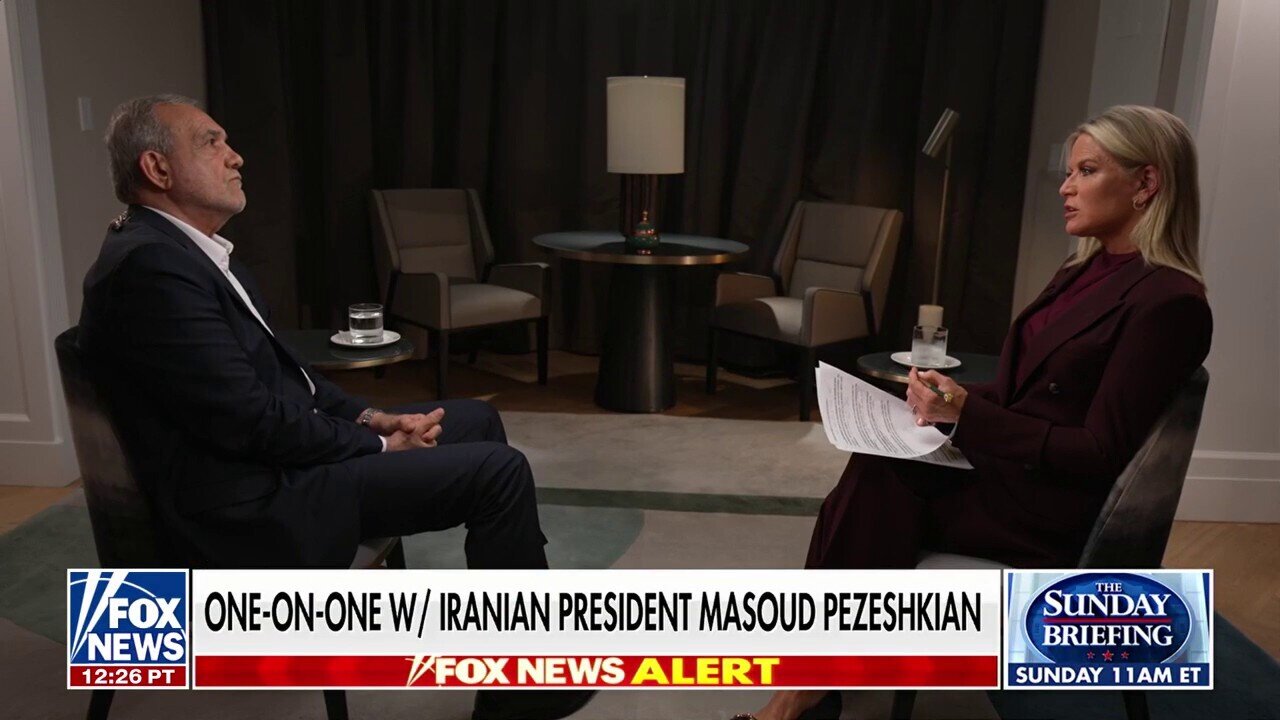
MADRID – An interview given by Iranian president Masoud Pezeshkian to US network Fox News represents a singular episode in both media and diplomatic relations between Iran and the United States. Beyond the usual dialectical conflicts that are characteristic of Western media, this conversation opens a window into examining Iran’s political and strategic evolution at a moment when its limitations and possibilities are being tested by external tensions and changes.
In Fox News, Pezeshkian constructs a story that leaves the epic conflict, offering a more complicated portrait of Iranian reality. He acknowledges difficulties and mistakes, but emphasizes that these are neither insurmountable nor conclusive. The nation can learn, adapt and advance projects despite economic sanctions, pressure campaigns and local tensions.
This measured perception of vulnerability, combined with a determined commitment to perseverance, undermines the narrative that reduces Iran to an inflexible or dogmatic actor. Discussional staging confirms that Iranian policies are heading towards a rebalancing strategy based on power rationality and calculated diplomacy.
An important aspect of this story is the clarity that argues that Iran’s political survival and regional influence extends to its ability to coheretically manage internal dynamics while also building a powerful, cohesive, dialogic external front. Therefore, this interview goes beyond mere communication needs. This is a strategic tool to adjust expectations and stabilize balance both within and beyond, and project a message of confidence and tenacity in national and regional projects.
Nuclear Issues: Sovereignty and Negotiation in the Game of Balance
As expected, the focus of the interview was Iran’s nuclear program, which for decades was at the epicenter of the conflict with the West. Pezeschkian reaffirms the state’s rights to civilian nuclear energy, citing international norms and existing multilateral agreements. At the same time, he alienates himself from accusations of military intent, labels them baselessly, and repeats his commitment to peaceful policies in this area.
His discourse on negotiation follows the logic of mutual respect and reciprocity, and emphasizes that progress requires a genuine willingness by the parties to abandon unilateral measures and coercion, starting with the suspension of oppressive sanctions.
This approach constitutes a political manipulation aimed at keeping Iran open while still keeping the channel open, demanding uncompromising conditions. This complexity is essential to understanding modern dynamics. The country is moving towards sustainable negotiations without bringing its central strategic privileges.
Furthermore, Pezeshkian emphasizes the international legitimacy of Iran’s private programmes, as opposed to what he defines as “a political attempt at demonization.” t
Here, the discourse reflects strategic calculations that balance the need to maintain the integrity of national projects with the urgency of access to economic and political interests through negotiation. The way Pezeshkian weaves these arguments reveals the sophisticated understanding of international chess boards and the importance of carefully managing both dimensions.
Regional Restructuring: Rhetoric Beyond Conflict
Also note that Pezeschkian has shifted its focus to regional disciplines, and that Western Asia is currently in a union characterized by multifaceted threats and the instrumentalization of conflict to advance external agendas. Within this framework, he predicts that stability is possible only through sovereign cooperation between regional states.
The proposal underscores the need to rethink dynamics rooted in sectarian hostility and artificial division, turning them into practical mechanisms that prioritize political autonomy and collective security. Essentially, it outlines a model of flexible, sovereign alliance that relies on historical differences and willingness to overcome external competition.
It is noteworthy that Pezeshkian makes this vision clear not only from a realistic perspective on interstate relations, but also acknowledges the diversity of non-state actors and fragmented governments. He emphasizes that responses to threats cannot be reduced to destructive wars, but that they require political adjustments and practical consensus.
This often-eramic perspective in western coverage accurately reflects Iran’s longstanding strategy of building a network of alliances that can create stability and deterrence in the face of Israel’s superiority and US strategy.
On economic issues, Pezeshkian remains unsteady from the reality of Westen sanctions, which undeniably affected Iran. However, he uses a narrative that emphasizes avoiding casualties and deepening adaptability, innovation and self-sufficiency within an autonomous developmental framework.
The story depicts popularity and national resilience, in which overcoming economic adversity is associated with rejecting external dependencies. In this view, the economy is not merely a technical issue, but an essential vector of sovereign policies that justify national projects and increase regional influence.
The gradual approach to innovation, industrial development and emerging markets is presented as an important pillar that allows Iran to maintain a modest, but nationally rated growth profile that projects strategic continuity while navigating economic pressures.
Governance and internal political unity
With regard to internal politics, Pezeshkian offers a multi-but-cohesive conceptual vision of Iranian society. This is a space in which broad consensus on fundamental principles coexist with the implicit recognition of mechanisms designed to promote stability.
This account provides a richer and more dynamic understanding of the political system and moves beyond the simplification of a “static monolithic regime.” The emphasis on governance and institutional innovation arises as key factors to ensure medium-term and long-term stability.
The interview emphasizes clear bets. A country that seeks to reconstruct Western perceptions to integrate space for strategic negotiations without abandoning the red line. Communication through public and hostile outlets reflects active efforts to ease tensions and create intervening spaces that can promote negotiation processes in transformative environments.
This political manipulation embodies the conceptual and practical evolution of Iranian foreign policy. The ability to regulate discourse and deal with unconventional and receptive audiences is a valuable tool and could potentially be converted into diplomatic progress, as long as the country’s core red line is respected.