
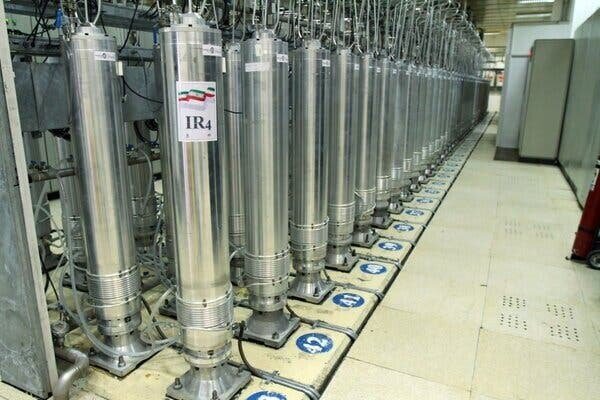
LONDON – Sanctions lifted against Iran under the 2015 nuclear deal were snapped against Iran in the middle of the night on September 26th. Sanctions aim to put strong pressure on the Islamic Republic.
These sanctions were activated by the European Trio (E3) prior to the nuclear deal, officially known as the Joint Comprehensive Plan of Action (JCPOA), but expired on October 18, 2025. The US is enforcing blockades on Iran and countries and businesses that deal with Iran.
European countries such as the UK, France and Germany are less powerful than the US when it comes to corporate pressure. Returning to snapback sanctions shows weakness. But they have no impact on Iran’s nuclear program.
The joint Israeli-US war with Iran in June did not lead to a change in Iran’s position. Iran has legal rights to a peaceful nuclear program, as guaranteed by international law and treaties, including the Nuclear Non-Proliferation Treaty (NPT). Iran committed to a nuclear deal in 2015, but the West, particularly the US, broke it. The United States was the first to leave the JCPOA.
Iran is still part of the IAEA and is still in negotiations. But these talks are now part of a long and weary struggle that cannot last forever. The US-led West will make a decision. Europe only follows the American lead. If the US is tough, Europe is tough. If the US is flexible, Europe continues. Europe has no real independence in these issues.
Iranian leaders always had a clear vision. Discussions with the US are pointless. They are a means of conquest, and they are not real negotiations, as their outcomes are pre-determined. The goal is to impose these outcomes and force Iran to abandon its nuclear program. They also do not recognize the rights of the negotiating parties, which is Iran. In particular, America does not comply with the outcome of the contract and can waive them at any time. Negotiations have also been used as a deception and have proven to be prepared for an attack.
What the West really wants to stop is Iran’s growth potential, its missiles and its impacts on the region. The US wants to maintain its control and power, especially in West Asia. Iran’s resistance to this is based on its identity as an Islamic Republic. If Iran abandoned this, it would mean that it had abandoned the very foundation of its existence as an Islamic Republic.
The West attempted a 12-day war, but they found it impossible to defeat or control Iran. They also realized that such a war would hurt our interests, especially Israel. So they are unlikely to try war again. Unless they want to take the big risk of using prohibited weapons like nuclear weapons, they want it to make Iran give up.
If that doesn’t happen, all current actions are just a way to apply pressure. Ultimately, the West must accept that Iran is unable to stop progress in nuclear technology and that Iran is an influential reality that must be recognized.