
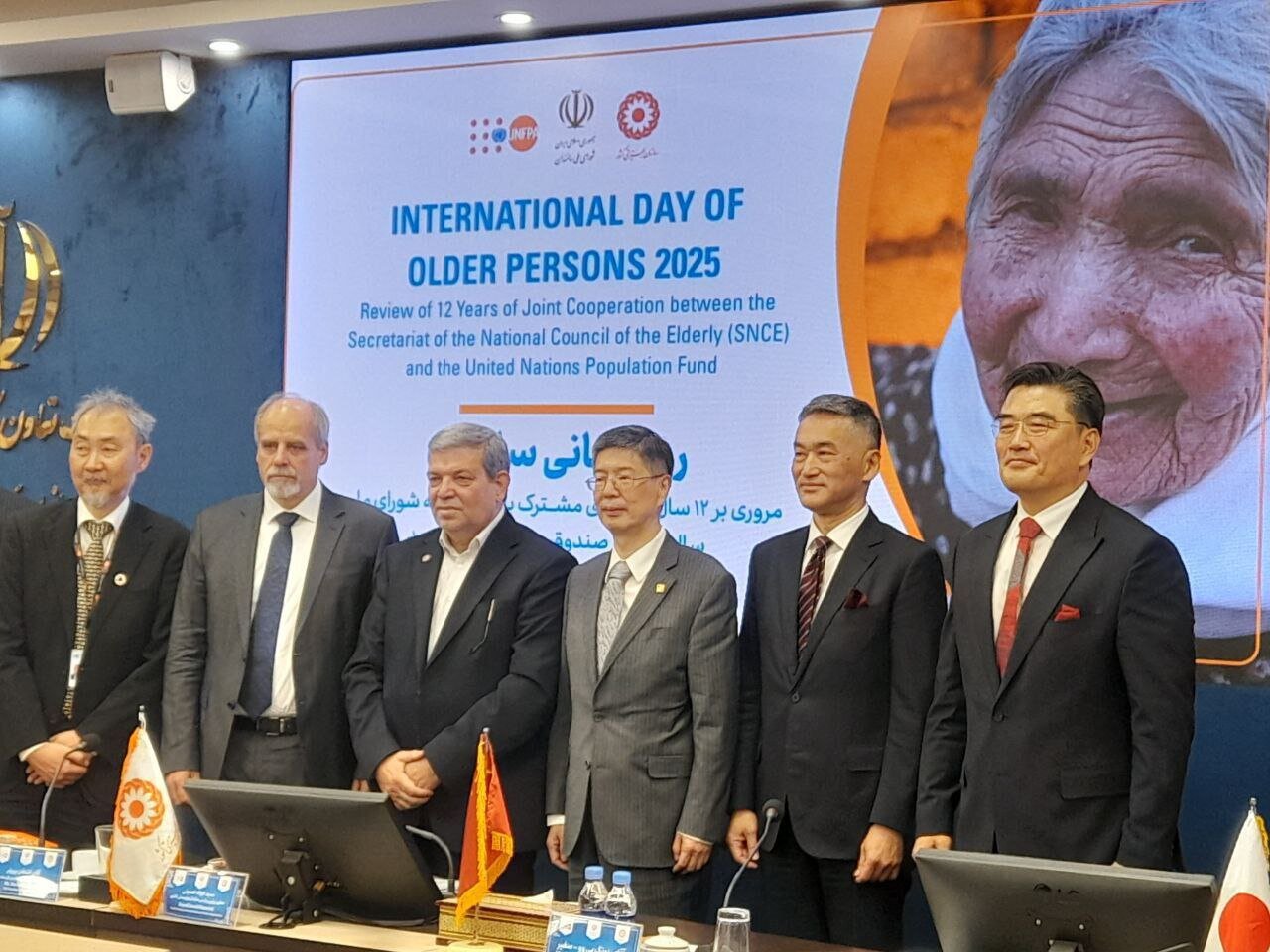
TEHRAN – International Seniors Day was observed in Tehran on Wednesday, October 1st in front of Chinese, Japanese and South Korean ambassadors and UN representatives.
UN International Seniors Day 2025 was observed in “Seniors driving local and global behavior: Our Aspirations, Our Happiness, and Our Rights.” Far from being a beneficiary, older people are the driving force behind progress and contribute to their knowledge and experience in areas such as health equity, financial well-being, community resilience, and human rights advocacy.
Working on the event, Ohashi, president of the United Nations Population Fund (UNPFA), said, “We will pay attention to the issues of aging in society, fighting ageism, working to create an environment that empowers and empowers the elderly.”
Given the feminization of aging, gender challenges must be considered. Health inequality and discriminatory practices hinder social participation among older people. Therefore, he said older women need to be able to fully enjoy social benefits, the IRNA reported.
He added that developing an environment for the elderly needs to increase social engagement among older people.
He praised Iran’s efforts in key services and pursuits, highlighting the issue of official women by developing a roadmap for aging.
Iran’s UN resident coordinator Stephen Pleenor said on his part.
People all over the world can live up to 60 years. Iran is a country that is rapidly aging due to increased life expectancy. Iran’s life expectancy is over 70 years.
It is estimated that 30% of the world’s population will become elderly by 2050. Without strategies, he noted, these rapid demographic changes pose great challenges.
Referring to Article 29 of the Iranian Constitution, which emphasizes the health of older people, Prienor has stated the UN pledge to ensure that no one is left behind in sustainable development.
On his side, Japan’s ambassador to Iran said, “Japan is one of the oldest countries in the world, with 29% of its population being elderly. We have the longest life expectancy. Japan is at the forefront of the challenges of Azing countries.
Japan is a pioneer in the deployment of robots, artificial intelligence and technology for the care of the elderly. Japan has developed unique health insurance coverage, making health care free for those over 70 years old.
Taehran’s South Korean ambassador Kim Jun-Pee also addressed the event, pointing out that “olds are not mere beneficiaries of services, but are active contributors to society.”
By 2050, the population over the age of 60 will reach 2 billion, affecting the healthcare system and leading to social challenges.
Last year, South Korea had the lowest child population, and its elderly population is growing rapidly. We have taken steps to address this. For example, it sets up a dementia counselling center and creates 1 million jobs each year for the elderly.
The country has launched an artificial intelligence-based care service project in its neighbourhood, officials further noted.
On his part, Iran’s Chinese ambassador, Konpei, has expressed China’s readiness to cooperate with Iran in economic growth. Officials said, “China has provided care services to 114 million people over the age of 60. The country is constantly trying to provide social care, and is reforming the system of serving people with disabilities.”
At the end of the ceremony, a poster of health support for people with disabilities and seniors in China was released.
The National Age Week has been observed in Iran from September 30th to October 6th, focusing on improving the mental and physical health, social participation and quality of life in older adults.
This year’s theme is “maintaining dignity and improving the health and quality of life of older people using a neighborhood-oriented approach,” the IRNA reported.
With the country’s senior citizens rapidly increasing, Iran is expected to enter the population stage between 2041 and 2046, with nearly a third of its population being over 60 by 2050.
Recent reports show that the number of Iranians over the age of 65 is currently 7.5 million, accounting for less than 10% of the country’s total population.
The number of elderly citizens in the country has increased by 3.62%, five times the total population growth rate, at 1.24%. For the time being, older women account for 52.3% of the total population, outweighing men (47.7%).
This year, in line with this week’s theme, the program is focused on three key areas. It promotes training and awareness, promotes respect and social participation, and promotes physical, mental and social well-being in older people. Therefore, a specific theme is assigned for each day of the week.
Tuesday, September 30th, “Aged People and Social Status”
Wednesday, October 1st, “Seniors and Physical Health”
Thursday, October 2nd, “Aged and Mental Health”
Friday, October 3rd, “Seniors and Family”
Saturday, October 4th, “Aged people and social participation”
Sunday, October 5th, “Seniors and Social Support”
Monday, October 6th, “Aged people, spirituality, life expectancy”
Webinars, educational workshops, poster development, educational media, media campaigns, cultural and social festival organizations, light physical training, meeting successful seniors, and providing free medical and consulting services at health stations are one of the programs offered per week.
mt/mg