
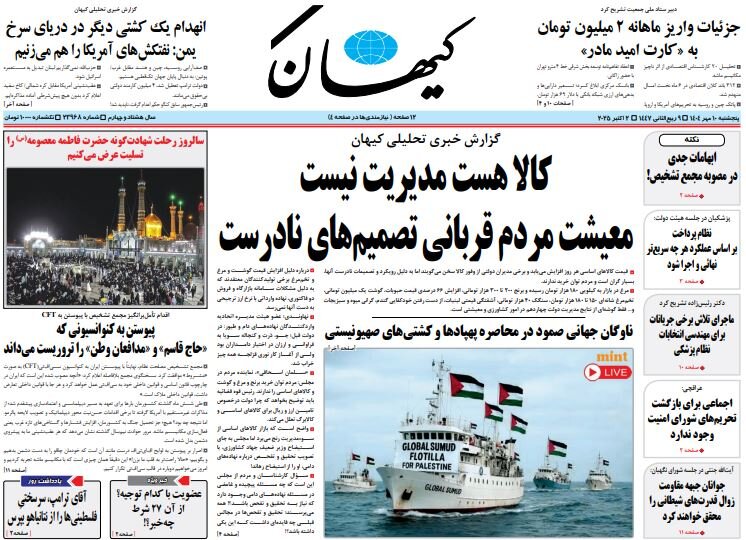
Tehran – In a memo, Kayhan discussed the activation of snapback mechanisms through the European trio (UK, France, Germany) and Iran’s nuclear program. Rather, it accelerates the collapse of surveillance.
Snapbacks do not limit Iran’s nuclear program. Accelerate the collapse of surveillance. Snapbacks undermine it rather than building on the recent Iranyaia framework that could restore transparency. By closing the door to diplomacy, we ensure that Iran’s nuclear program is merely more secretive and fragmented. Russia and China have completely rejected moves by the three European countries, saying that parties violating the treaty cannot legally call that provision. The Security Council’s authority to fulfill its two veto has announced that it will not implement snapbacks. This means that not only will they refuse to comply with sanctions, but even the Security Council Committee is likely to be suspended. Perhaps most importantly, many Iranians have come to bitter conclusions. Whether Iran remains in the NPT or whether it works with inspectors, the US and Israel may attack again. The lesson from Iran is that international rules and institutions are no longer important. Therefore, Tehran must act in its own national interests.
Iran: How to get out of the crisis
In an interview with an Iranian newspaper, International Relations Professor Dr Seyyed Jalal Dehghani Firouzabadi discussed how to navigate the crisis after snapback. He states: The way out of crisis requires a multifaceted, careful, progressive strategy. A fundamental and emotional solution increases the risk of escalating conflict. Therefore, necessary measures include implementing “smart forced diplomacy” and focusing on “preventing escalation of crisis” for the key months ahead. At the same time, the greatest exploitation of relations with Russia, China and other non-Western partners to neutralize sanctions and alternative economic projects by strengthening economic diplomacy. In addition to these, domestic resilience and military deterrence, particularly increased air defense, should be prioritized to increase the costs of military options for Iran. If these measures were implemented simultaneously and in a coordinated manner, they would increase the likelihood of overcoming the current crisis and could turn the threat into diplomatic and economic opportunities.
Shargh: The impact of CFT on Iran’s diplomatic strategy
In the commentary, Shargh discussed the consent of Iran and the members of the effectiveness council participating in the CFT, writing: Experts believe that implementation of the FATF standards will promote access to the global banking system and restore banking relations. However, this decision dimension is not only economic. At a political level, agreeing to the CFT could be a positive signal for the international community, especially for European countries that invite Iran to comply with global standards. In a situation where snapback sanctions against Iran have been activated and the atmosphere of diplomatic relations is tense, such a decision indicates that Tehran is ready to engage constructively with the international system in line with its interests. This message is particularly important for countries where there are still openings for economic interaction with Iran. The approval of the Convenience Council can pave the way for new consultations with some regional and European partners and limited banking and financial agreements.
Donya-e-eqtesad: Create opportunities or kill opportunities?
The activation of snapback mechanisms and the revival of secondary sanctions on Iran quickly spread to the economy and everyday life of Iranians. In this context, banks and financial institutions from various countries, from Emirates and Omann to Turkey and Europe, had to consider more carefully the origins of Iranian assets and financial transactions. This situation creates a serious dilemma for many Iranian economic stakeholders. Block resources and assets, and accept the risk of transferring capital to the country. This trend could be the beginning of a new wave of reverse financial transitions at the billion-dollar dollar scale. Returning to the Iranian capital country is a reality sooner or later, and this trend is at the same time the biggest opportunity and most serious threat to the Iranian economy. If the economic governance system is not reformed, this wave can lead to unlimited inflation, favoritism, and greater social disparities. However, if reforms are implemented, the return of capital will serve as a springboard for infrastructure development, bringing Iran’s economy closer to global standards. The country is currently facing a fateful choice: create opportunities and opportunities for burning?