
Tehran – The Hoover Institution, affiliated with Stanford University in the US, has been one of the major centres of anti-Iranian discourse production in recent decades.
Since the Cold War, the think tank has a mission to shape US policies towards independent countries through analysis and recommendations. Ayatollah Seyed Ali Khamenei, a recent report on the leadership of the Cultural and Islamic Revolutions, is also within the framework. It attempts to portray the ideology of the Islamic revolution as ineffective and portrays the ideas of Iranian leaders as unrelated.
However, this report is less of a scientific analysis than an unintended acceptance of Western fears about the soft power of the Islamic Republic. The author attempts to portray the image of Iran’s crisis-hitting image, but presents a different reality within the country, within the region, and even in the West. The Islamic Revolution and its leadership remain the norms of resistance to domination and Zionism.
Redefinition of Independence
The Islamic Revolution of 1979 was more than a government change. It was the regeneration of Iranian and Islamic identities that have been marginalized for decades under Western dependence. The blind imitation of the Western Shah dragged national culture into decadence and consumerism. With the leadership of Imam Khomeini, the people of Iran have broken these chains and redefine independence not only in politics but also in culture and thinking.
Imam Khomeini warned from the start that if cultures do not achieve independence, political and economic independence cannot bear it. For this reason, he placed the cultural revolution at the forefront of priorities. Ayatollah Khamenei continues this path, repeatedly emphasizing that “culture is the foundation of everything” and that if society’s culture is not reformed, politics and economy will also be damaged.
Contrary to Western propaganda, this outlook is not about suppressing culture, nor about liberation from intellectual and cultural colonialism. It is the same colonialism that has acquired a national lifestyle through media, universities, entertainment industry and consumerism.
Hoover’s analysis is full of contradictions. One section argues that the Islamic Republic ideology is not attractive to the majority, but at the same time, Iranian leaders warn that they are exporting the ideology to the West through vast cultural institutions and “hidden” budgets. Why are there such important concerns and warnings when the Islamic Republic ideology really fails and ineffective?
Another example involves distortion of the leader’s ratio phors on “weeding.” In reality, this expression refers to cultural cleansing and protective values, the processes implemented by all political systems. In the US and Europe, slight criticism of Zionism or opposition to global capitalism is quickly censored. Isn’t this again a form of “cultural weeding” when French police attack anti-war demonstrations and American media suppress news of Israeli crimes? The contradictions of the Hoover Agency reveal that the real problem lies not in the way but in the principles of cultural independence in Iran.
The Cultural Revolution is Iran
Over the past 40 and a half years, Iran’s cultural revolution has brought significant achievements and milestones across a variety of sectors.
1. Science and Technology: Iran is today ranked among the top 15 countries in scientific production in the world. He is one of the region and world leaders in areas such as nanotechnology, biotechnology, stem cells, nuclear medicine, and defense industries. These results are not the result of imports, but rather the result of developing a young, committed, confident generation.
Despite all sanctions and pressure, Iranian universities and research centres have managed to localize the cycle of knowledge and technology production.
2. Integration of Resistance: The Islamic Revolution has transformed the discourse of resistance to colonialism and Zionism into inspiration from other countries.
Resistance movements in Hezbollah in Lebanon, Hash al-Shaabi in Iraq, Ansarrah in Yemen and other regions are all heirs to the cultural heritage of the Islamic Revolution. These groups embody not merely military movements, but new cultural and ideological identities that the Islamic Revolution taught them.
3. Islamic Awakening and Beyond Western Asia: The waves of Islamic Awakening in the 1980s and 1990s were inspired by Iran’s Islamic Revolution. This awakening was then seen in the Latin American movement for justice. There, independence-seeking leaders such as Chavez and Morales have publicly mentioned Iran and its leadership as a model of resistance.
Even in Europe and the United States, movements such as “Occupation Wall Street” and anti-capitalist protests unconsciously rescue the same global waves that sought for the same global justice fired up by the Islamic revolution.
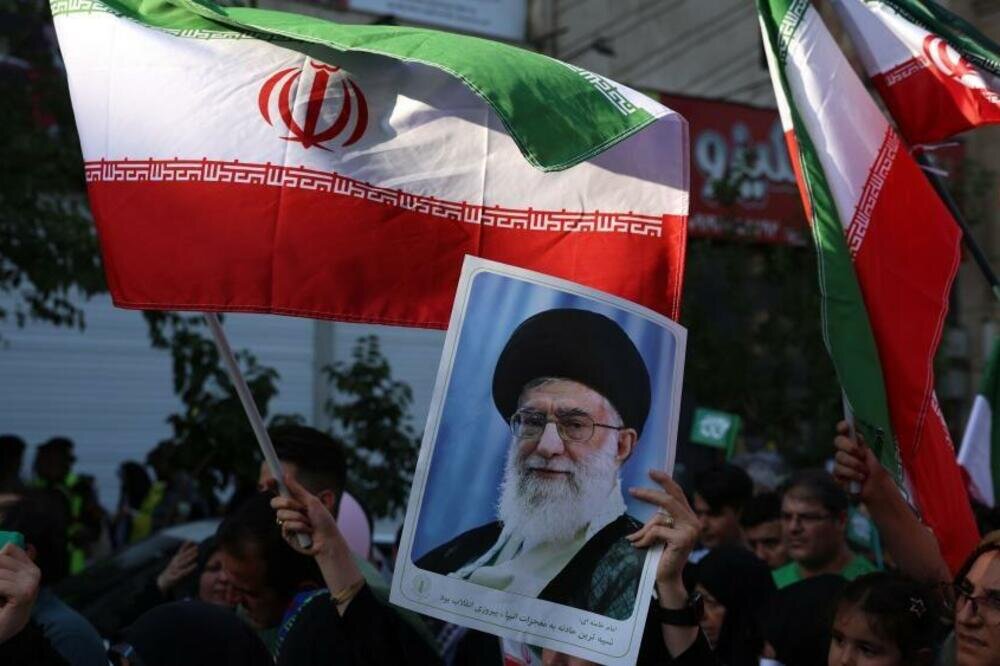
4. Global support for Palestine: In recent years, large protests in support of Palestine have emerged in the European and American scene, particularly after the Gaza War. The Iranian flag and portrait of Ayatollah Khamenei highlights Iran’s position as the standard ruler of young Europeans and Americans against oppression. This is a phenomenon that even Western media could not hide. Iran has become a symbol of global resistance.
Personal influence of Ayatollah Khamenei
Ayatollah Khamenei is more than just a political leader. He is an intellectual, cultural and ideological authority across the community. His charismatic personality extends beyond Iranian borders. His immobilization over Western and Zionist hegemony is the main reason behind the rage of think tanks like Hoover.
This charismatic influence is particularly visible among younger generations. Contrary to the Western assumption that Iranian Generation Z is being separated from the revolution, recent events have proven not the case. Young people look different from traditional norms and show dedication to their leader at key moments. After a 12-day war between the Zionist regime and Iran, a wave of solidarity and unity wiped out the country. The young people expressed their support for resistance by reposting images of the leaders on social media.
Even in the Islamic world, Ayatollah Khamenei is recognized as the “spiritual leader of resistance.” His influence can be compared to charismatic leaders of history such as Gandhi in India and Nasser in Egypt, with the difference that he was able to extend this influence across borders and turn it into a global movement. This unique position forces agencies like Hoover to try and assassinate characters through biased reporting.
Over the past decades, the West has spent billions of dollars on cultural projects against Iran, from satellite TV channels and media campaigns to economic sanctions and cyberspace invasions. But what was the outcome? Iranian society continues to assert independence and justice, and instead of surrendering, the younger generation is moving towards resistance.
At the regional level, US and Israeli projects have failed one after another. The occupation of Iraq and Afghanistan not only failed to establish permanent rule, but also reinforced the discourse of resistance. Today, anti-Americans and anti-Zionists are growing not only in the Middle East but also in Latin America and Africa. All of these are reflections of the soft power of the Islamic Revolution.
The Hoover Report repeatedly speaks of freedom and democracy, but why is it silent about widespread Western oppression? Why did American students encounter police violence when they opposed the Gaza War? Why do major western media censor small criticisms of Israel?
This is Western cultural hypocrisy: freedom of itself, oppression for others. Despite its internal challenges, Iran was able to maintain its political and cultural independence and did not allow it to sacrifice its value for foreign interests.
Ultimately, Hoover’s report is less of a scientific critique than an unintended acknowledgment of the Islamic Revolution and the power of Ayatollah Khamenei’s leadership. If Iran’s cultural revolution was indeed ineffective, we don’t need this amount of analysis, warnings, or counter budget. In reality, the West fears Iran’s cultural influence and the charisma of its leaders.
Today, the Islamic Revolution is the global standard bearer of oppression and resistance to Zionism. Ayatollah Khamenei is not only an Iranian political leader, but also an intellectual and cultural authority for generations around the world who seek justice and freedom. This reality paves the way for a bright future for Iran and the free state, ensuring an inevitable defeat in the West.