
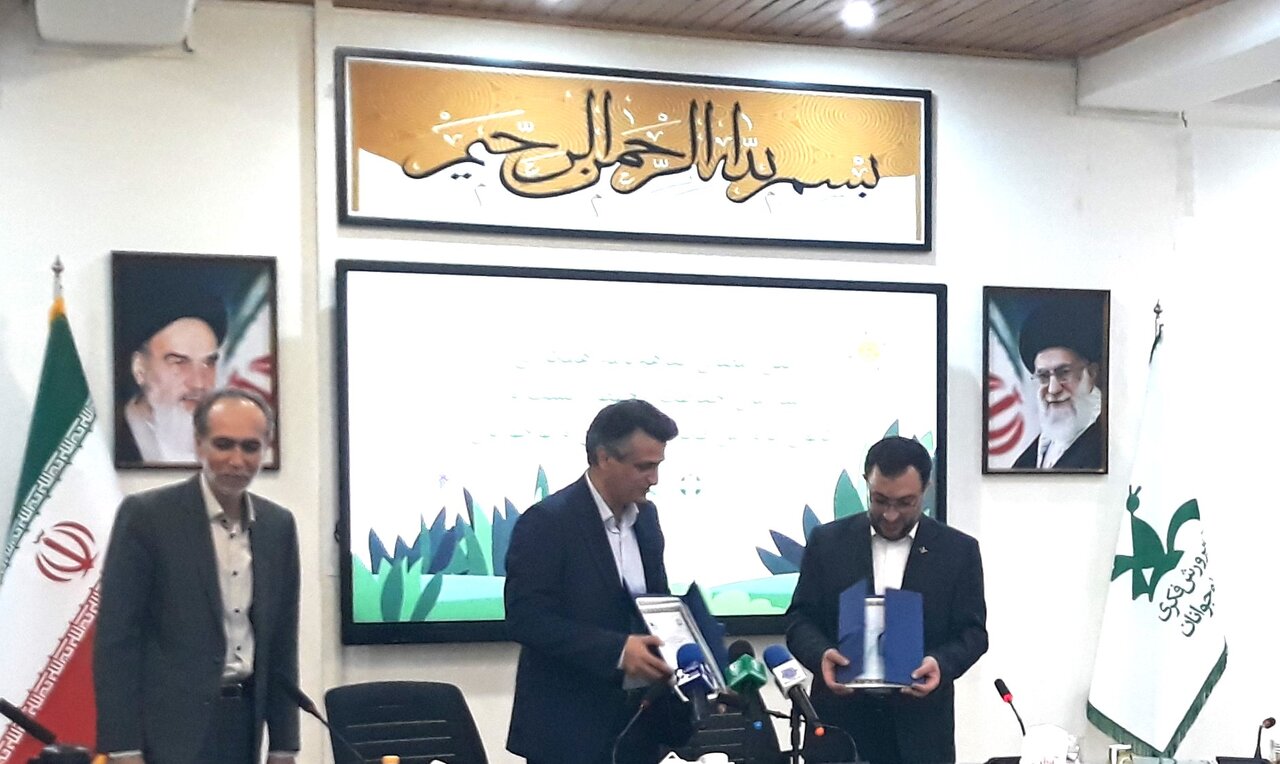
TEHRAN – The Department of Environment (DOE) and the Institute of Intellectual Development of Children and Youth (IIDCYA) signed a memorandum of understanding to promote environmental protection among children and youth.
The MOU was signed on Wednesday at IIDCYA’s location in Tehran by Hadi Kiadaliri, DOE Deputy Secretary for Education and Public Engagement, and IIDCYA Director Hamed Alamati.
The signing ceremony was held simultaneously with the second day of National Children’s Week, which will be held across the country from October 7th to 13th under the theme of “Children, the Joy of Life.”
National Children’s Week is celebrated each day by focusing on a specific topic.
October 7th (Tuesday) “The Beautiful World of Families and Children,” October 8th (Wednesday) “Earth, Our Home,” October 9th (Thursday) “Life, Play, Health,” October 10th (Friday) “Comet” (Iran and Ghana). October 11th (Saturday) “Books, the Wonderful World of Children”, October 12th (Sunday) “The Sweet World of Children with Special Books Needs” Monday, October 13: “Children and the Modern Scientific World” Technology”.
As education plays an important role in promoting environmental protection, the Ministry of the Environment plans to implement a national project aimed at training environmentally friendly students, called “environmental helpers”, in 20 percent of elementary schools nationwide.
This project was launched with the cooperation of medical professionals to coincide with the start of the new fiscal year on September 23rd.
IRNA aims to identify students interested in environmental issues and encourage them to participate in working groups focused on environment-related subjects, IRNA quoted DOE official Mohammad Medadi as saying.
These students will later train other students to increase environmental awareness. The project is envisaged to cover all schools in five years, the official added.
Informal education in the form of extracurricular activities is also planned. As a result, the development of a national environmental theme is on the agenda. He further stated that this will contribute to creating a roadmap for formal environmental education, depending on which relevant content is included in the curriculum.
To inculcate environmentally friendly behavior, environmental education should be introduced from an early age, when children are in elementary school or even pre-school. However, there will also be some challenges. Education is a continuous process. Temporary or short-term courses do not induce long-term behavioral changes. Medadi said it will take time to see positive results.