
TEHRAN – Following a strongly worded statement from Iran’s Foreign Ministry, the speaker of the country’s parliament has now appeared to condemn the joint statement issued by the foreign ministers of the Persian Gulf Cooperation Council (GCC) and the European Union regarding Iran’s three islands in the Persian Gulf: Greater Tunb, Less Tunb and Bu Musa.
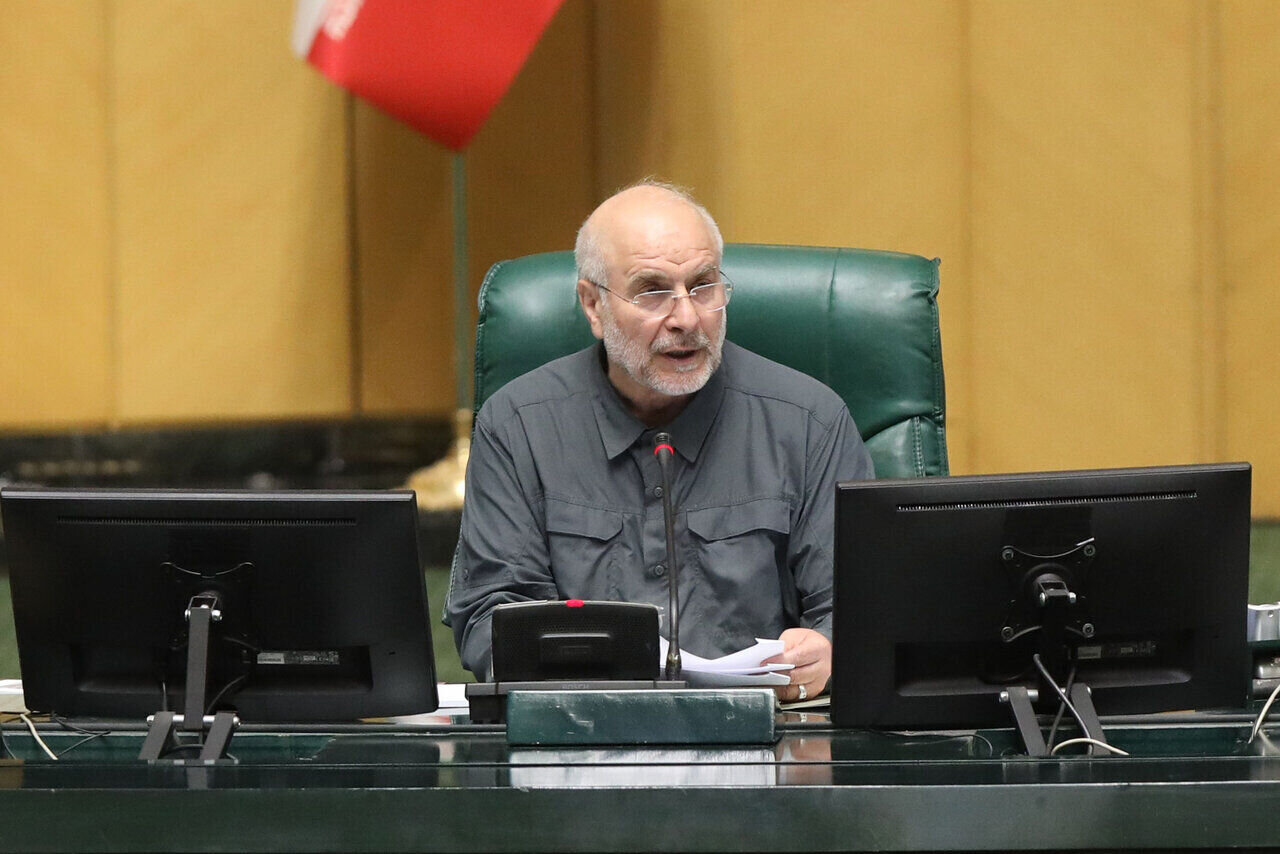
“We categorically condemn Iran’s rehashing of baseless claims to the islands of Greater Tunb, Lesser Tunb and Abu Musa,” Mohammad Bakher Qalibaf said in a public session of parliament. He added that Iran will not show “appeasement” towards baseless allegations.
In a statement issued at the end of the 29th joint GCC-EU ministerial meeting, both blocs called on Iran to end its so-called “occupation” of three Iranian islands that have belonged to Iran for centuries before the UAE existed.
Khalibaf said Iran’s territorial integrity “has been sealed and protected by the blood of hundreds of thousands of brave young people of this country.” His remarks came after Foreign Ministry Spokesperson Esmail Bagai said the GCC-EU statement amounted to a threat to the country’s sovereignty.
Iran’s diplomatic services also had Deputy Foreign Minister Majid Takhteh Ravanshi convey the country’s strong protests to EU diplomats. He convened the ambassadors of European Union countries in Tehran on Tuesday, a day after European Union countries and Persian Gulf officials convened in Kuwait.
Foreign Minister Takht-e-Ravanshi, in a meeting with summoned ambassadors, reaffirmed Iran’s indisputable and enduring sovereignty over Abu Musa, Lesser Tunbu and Greater Tunbu, calling these islands an integral part of the country. He strongly condemned the EU’s politicized and biased stance, saying the EU’s support for the UAE’s “groundless” claims to the islands violates the principles of national sovereignty and territorial integrity.
The Abu Musa Islands and Greater and Lesser Tunb in the Persian Gulf have historically been part of Iran, evidence of which has been discovered and supported by countless historical, legal, and geographical documents from Iran and other parts of the world. However, the United Arab Emirates has repeatedly claimed sovereignty over the islands.
The islands came under British control in 1921, but Iranian sovereignty over them was restored on November 30, 1971, one day after British troops left the area and two days before the UAE became a formal federation.
In statements issued in Kuwait, both blocs also made interventionist statements about Iran’s nuclear and missile programs. They “stressed the importance of ensuring the peaceful nature of Iran’s nuclear program” and accused Iran of regional escalation through its ballistic missile and drone programs.
Foreign Minister Takht-e-Ravanshi addressed allegations regarding Iran’s missile program, condemning it as interference in Iran’s internal affairs and denying false and exaggerated stories. He emphasized that Iran’s locally developed defense capabilities, including its missile program, are an inherent right to self-defense and contribute to regional security and stability.
The Deputy Foreign Minister also referred to recent moves by the UK, France and Germany (collectively the E3) to return UN Security Council sanctions against Iran under the so-called snapback mechanism of the 2015 nuclear deal, formally known as the Joint Comprehensive Plan of Action (JCPOA).
He said the EU, as coordinator of the JCPOA Joint Committee, had failed to live up to its commitments along with the E3 and instead abused the dispute resolution mechanism outlined in the agreement, thereby obstructing diplomacy. They should take responsibility for their destructive actions instead of repeating commonplace and completely false claims, Takti Ravanshi added.
The recent controversial statement is the latest in a series of escalating steps Europe has taken against Iran in recent years. The reimposition of snapback sanctions and upholding of the UAE’s illegal claims to Iranian territory follows tough sanctions by European countries against Iran over its disputed war with Ukraine. Western countries claim that Iran is supplying weapons to Russia for use in Ukraine, but Iran rejects the claims and has asked Western countries to provide evidence. To date, neither the Europeans nor their main patron, Washington, has provided such evidence.