
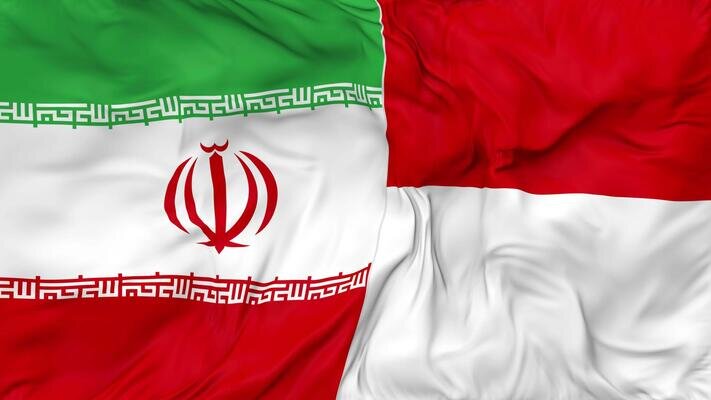
TEHRAN – When I was appointed Indonesian Ambassador to Iran by President Prabowo Subianto, the message I received was clear. The aim was to advance Indonesia-Iran relations in all areas and navigate the mutual interests of both countries in a delicate geopolitical situation.
I believe strongly in this goal and the benefits it brings to both countries. We also simply recognize that Indonesia and Iran are emerging regional powers and that their cooperation should be closer politically, economically and culturally than it is now.
Indonesia officially joined BRICS in January 2025, becoming the group’s first Southeast Asian country and joining the WTO, NAM, OIC, and D8 members. Indonesia and Iran currently belong to the BRICS group, along with major powers such as China, Russia, and India. This accession will allow both countries to pursue global governance reforms that are in line with Indonesian and Iranian interests, and diversify options from – let me say the quiet part – Western-led institutions.
During the 12-day war, Indonesia not only condemned Israel’s illegal attacks on Iran, but also demonstrated confidence in Iran’s ability to protect its remaining population, including its diplomatic corps, and worked to keep its embassy open.
Politically, Iran is undergoing a complex period of transition as it seeks greater cooperation on a global scale. I argue that the importance of cooperation between Indonesia and Iran is threefold. a) mutual support to create peace and stability internationally, b) strategic economic and technological interests, and c) culturally both countries have an important voice in the Islamic world.
Indonesia and Iran’s common Islamic identity often shapes Indonesia’s position in multilateral forums. The two countries consistently support each other on issues, especially the Palestinian issue. The IAEA General Assembly and the United Nations General Assembly held just a few weeks ago also demonstrated the urgency for cooperation and collaboration in the face of adversity to build lasting peace in the region. I hope that Indonesia can play its role both individually and through ASEAN. ASEAN is scheduled to hold a summit under the Malaysian chairmanship in October this year, and we will work to ensure that discussions and diplomacy are at the forefront. This is a pivotal moment in history for ASEAN and its dialogue partners. Many of them are involved in recent movements happening around the world. Indonesia and Iran will both do our part and certainly support each other’s efforts in the process.
We also share the belief that multilateralism, with all its imperfections, remains a viable path to the future, as no country can stand alone. We face challenges today that highlight the urgent need to make our systems more resilient, more representative, and more accountable to everyone, not just the few. War, economic inequality, climate change, and technological advances such as AI are just some of the problems that can be solved by addressing them as global challenges. This is why recent developments in multilateral institutions should not be seen as permanent, but as an opportunity to revitalize them. As a reminder that just as global challenges evolve, so too should multilateral institutions hope to overcome them.
Economically, Indonesia’s membership in BRICS will inevitably bring it closer to Iran, and we are grateful for Iran’s generous attitude in accepting our application. For me, BRICS does not only serve as a platform to influence regional stability and reshape the geopolitical landscape, the “political challengers” portrayed by many Western media. I think BRICS also represents a spirit and desire to “diversify” the global financial system and become more inclusive towards developing countries. BRICS offers access to the New Development Bank (NDB), which certainly still has something to prove compared to existing financing mechanisms such as ADB and AIIB, but given the support of member countries, Indonesia believes it can realize its potential.
However, economically speaking, it must be said that the number of trade transactions between our countries is not at the level expected for two emerging countries. Unilateral sanctions against Iran are certainly a factor, and Indonesia does not recognize them, but they are still causing concern, especially among the private sector. Both governments must actively fill this gap. As the relationship between our two countries grows closer, we are having to be more creative in finding solutions, and we are seeing the rise of local currency payments (LCS) and barter mechanisms, to name just a few. These are strategic initiatives that must be pursued to achieve economic and technological benefits. I have seen for myself how inventive Iranian industry is. When sanctions are imposed, Iranians don’t just stand by, they manufacture almost everything they need. I see Iranian cars on my way to the office, and I see Iranian electronics when I go shopping. Specifically, last year, Indonesia agreed to purchase Iranian telemedicine equipment to be used in four major hospitals across Indonesia.
Culturally, Indonesia and Iran represent the world’s Muslim majority and, very importantly, we have set an example in how we manage the diversity of thought/mazhab that our people value. Many Iranians may not know this, but there are millions of Shia in our country in Indonesia, as well as hundreds of Shia students studying in Qom, and the country is committed to protecting their religious rights. In Iran, we have seen Sunni-Shia differences not being used as a means of division. Clergy are still debating it, and universities such as Gorgan are also appealing to Sunni students in Indonesia. I believe that our two countries are the foundation for achieving this, and that is the very principle of democracy: “majority rule, minority rights.”
Educational and religious exchanges are also important. Both Iran and Indonesia provide scholarships to Indonesian and Iranian students and scholars, many of whom return to contribute to their countries’ religious and academic fields. Furthermore, Iran Corners were established at Indonesian universities and the Iranian Islamic Cultural Center in Jakarta, promoting richer cultural exchanges. Our engagement is an Islamic engagement, an important voice for the Muslim world, and it is our duty to amplify this important message of peace.
After 75 years of shared responsibility and solidarity, there is a clear path forward for Indonesia and Iran. It is to work together for the peace and prosperity of both countries, to maximize the potential of both countries in various fields, and to lead by example to show that cooperation trumps division and unity trumps conflict.