
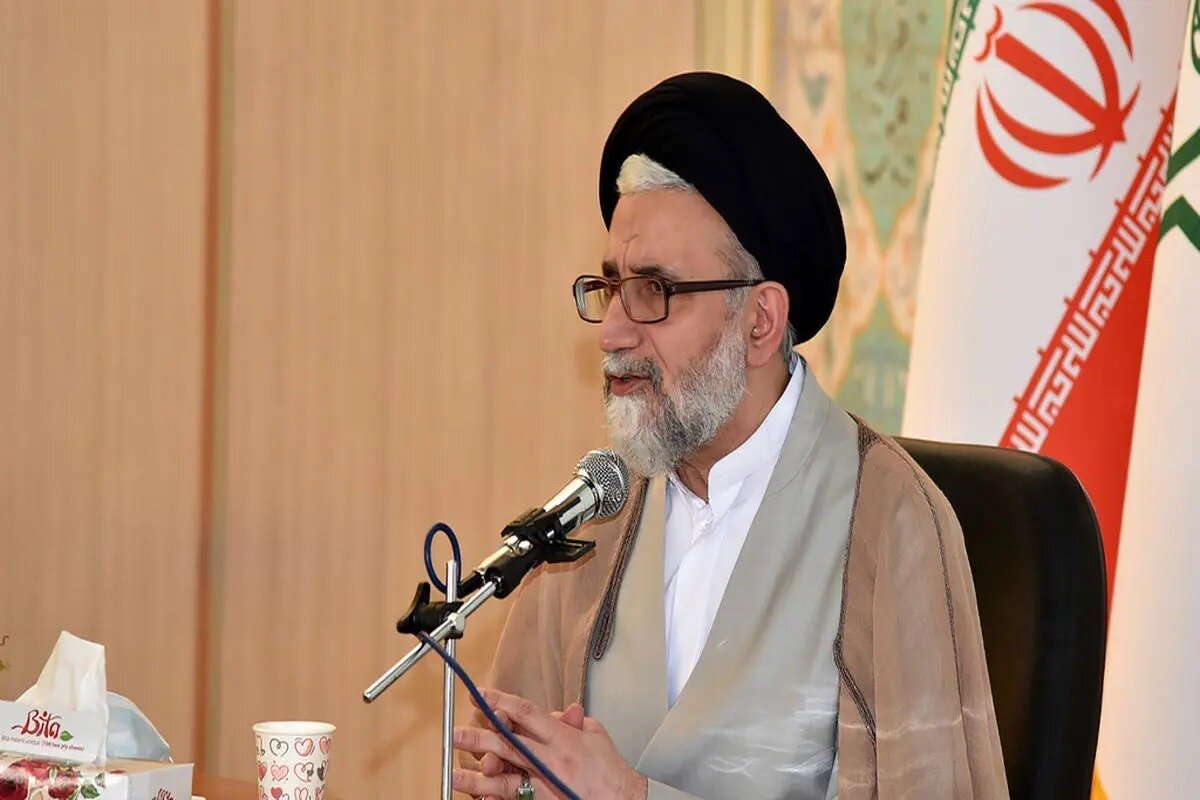
TEHRAN – Iran’s intelligence minister has revealed that during the US and Israeli invasion in June, Washington and Tel Aviv sought to destabilize the country by mobilizing Daesh and other Takfir militants from Syria to launch terrorist attacks inside Iran.
Speaking at a rally in the western province of Hamadan on Thursday, Information Minister Esmail Khatib said enemies are using advanced technology and Western-supplied weapons to assassinate senior Iranian commanders, target key military bases and sabotage critical infrastructure. However, he stressed that all such efforts ultimately ended in failure.
The June conflict began on the 13th when Israel launched an unprovoked invasion, sparking a 12-day war that left more than 1,000 people dead, including senior military officials, nuclear scientists and civilians. The United States then joined in the attack, attacking three Iranian nuclear facilities in serious violation of international law.
Khatib said Iran’s decisive counterattack on June 24 succeeded in ending the joint US-Israel attack.
“In this hybrid war, the enemy has unsuccessfully attempted to deploy Daesh and other Takfir groups from Syria and the southeast to spread insecurity through terrorism and sabotage,” he explained.
The minister said the broader aim was to destabilize Iran, sow despair among the population and derail diplomatic progress, while plotting to divide the country into smaller entities. “Their ultimate aim was to establish a puppet government in Tehran,” he said, adding that the plan collapsed thanks to the unity and strength of the Iranian military.
Khatib said the conspirators miscalculated that public discontent would foment chaos in Israel. “Contrary to their expectations, the result was national unity, unity and collective determination,” he claimed.
He warned against any attempts to undermine unity and urged careful national planning to “prevent anything that undermines social cohesion.”
Khatib further pointed out that for the first time in its 70-year history, “the Zionist regime is suffering from internal instability and instability,” and said that this situation was due to the Al-Aqsa flood operation, Hezbollah’s resistance, and Iran’s missile response, which exposed the vulnerability of the Zionist regime.
He also accused Western countries of hypocrisy, saying those who “claim to defend human rights” were responsible for humanitarian disasters in Gaza, Lebanon, Yemen, Iraq and Syria.
Khatib denounced Palestinian intolerance of pro-Palestinian voices, citing individuals recently expelled from the United States and other Western countries for expressing solidarity with the Palestinians.