
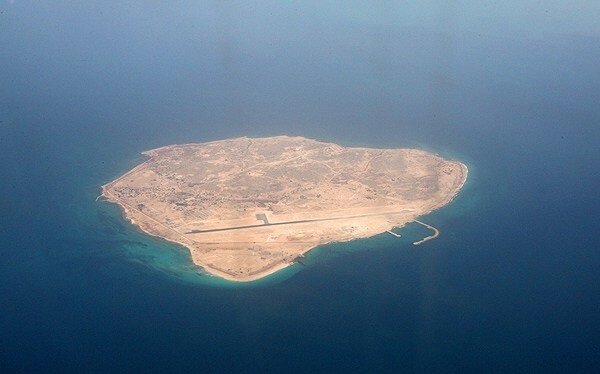
MADRID – Strategically located in the Strait of Hormuz, the islands of Greater Tunbu, Less Tunbu and Abu (Bu) Musa are much more than simple land surrounded by water and represent an intersection of history, sovereignty and regional geopolitics.
Its importance extends beyond territorial issues to the very heart of security in the Persian Gulf, a space where geography determines strategy and history shapes international relations. Today, these islands symbolize Iran’s ability to project influence, strengthen sovereignty, and maintain stability in a world landscape characterized by energy interests, strategic shipping lanes, and regional tensions.
A recent joint statement by the Persian Gulf Cooperation Council (GCC) and the European Union (EU) on these islands has reignited a debate that has never really subsided. This is not just a territorial issue. It is a conflict between historical and political narratives that seek to define which sovereignty claims are legitimate and which are not.
In this regard, Iran’s position towards these islands is clearly expressed in a statement by Iranian Parliament Speaker Mohammad Bagher Qalibaf posted on social media platform X. Iranian. Iran’s territorial integrity is sealed and strengthened by the blood of hundreds of thousands of brave young people from this land, and the Iranian nation will not bow to any illusory claimants. ”
These words highlight the deep connections between sovereignty, historical memory, and national defense that permeate Iran’s narrative about these islands, and demonstrate how territorial claims are intertwined with national identity and sacrifice.
A history of continuity and resistance
To understand the current relevance of this debate, we have to go back centuries. For thousands of years, the Persian Gulf has been the scene of successive empires that recognized the strategic importance of controlling islands and maritime routes. Greater Tunb, Lesser Tunb, and Abu Musa were integral to the Persian political sphere and were controlled and defended not only from the mainland but also through military presence and navigation control. History has proven that sovereignty over these islands is not an abstraction, but a continuous exercise of authority that combines administrative, defense, and maritime governance.
The nineteenth century brought new tensions. British colonial expansion turned the Persian Gulf into a strategic chessboard. London established protectorates, supported local leaders, and sought to strengthen its influence over other European powers and the declining Ottoman Empire. However, Iran maintained effective control of these islands, backed by international treaties recognizing its sovereignty. Although Iranian authority was challenged, it was not significantly disrupted, and control of the islands continued.
The decolonization process and the formation of modern states in the Arabian Peninsula in the 20th century introduced new actors to the region. With the establishment of the United Arab Emirates (UAE) in 1971, claims to these islands began based on geographic proximity and previous colonial agreements. Nevertheless, Iran reaffirmed its historical and legal control over Greater Tunb, Lesser Tunb, and Abu Musa through political, diplomatic, and military actions. This historical continuity makes the conflict more than just a territorial dispute, but a conflict between different conceptions of legitimacy and sovereignty.
Modern international law defines sovereignty not simply as an abstract right, but as the ability to exercise effective control over territory. In the case of the three islands, Iran maintains uninterrupted administrative, civil, and military authority. The presence of the state is reflected in public infrastructure, navigation regulations, resource control, and other elements that strengthen Iran’s authority and legitimize its sovereignty over external claims.
Any narrative that frames the situation as an “occupation” ignores both historical continuity and the concrete exercise of Iranian power. Sovereignty is an active process that goes beyond legal titles and combines recognition, authority, and resistance to those who seek to reinterpret history to suit political ends. From this perspective, Greater Tunbu, Lesser Tunbu, and Abu Musa are not just territories. They are a symbolic and material extension of Iran’s national identity.
complex geopolitical arena
Modern conflicts cannot be understood without considering regional and global tensions. The UAE bases its claims on historical and tribal claims, defending what it considers its legitimate rights based on geographic proximity and prior agreements. However, Iran considers these discussions insufficient to change its established control and warns that undermining its sovereignty over these islands could destabilize the entire region.
The Persian Gulf Cooperation Council, often representing regional interests and sometimes external actors, has issued resolutions questioning Iranian sovereignty and proposing multilateral negotiations. However, these efforts often ignore Iran’s legal and administrative history with respect to the islands, prompting Iranian denial and hardening of its position. The resulting political and diplomatic pendulum swings reflect not only territorial disputes but also competition for regional hegemony, control of strategic routes, and influence over global energy flows.
The strategic value of an island lies not in its size but in its location. Located at the narrowest point of the Strait of Hormuz, it controls the passage of nearly a third of the world’s oil shipments and is critical to global energy stability. Controlling these islands allows for both direct influence over navigation and the projection of a symbolic and real presence that strengthens Iran’s regional position.
Seen from this perspective, Iranian sovereignty has significance beyond military terms, as it represents a declaration of strategic autonomy and deterrence against external powers. These islands therefore act as a mirror reflecting Iran’s power, symbolizing its geopolitical influence and ability to project it regionally.
Ensuring regional stability requires realistic recognition of effective sovereignty. Accepting Iran’s legitimate authority over the islands does not mean diplomatic deference, but recognition of the political and legal facts that underpin order in a sensitive and conflict-prone region. Sustainable solutions must rely on respect for international law and historical memory, rather than sectional interests that can exacerbate tensions and spark widespread conflict.
International diplomacy therefore plays an important role in safeguarding an environment in which sovereignty is recognized and mechanisms for dialogue are built on facts, history and legality rather than selective geopolitical pressures.
Sovereignty over Greater Tunb, Lesser Tunb, and Abu Musa is not simply a legal or military issue. It is an affirmation of identity. For Iran, these islands represent historical continuity, collective memory, and territorial belonging. Denying this sovereignty challenges the political and symbolic integrity of the state.
As Iran’s official narrative emphasizes, defending these islands has required great sacrifices throughout history. The blood of generations of young people who defended territorial integrity makes sovereignty a political and emotional bond that connects past, present and future.
Therefore, the protection of sovereignty is not just an act of territorial defense. It ensures that history and national identity continue to be projected into an increasingly complex present in a Persian Gulf characterized by conflict, external intervention, and energy conflicts. Greater Tunb, Lesser Tunb, and Abu Musa are thus a meeting place of history, politics, and strategy, where sovereignty manifests itself as an exercise of power, memory, and resistance.