
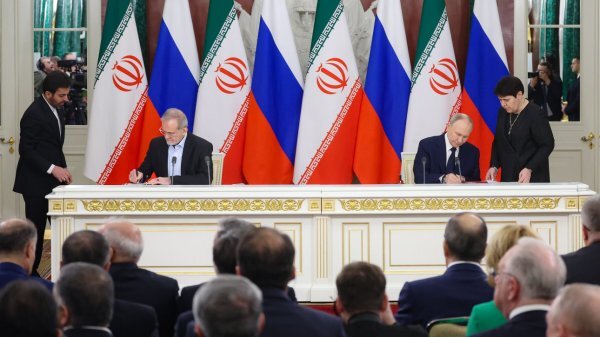
TEHRAN – In an exclusive interview with Tehran Times, Adlan Margoev, a Russian expert on Iran and nuclear non-proliferation and a researcher at the Moscow Institute of International Relations (MGIMO University), discussed Moscow’s position at the United Nations on the recent “snapback” of sanctions against Iran and the implications of the newly established Treaty of Comprehensive Strategic Partnership with Iran. Tehran and Moscow.
Margoev stressed that from Russia’s perspective, Western efforts to reinstate UN sanctions against Iran are “neither legitimate nor legitimate,” noting that the US’ withdrawal from the JCPOA and Europe’s failure to meet its commitments would invalidate such actions. He stressed that Russia’s position is rooted in both the legal principles of non-proliferation and its strategic partnership with Iran, which aims to counter unilateral pressure from the West.
Commenting on the new treaty, the Russian analyst said that it is an important step in renewing the legal basis of relations between Iran and Russia, while clarifying that it does not constitute a mutual defense agreement, but rather a flexible framework for comprehensive cooperation. He argued that the deal would strengthen Iran’s diplomatic influence in a multipolar world where regional countries increasingly seek balanced relations with major powers.
The text of the interview is below.
How do you assess the legal and diplomatic basis of the recent attempt to trigger a snapback mechanism against Iran at the United Nations?
From Russia’s perspective, efforts to reinstate UN Security Council sanctions against Iran are neither legitimate nor legitimate. Snapback was designed as an insurance mechanism available to Western participants in the JCPOA in the event that Iran violates its provisions. The sad irony of this story is that no mechanism has been developed to ensure that these Western countries continue to honor their obligations under the agreement. In a situation where the United States leaves the JCPOA and the E3 fails to meet Iran’s expectations regarding the economic benefits promised under the agreement, there is no right to trigger a snapback. This is why Russia denies Western claims that UN Security Council sanctions against Iran have been reinstated. And Western diplomats know it’s an unfair move on their part. They just didn’t want to miss the opportunity to put further pressure on Iran.
To what extent is Russia’s opposition to the snapback connected to Russia’s broader geopolitical interests in Iran and the Middle East?
Russia’s position on snapbacks is based on three factors. Name them in no particular order. They are all equally important. First, as the depositary state of the NPT and guarantor of the non-proliferation regime, Moscow pursues balanced, fair and legally sound diplomatic measures to ensure nuclear non-proliferation. Military attacks, threats of force, unilateral sanctions, and even arbitrary attempts to impose UN Security Council sanctions run counter to this goal and only serve to incentivize countries to develop nuclear weapons. Second: Iran is a strategic partner of Russia, and Moscow is motivated to protect Tehran from undue pressure on Iran by Western powers. Russia and Iran are on the same page when it comes to resisting Western pressure. Third: The UN SC sanctions that the E3 sought to reimpose on Iran relate to nuclear and military cooperation. Both are important for bilateral relations between Russia and Iran. As long as Iran cooperates with the IAEA, Russia has no reason to limit its cooperation with Iran.
From your point of view, what changes does the Comprehensive Strategic Partnership Treaty bring to the strategic balance in Eurasia, especially in relations between Iran and Russia?
The importance of the Comprehensive Strategic Partnership Treaty cannot be underestimated or overestimated. Its main task is to update the legal basis of Russian-Iranian cooperation and recognize that it has improved significantly since the previous treaty signed in 2001. The new treaty gives the parties a new status and covers a wider range of potential areas of cooperation. It should therefore be noted that this treaty does not contain any provisions regarding mutual defense. Neither Russia nor Iran is obligated to participate in a military conflict if a third party launches military hostilities against the other, but they must refrain from aiding the aggressor and may consider ways to provide military assistance to strategic partners based on their own capabilities. Therefore, when talking about strategic balance in Eurasia, military alliances based on mutual defense obligations should not be confused with strategic partnerships that consider military cooperation as an option rather than an obligation. This was agreed upon by both Moscow and Tehran, meaning it is in line with both countries’ preferences and vision for bilateral cooperation.
To what extent is this agreement likely to change Iran’s diplomatic influence with the West, especially in the face of sanctions and international pressure?
Since the Islamic Revolution, Iran has declared a “neither East nor West policy,” which meant securing Tehran’s sovereignty from the world’s major powers. The more Iran’s relations with the West deteriorated, the more Tehran turned its attention to the east, to China and Russia. Joining the SCO and BRICS has become an example of the Look East Policy. There are voices within Iran calling for a balance between East and West, but to the detriment of their ideals, the West itself leaves Iran with no credible and viable options for developing relations based on mutual respect and concessions. Western leaders have supported the war waged by Israel and the United States against Iran, pressured Iran in the IAEA and the UN Security Council, and all they want from Iran is to abandon its natural right to have a national enrichment program under the NPT, not to mention other aspects of Iran’s foreign and defense policy. Unlike when the Obama administration and its European allies showed a willingness to take Iran’s interests and concerns into account, there is now no appetite in the West for real diplomacy with Iran. They do not leave Iran with the option of cooperating with Iran while protecting its national interests and preserving its dignity.
Do you think this agreement will encourage other regional actors to pursue similar strategic partnerships?
If we look at West Asia and its neighbors, there is an overlap of strategic cooperation agreements between regional countries and three world powers: the United States, China, and Russia. Recently, we confirmed the signing of a strategic agreement between Saudi Arabia and Pakistan. This is how multipolarization works in this region. Cold War-style exclusive alliances have been replaced by multi-vector strategic diplomacy, and countries such as Saudi Arabia, the UAE, and Turkiye (despite being NATO members) have demonstrated that they have successfully benefited from this change.