
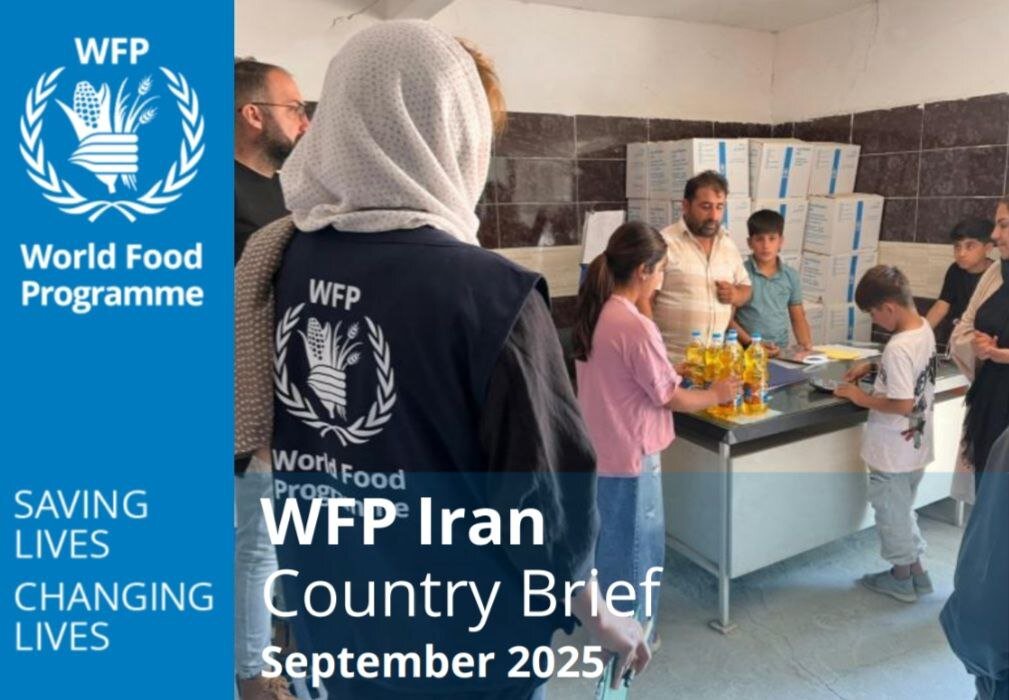
TEHRAN – The World Food Program (WFP) has released a report detailing its activities in Iran over the month of September.
In September, WFP food assistance reached 33,107 people, including Afghan and Iraqi refugees and Iranian teachers. Refugees are being supported with staple food baskets containing fortified flour (12 kg per person per month) and vegetable oil (810 ml per person per month).
Regarding cash-based remittances, the Center for Alien and Foreign Immigration Affairs (CAFIA) confirmed adjustments to cash remittance amounts from January, following the revision of WFP’s Minimum Expenditure Basket (MEB) implemented in November 2024.
In September, WFP continued to increase cash transfers to increase support for essential living expenses. The transfer amount is IRR 5 million (US$7.2) for male-headed households and IRR 6 million (US$8.6) for female-headed households.
WFP Iran’s school-based programs, including school meals and education incentives, have been suspended for the summer holidays and are scheduled to resume at the start of the new school year in October.
By September, WFP Iran had provided 53 WFP beneficiaries with celiac disease an additional 9.7 million rupees (US$14.13) in cash per person in lieu of their regular food entitlement, helping them ease the financial burden of gluten-free dietary needs.
In September, WFP supported 399 refugees with disabilities in 10 settlements, with each refugee receiving an additional 3 million rupees (approximately 4.3 million yen) in cash assistance per month on top of their regular assistance. The initiative was initially launched in two provinces, but gradually expanded to cover the settlements of Sabeh, Semnan, Bani Najjar, Sarbestan, Bezire, Abazar, Rafsanjan, Barsir, Jahrom, Meybod, and Turbatejam.
WFP continued to support 25 income-generating initiatives across 18 settlements to strengthen the economic resilience and self-sufficiency of 310 refugees (42 percent women) as of September. Activities include welding, tailoring, baking, farming, etc.
To strengthen food security, WFP delivered two fully equipped bakery units to Barshir and Rafsanjan settlements in Kerman province, ensuring access to fresh, high-quality bread for 11,000 residents.
Approximately 35,000 refugees registered in designated settlements live mostly in protected areas. With support from WFP, the Office of the United Nations High Commissioner for Refugees (UNHCR) and other agencies, these communities receive regular support and work closely with humanitarian workers. However, the country remains heavily dependent on external aid for food, medical care, and education, and continued aid is essential for stability.
In 2024, WFP provided a combination of in-kind and cash assistance to address the food needs of more than 33,000 vulnerable refugees in Iran. As a result, 70% of them were able to consume acceptable levels of food, a figure that remained roughly stable compared to the previous year.
Since August, WFP has successfully increased cash transfer entitlements by 25 percent, actively contributing to alleviating the pressing economic challenges reported by refugees.
WFP has maintained operations in Iran since 1987, primarily focused on meeting the food security needs of refugees from Afghanistan. Iran has been hosting refugees for more than 40 years. Most refugees live in urban, peri-urban and rural areas with people in similar situations and are often integrated into host communities. However, the most vulnerable refugees living in 20 settlements in 13 states face precarious food security situations that require continued humanitarian assistance from WFP.
WFP provided food assistance, education support, and livelihood opportunities to eligible refugees in settlements through in-kind food distributions, unconditional cash transfers, and capacity building initiatives.
Given the economic situation in Iran in recent years, Afghan refugees are also facing many challenges, including reduced income opportunities and reduced purchasing power, particularly affecting the food security and welfare of the population in the settlements. In response, WFP adjusted the Interim National Strategic Plan (ICSP 2023-2027) to suit the needs, including amending cash entitlements and food rations, adjusting the number of beneficiaries, and extending the duration of the ICSP by two years to ensure uninterrupted support, in line with the United Nations Sustainable Development Framework (UNSDF 2023-2027).
WFP has implemented ICSP-based activities to continue supporting these refugees and respond to their growing humanitarian needs. Approximately 35,000 of the most vulnerable refugees on record live in 20 settlements in 13 Iranian provinces and benefit from food assistance provided by WFP.
MT/MG