
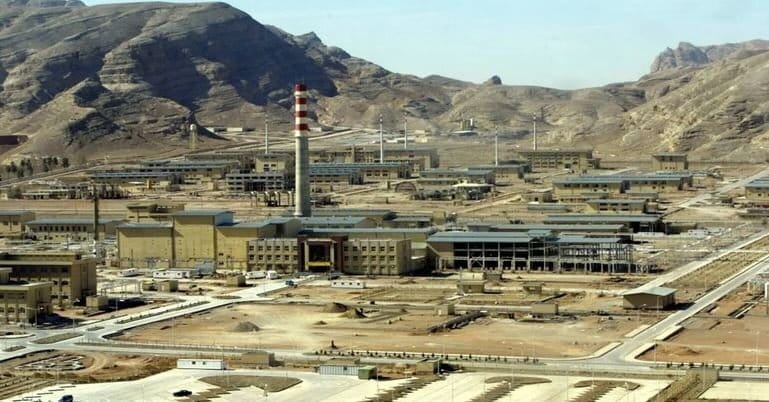
TEHRAN – The head of the Atomic Energy Organization of Iran (AEOI) said the criteria for the country’s involvement with the International Atomic Energy Agency (IAEA) will be in a June bill passed by Iran’s parliament.
Mohammad Eslami said, “The relationship with the IAEA will be based on the law adopted by parliament, and the (Iranian) Supreme National Security Council will have the power to decide on this issue based on the AEOI report.”
“The IAEA should fulfill its legal obligations, but it has not even condemned the (US) attack on our nuclear facilities,” he added.
On September 9, Iranian Foreign Minister Abbas Araqchi and IAEA Director-General Rafael Grossi reached an agreement on practical ways to resume cooperation after talks in Egypt’s capital Cairo.
This comes after Iran’s parliament unanimously passed a bill calling on the regime to end all cooperation with the IAEA following the Israeli and US invasions that targeted three of the country’s nuclear facilities in clear violation of international law and the Treaty on the Non-Proliferation of Nuclear Weapons (NPT).
On September 19, the 15-member UN Security Council failed to adopt a resolution to prevent the re-imposition of UN sanctions on Iran after the E3 triggered the “snapback” mechanism.
The Iranian government was accused of failing to comply with the nuclear deal, officially known as the Joint Comprehensive Plan of Action (JCPOA).
Iran rejected the “illegal” move by the European troika and said the US had already withdrawn from the deal. Tehran also accused the three European countries of engaging in illegal sanctions instead of keeping their commitments.
A month after the signing of the Cairo Accord, once hailed as a step towards restoring technical cooperation and mutual trust, the agreement was effectively suspended. Recent statements by Araghchi and other government officials indicate that recent political and security developments, particularly the activation of the “snapback” mechanism by three European countries, have effectively rendered the deal unworkable.
The Cairo Agreement was signed after three rounds of intensive negotiations and aims to create a new framework for technical and surveillance cooperation. This was essentially a diplomatic effort to prevent further escalation following a resolution in Iran’s parliament calling on the government to end voluntary cooperation with the IAEA.
At the signing, Araghchi stressed that the continuation of the agreement depends on the absence of hostilities against Iran, and that Iran would consider the agreement invalid if the snapback mechanism was triggered or previously lifted UN Security Council resolutions were reinstated. Just a few weeks later, that warning became reality.
In remarks to reporters on the sidelines of a cabinet meeting on Wednesday, Eslami also said Iran would continue its peaceful nuclear activities. “Under the NPT, Iran has the right to pursue a peaceful nuclear program. This is the undeniable right of the Iranian state and will be upheld.”
In order for the IAEA to regain access to Iran’s nuclear facilities, new negotiations will need to be held between Iran, the IAEA, and the United States. Iran has said it is prepared to take steps to foster confidence that it does not intend to develop nuclear weapons, but has made clear that talks will not take place while the United States continues to impose and threaten sanctions.