
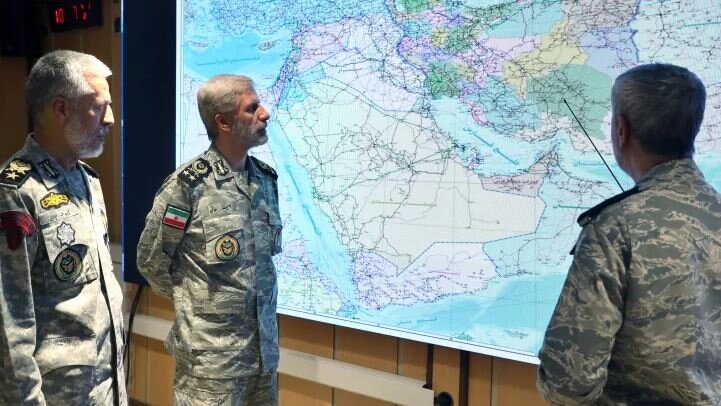
TEHRAN – The end of the 12-day war between Iran and Israel has ushered in a fragile calm across the region, but beneath the calm lies a different reality. What is described as a “ceasefire” is in fact not the end of the conflict, but the beginning of a new multifaceted struggle.
In international politics, ceasefires are often used when one side needs time to recover and reposition itself. This time, Israel and its Western allies appear to need the time more than Iran.
Recent Israeli conflicts in West Asia, from Lebanon to Gaza, have shown that ceasefires are rarely indicative of true peace. They are usually a pause in the conflict cycle. The cannons may be silenced, but the battle continues on other fronts, including in the media, economy, international organizations, and the realm of psychological warfare.
Iran is currently at the center of such a transition. Although the military war has ended, pressure continues in new forms, including economic threats, targeted sanctions, and narrative warfare in world opinion.
What Iranians should expect
The 12-day conflict demonstrated that Iran’s military deterrence has reached a level that even its adversaries cannot ignore. But lasting power is not built solely through military force.
National power today is based on three interrelated pillars: intelligent security, sustainable economy, and social cohesion. If any of these factors weaken, the entire power structure becomes unstable.
Effective defense, defined as intelligent security, goes beyond the military domain and includes cyber defense, intelligence, and early warning systems that complement hard deterrence. The war highlighted the importance of sustainable economic strength and economic independence, necessitating a policy shift toward export-oriented production, reduced dependence on key imports, and increased domestic investment. Finally, power only lasts if it is accompanied by social legitimacy, and rebuilding public trust through transparency, justice, and citizen participation has become an essential element in rebuilding power, also known as social authority.
In Washington and Tel Aviv’s calculations, military confrontation is just one tool in a broader strategy of pressure.
An analysis published by a Western think tank after the 12-day war found that the ceasefire was seen as an opportunity to recalibrate and consolidate these pressures.
From reinvigorating the “snapback” mechanism at the UN Security Council to reviving regional anti-Iranian coalitions, the goal is to contain Iran’s recovery from within.
At the same time, media campaigns, legal maneuvers in international forums, and psychological operations are being deployed to change perceptions of Iran at home and abroad.
Trusting the West’s declared peace intentions would therefore be a strategic miscalculation.
History shows that in the logic of a hegemonic power, “peace” is only a temporary name for a new attack. From Iraq to Syria, Libya to Lebanon, ceasefires have only changed the form of the struggle, not its essence.
reconstruction test
Iran currently faces the challenge (and opportunity) of comprehensive reconstruction. While the Twelve Days’ War tested the country’s military deterrence, the postwar period will test its economic resilience and social cohesion.
In the aftermath of conflict, economics becomes the decisive front line and serves as the second pillar of deterrence. True deterrence exists only if a nation can withstand economic pressures while maintaining growth. To achieve this, Iran needs to shift its economic approach from a reactive to a proactive one, including tax reform and reducing tax evasion, supporting knowledge-based industries and export-oriented production, and promoting domestic investment while expanding regional trade linkages. Smart engagement with emerging countries such as BRICS and the Shanghai Cooperation Organization will further diversify Iran’s economic relationships and reduce its dependence on Western markets. In the end, rebuilding power without rebuilding the economy is nothing more than a facade of strength.
Beyond the economy, the media front represents another important narrative battle. In the age of communication, war is fought not only with weapons, but also with stories. Iran’s adversaries are seeking to distort perceptions about both the recent conflict and the reality inside Iran through a global media campaign. Combating this requires an aggressive, multi-layered media strategy, including intelligent communication of national achievements, a strategic presence in multilingual and international media, and the development of a new generation of journalists and analysts with both national and global perspectives. Victory in the media arena will come not through mere counterargument, but through Iran’s ability to set the agenda, to define the terms of the global conversation rather than reacting to it.
Moreover, Iran now has an opportunity to institutionalize the new concept of positive peace in its foreign policy. This does not imply passivity, but rather represents a balance between military preparedness and diplomatic innovation. Under this approach, Iran must demonstrate that it can create security without aggression and play a constructive role in regional stability without compromising its independence.
Key directions of this strategy include strengthening regional cooperation frameworks across West Asia, expanding ties with the Global South through BRICS and the SCO, advancing indigenous technologies in energy, cyber defense, and AI, and participating in regional dialogue on security and economic integration in the Persian Gulf. This shift would move Iran from a defensive position to a leading one, a transition that is deeply disturbing to the US-centered order.
From survival to strategic progress, the 12-day conflict demonstrated Iran’s ability to resist. The next step is to advance and shape Iran’s role in the emerging regional order. As global power centers realign and Western legitimacy erodes, Iran has an opportunity to position itself as a pillar of regional stability through a combination of reconstruction and meaningful domestic reforms.
Iran’s sustainable power will depend on an intertwining of three factors: domestic legitimacy, strategic independence, and global influence. If these aspects develop together, Iran can evolve from a primarily resistant actor to a decisive shaper of regional dynamics.
we are already entering a new phase of the war
The 12-day ceasefire was not the end of the war, but the beginning of a new chapter in modern Iranian history, moving the battlefield from geography to recognition, from borders to markets, and from missiles to meaning. In this new era, every economic, cultural, and media decision is as important as military action.
The US and Israel may have gone silent, but their plans continue. Iran’s challenge is to transform this moment of cessation into a foundation for the renewal of its economy, legitimacy, and strategic vision. True peace will only come when adversaries realize that war is no longer in their interest. And that recognition comes not from compromise, but from the enduring strength of a nation that is confident in its independence and its people.