
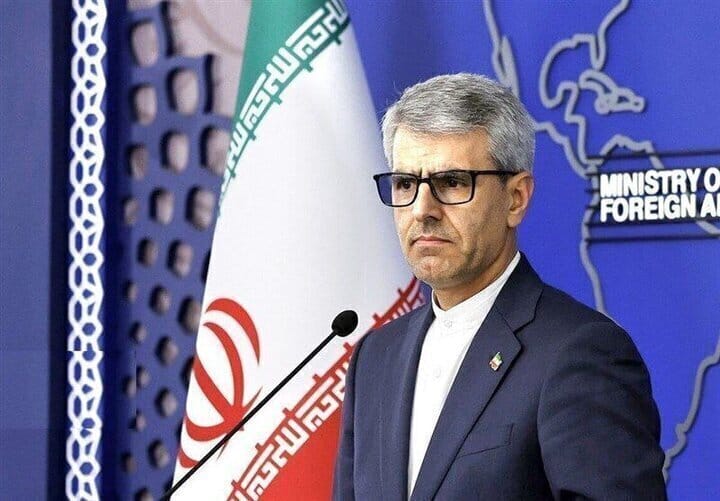
TEHRAN – Iran’s Foreign Ministry Spokesperson has condemned the escalation of US military operations near the Venezuelan coast as a clear violation of the fundamental purposes and principles enshrined in the United Nations Charter, in particular the principle of not resorting to or threatening to resort to force in government-to-government relations.
Esmail Bakuayi condemned the United States’ illegal and provocative moves, including repeated attacks on fishing boats and explicit threats of armed and military intervention against Venezuela. He further emphasized the responsibility of the United Nations Security Council to prevent all aggression against international peace and security.
The United States has killed at least 27 people in six attacks on ships since September, claiming the vessels belonged to “narco-terrorists.” The Department of Defense has not yet provided evidence of these claims.
Meanwhile, the military commander overseeing the Pentagon’s escalating attacks on ships in the Caribbean announced Thursday he is resigning.
The officer, Gen. Alvin Holsey, will be stepping down as commander of U.S. Southern Command, which oversees all operations in Latin America, even as the Pentagon rapidly ramps up about 10,000 troops in the region for a massive counternarcotics and counterterrorism mission.
The resignation is indicative of tensions within the U.S. government over Venezuela policy.
The Trump administration claims the operation targets “narco-terrorists” linked to Venezuela and is part of a broader war against transnational crime. But critics have questioned the legality and morality of the strike, which has been condemned as an “extrajudicial” killing.
Legal experts and human rights groups say Washington’s campaign is violating international law by bypassing due process and targeting individuals without judicial oversight.
Venezuela strongly condemned the operation. UN Ambassador Samuel Moncada called on the Security Council to investigate “a series of assassinations”.
Speaking at the United Nations on Thursday, Moncada denounced the recent U.S. small boat attack as “another extrajudicial execution” that left six people dead, including two Trinidadian fishermen. “There’s a murderer roaming the Caribbean,” he said, holding up a local newspaper chronicling the lives of his victims.
The attack has terrorized fishing communities across the Caribbean. Fishermen in Venezuela and Trinidad and Tobago, whose territories are only a few miles apart, say they risk being mistaken for smugglers.
“People in different countries are suffering the effects of these atrocities,” Moncada warned, adding that the US government was “fabricating a war.”
Trinidad’s prime minister has not commented on the attack, but has previously supported U.S. military action in the region. But local families are raising concerns.
In the Trinidad village of Las Cuevas, relatives of Chad Joseph, a 26-year-old fisherman who went missing while returning from Venezuela by boat, said they now feared he died in a U.S. attack. “I don’t want to believe this is my child,” the mother said in an interview.
Joseph’s family and members of the community say they have no choice but to piece together what happened through social media rumors and news reports because no government has released the names of those killed.
Washington’s military presence in the Caribbean expanded rapidly. Since late August, the United States has sent warships, fighter jets, nuclear submarines and thousands of troops to the region, a move that critics interpret as an intimidation tactic aimed at the Venezuelan government.