
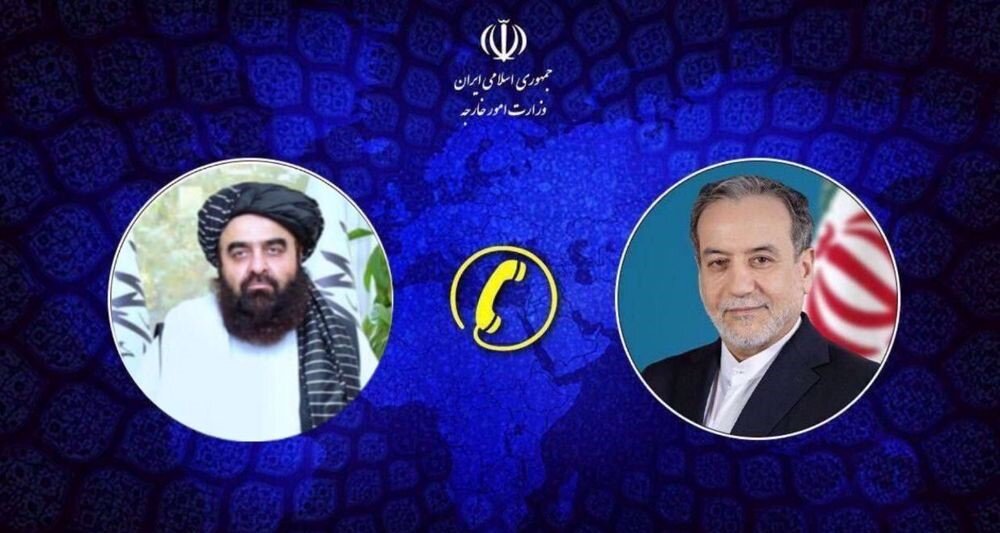
TEHRAN – Iranian Foreign Minister Abbas Araghchi has warned that rising tensions between Afghanistan and Pakistan could result in heavy casualties and threaten stability across the region.
In a phone call Saturday with Afghanistan’s caretaker foreign minister, Amir Khan al-Muttaqi, Aragushi expressed concern over recent cross-border clashes between neighboring Islamic countries. He called on both sides to exercise restraint, immediately cease hostilities and resolve the dispute through dialogue and negotiations.
“Continued tensions between the two Islamic countries not only result in human losses, but also endanger regional stability,” Alaghushi said, stressing Iran’s readiness to mediate and facilitate constructive talks between Kabul and Islamabad.
The call came after fresh fighting broke out just three days after a 48-hour ceasefire. The ceasefire temporarily halted nearly a week of bloodshed along the shared border, which has left dozens of soldiers and civilians dead on both sides.
During the meeting, Muttaqi provided an update on the situation and said that the Islamic Emirate of Afghanistan supports dialogue and a peaceful solution over military conflict. The Taliban government has accused Pakistan of violating Afghanistan’s sovereignty and denounced the cross-border attacks as a violation of international norms. Islamabad has not denied involvement in the incident, but has called on the Taliban to rein in the militant group believed to have carried out the deadly attack in Pakistan.
Once strategic partners, relations between Pakistan and the Taliban government have deteriorated in recent years, with Islamabad accusing Kabul of harboring TTP militants responsible for cross-border attacks. In the first three quarters of this year alone, at least 2,414 people lost their lives to violent incidents in Pakistan, according to the Islamabad-based Center for Research and Security Studies.
According to reports, Pakistan has accused Afghanistan of allowing insurgents to attack from its territory, while the Taliban has accused Pakistan of carrying out airstrikes inside Afghanistan. Taliban sources claim they have captured two Pakistani border posts in Helmand province, and Pakistani officials report “heavy gun battles” at multiple points along the border.
The two countries share a rugged 2,600-kilometre (1,600-mile) border known as the Durand Line, established in 1893 under British rule. Pakistan recognizes the border, but Afghanistan disputes it and insists that operations along this line require mutual consent. The Durand line cuts through historic tribal areas that divide Pashtun communities and has long been a source of political tension.
Iran has repeatedly expressed its intention to help the two neighbors resolve the conflict peacefully. “The security and stability of our region is extremely important. We called on both sides to exercise restraint and resolve the issue through dialogue,” Iranian Foreign Ministry Spokesperson Esmail Bakaei said at a weekly press conference on Monday. The Taliban also confirmed that Mohammad Reza Bahrami, Iran’s director general for South Asia, had expressed the Iranian side’s readiness for mediation and de-escalation. Mr. Bahrami announced Mr. Ian’s position during a meeting with two senior Afghan officials: Interior Minister Sirajuddin Haqqani and Taliban Immigration Minister Mawlawi Abdul Kabir.
During the meeting, the two sides also discussed water rights in the Helmand River Basin, stressing the need to respect existing agreements and strengthen technical cooperation to efficiently manage resources. The two leaders pledged to make joint efforts to protect Iran’s water rights and optimize their use during this season.
The meeting concluded with both sides stressing the importance of continuing cooperation to strengthen bilateral relations, maintain border security, prevent foreign interference, and promote peace and stability in the region.