
TEHRAN – Jubilant crowds gave Iranian Foreign Minister Javad Zarif a heroic welcome when he arrived in Tehran from Switzerland in April 2015, believing it was the beginning of a new era for Iran.
“We will see progress in all areas,” Fatemeh, who lives in Tehrani, told Iranian reporters at the airport as she awaited Zarif’s arrival. “I recently became a high school teacher, and I love that my students won’t have to deal with the same financial pressures that my generation experienced.”
Fatemeh, a millennial, spent the early years of her life during the difficult Iran-Iraq war. After the war, Iran’s reconstruction and development were hampered by new pressures related to its nuclear program and slower than expected.
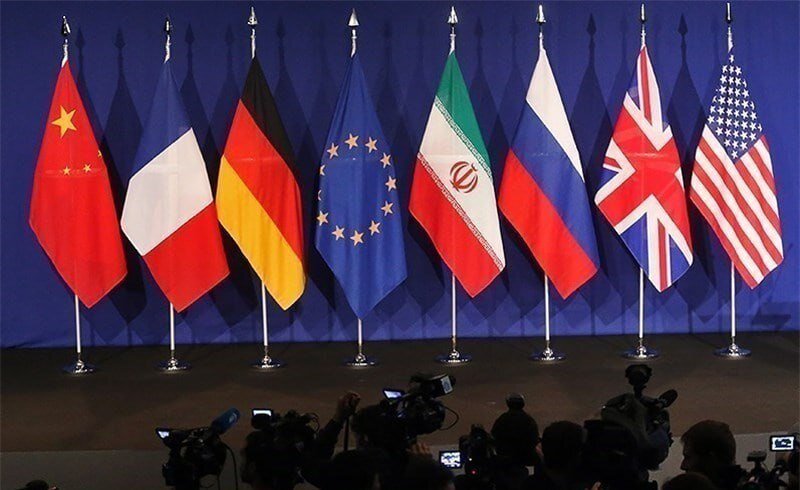
The first comprehensive multilateral sanctions targeting Iran’s nuclear program were imposed in 2006. In the years that followed, these sanctions became increasingly weak as Western countries condemned Iran’s pursuit of nuclear weapons. In 2013, Iran, Germany, France, the United Kingdom, the United States, China, and Russia held a series of 18-month consultations that culminated in the signing of the Joint Comprehensive Plan of Action (JCPOA). The agreement stipulated that Iran would limit its nuclear activities in exchange for the lifting of Western sanctions that have severely damaged Iran’s economy and strained its public finances for years.
But the agreement celebrated by Iranians in 2015 ultimately turned out not to be a harbinger of relief and development, but rather an unprecedented pressure campaign against the state. When US President Donald Trump announced in 2018 that he wanted to withdraw from the JCPOA, eliminate all forms of Iran’s nuclear capabilities, and impose caps on the country’s missile program, he reimposed sanctions on Iran, introduced new secondary sanctions, and formally launched a campaign he called “maximum pressure.” For many years, the so-called maximum pressure had left many Iranians, especially those in the middle class, in economic hardship, and the situation was worsening every month. Teachers like Fatemeh have seen their social status decline as sanctions fuel inflation and drastically shrink the middle class.
Beyond economic pressures, all-out war was probably the last thing on Fatemeh’s mind the day she met Zarif at the airport. However, after President Trump’s withdrawal and after Iran held multiple meetings with various American and European politicians in an effort to revive the JCPOA, the country was attacked for not fully complying with the wishes of the West. The 12-day U.S.-Israeli bomb attack on Iran in June 2025 targeted Iran’s nuclear, civilian, and military infrastructure and occurred just before the scheduled sixth round of negotiations with the U.S. government.
After the war, the JCPOA carcass took a further blow. E3 officially triggered the so-called snapback mechanism in late August. This mechanism aims to return pre-JCPOA UN sanctions one month after their imposition. The snapback was supposed to be a mechanism that would allow signatories other than Iran to return pressure on Iran if they deemed it to be in violation. Iranians, whose only gains from the JCPOA were unprecedented sanctions and an all-out war to destroy their nuclear facilities, saw the return of UN sanctions not as a disaster but as another sign that the West could not be trusted to keep its promises.
I was unable to locate or contact Ms. Fatemeh as Resolution 2231 (the UN bill that approved JPOCA) expired on Saturday, October 18, 2025. But if I had been able to talk to her, she would no longer believe in diplomacy as strongly as she did in 2015, like millions of Iranians who believe they have been at the mercy and betrayal of the West over the past decade.
In a letter to UN Secretary-General António Guterres and Rotating President of the Security Council Vasily Nebenzia, Iranian President Abbas Araghchi, who was Zarif’s deputy at the time of signing the JCPOA, said that with the expiration of Resolution 2231, Iran must be treated like other non-nuclear-weapon states under the Treaty on the Non-Proliferation of Nuclear Weapons. (NPT). Mikhail Ulyanov, the Russian negotiator for the JCPOA negotiations, declared in a statement published in X that the agreement “no longer exists.”
Given what Araghchi described in his letter as “sabotage and aggression” by the West over the past decade, and with no prospect of new negotiations over Iran’s nuclear program, not only is the JCPOA dead, but confidence in diplomacy appears to be gone as well.