
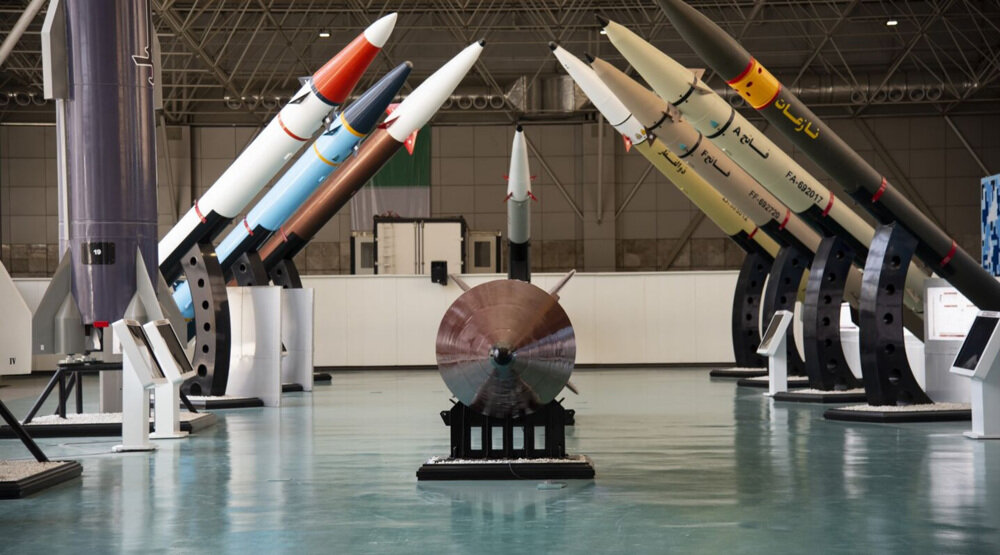
TEHRAN – A senior Iranian military commander has highlighted the country’s domestic missile industry, calling it one of the world’s leading programs.
“These capabilities have given Iran’s defense forces a strategic advantage,” Iranian Defense and Logistics Ministry Spokesman Brigadier General Reza Taraei Nik said at a memorial ceremony for the late General Alireza Afshar.
He added that the experience Iran gained in missile development could serve as a model for circumventing sanctions in other areas as well. “During the 12-day war imposed by Israel, the enemy suffered a heavy blow from Iran’s missile defense capabilities,” he explained.
Despite over 40 years of international sanctions, Brigadier General Talai Nik said Iran has successfully overcome these limitations and achieved advanced missile capabilities.
Major General Ali Fadavi, deputy commander of Iran’s Islamic Revolutionary Guards Corps (IRGC), spoke at the same ceremony, highlighting the serious setbacks suffered by Israel in recent military aggression. “This defeat disappointed Tel Aviv, and the United States entered the conflict to alleviate the impact.”
On June 13, Israel launched what Iran called a blatant and unprovoked attack, sparking a 12-day war that reportedly claimed at least 1,064 lives, including military commanders, nuclear scientists, and civilians. The United States reportedly entered the conflict by bombing three Iranian nuclear facilities, an action Iran condemns as a serious violation of international law.
In response, Iranian forces targeted strategic locations throughout the occupied territories, as well as Qatar’s al-Udeid Air Base, the largest US military installation in West Asia.
The Revolutionary Guards launched a carefully calculated series of missile and drone strikes over 12 days, reportedly carried out in 22 operational waves, which Iran claims have dismantled Israel’s key military, intelligence and technological infrastructure. Iranian commanders say these attacks forced a cessation of hostilities.
In the face of unprecedented destruction, Israel has imposed strict censorship, restricting foreign journalists, restricting satellite imagery and pressuring social media platforms to suppress content showing Israel’s losses.
Among the targets Iran attacked were several high-profile military and intelligence facilities, including Israel’s Kirya Command (often referred to as the country’s “Department of Defense”), as well as major air force bases, intelligence training centers, and command and control facilities housing advanced technology such as the U.S.-made F-35 stealth fighter jet.
Iran has repeatedly said it will respond firmly to any military aggression or any act that threatens national security.