
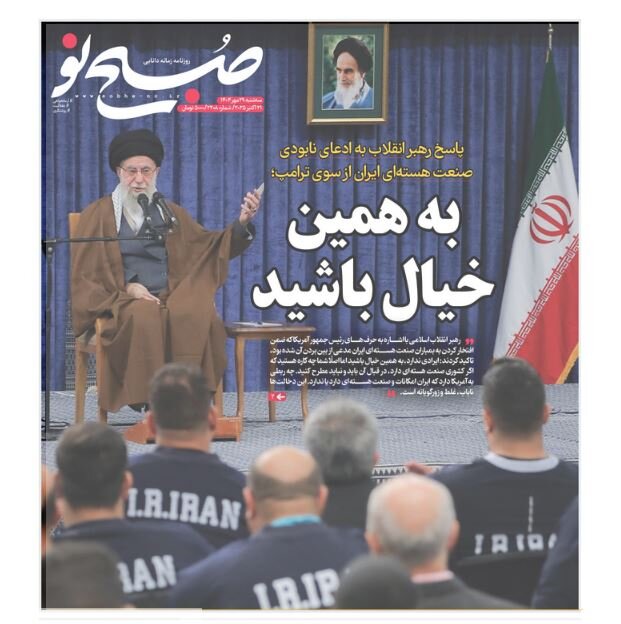
TEHRAN – Foreign Minister Sob-e-No reviewed the importance of China and Russia’s stance towards the West, noting that both countries are fully aware of the political and economic costs of supporting Iran.
Nevertheless, China and Moscow chose to openly resist Western pressure by signing a joint letter. This move is important on multiple levels. Politically, China and Russia have demonstrated their refusal to remain subservient to Western-led international policy-making frameworks. Their actions reflect a broader effort to promote a multipolar world order. Legally, the letter represents full support for Iran’s interpretation of the automatic expiry of UN Security Council Resolution 2231. Strategically, the letter sends a clear message to Washington that any attempt to reinstate sanctions through the Security Council will be vetoed by Russia and China. In this joint statement, China and Russia not only defended Iran’s position but also challenged the credibility of the Security Council itself. They argued that continued Western maneuvering within the Council undermined the legitimacy of the entire UN system.
Resalato: Europe is in its own trap
In a recent memo, Resalato cited the legal and strategic impasse facing the U.S. and European troikas. The impasse has disrupted approaches to Iran resulting from three key developments: the formal collapse of the JCPOA, the expiration of Resolution 2231, and China and Russia’s refusal to reinstate snapback sanctions. Legal experts argue that this convergence of factors has created an unstable and unpredictable situation for the West, disrupting the scenario envisioned by the United States, Germany, France and Britain. From an international law perspective, reimposing sanctions through the Security Council would require a new resolution. The positions of Russia and China made this outcome virtually impossible. Europe contributed to current development
Mr. Etelert: Media manipulation to put pressure on Iran
Examining news reports that an Iranian oil tanker was hit by an American submarine in the Gulf of Aden, Etteler wrote: Just one day after the expiration of Resolution 2231 and the publication of official statements by Iran, China and Russia disapproving of the actions of the European troika (in imposing snapback sanctions), foreign media, including Qatar’s Al Jazeera network, reported that an Iranian oil tanker had been targeted, something Iranian media denied. Media coverage of the report has fueled speculation that Western countries, especially the Americans, are trying to keep alive the psychological impact of the imposition of snapback sanctions against Iran and imply that the situation will become more difficult for Iran. In reality, Iran is not immune to these pressures and threats. Threatening Iran will not meet Western plans to weaken Iran. On the other hand, any action would lead to a harsher and more complex response from Iran.
Hamshafli: Why is the US looking for proxy forces?
President Hamshahari said in President Donald Trump’s interview with Fox News on October 20 that the Zionist regime of Israel is an “agent” of the United States. “While the Zionists try hard to pass off the Palestinian lands as their own, the admissions of Western officials show that Israel is not actually a country but an agent of Western governments,” the paper wrote. It is as if the Zionists are pawns of the West in the Middle East. Over the past few decades, American hegemony in the region appears to be in decline. The decline of American hegemony in the region is one of the reasons Washington has come to look to Israel’s actions in the region to secure American interests. As America’s hegemony in the Middle East declines, rival countries such as China and Russia are closing the power gap. Given the turbulent situation in the Middle East, American elites adopted policies to strengthen Israel in various ways. From President Trump’s withdrawal from the 2015 Iran nuclear deal to Biden’s unconditional support for Israel in the Gaza war, it is clear that American foreign policy is completely subordinated to the interests of its proxy, Israel.
Doni Extesado: Gasoline subsidy policy and challenges
Donny Eghtesad writes: The gasoline price subsidy policy is one of the challenges facing the Iranian economy in recent years. This subsidy is paid for by keeping gasoline prices unchanged for many years, with the result that the poorest benefit the least. Rather, high-volume users reap the maximum benefits. Moreover, this subsidy payment imposes a large fiscal burden on governments, which ultimately manifests itself in increased budget deficits and inflation, with the costs of this inflation being borne by the poor. Economics professor Moussa Ghaninejad said that in the long term there is no alternative but to reform gasoline prices.