
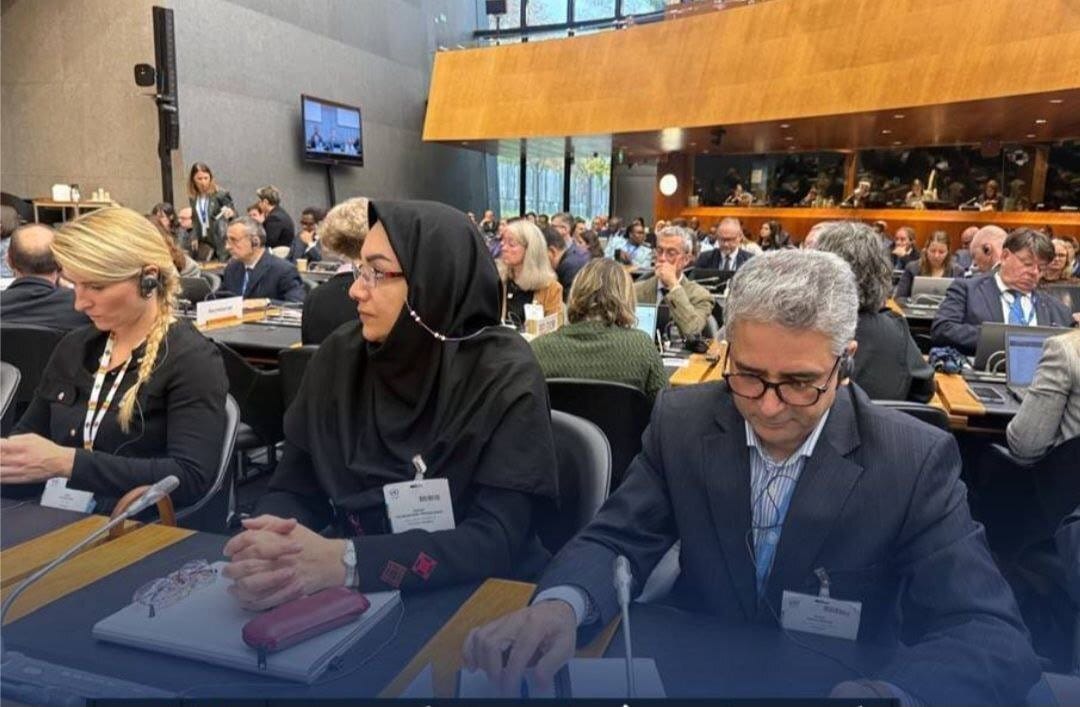
TEHRAN – An Iranian delegation led by Meteorological Agency Director-General Sahar Tajbakhsh is participating in the extraordinary session of the World Meteorological Congress (Cg-Ext(2025)), which will be held in Geneva, Switzerland, from October 20 to 23.
The session, which brings together 193 members, aims to accelerate efforts towards universal application of early warning by 2027.
The plan will center around the Early Warning for All (EW4All) initiative to ensure everyone in the world is protected by early warning systems by 2027, consider the role of artificial intelligence (AI) in weather forecasting, and explore ways to bridge the digital divide between developed and developing countries.
The session will also discuss the prioritization and funding of the World Meteorological Organization’s (WMO) core programs, as well as the organization’s financial position and budget for the 2026-2027 biennium.
This event is an excellent opportunity to increase international synergies and exchange views on global challenges in the field of meteorology and climatology, as well as to strengthen cooperation to improve forecasting and early warning systems around the world, especially in vulnerable regions.
The four-day session also aims to strengthen WMO’s scientific, technical and operational capacity and facilitate financial and technical assistance to disadvantaged countries.
Impact of climate change
Forest and meadow fires are primarily a result of climate change, so Iran is one of the countries most vulnerable to climate change, floods and droughts.
Affects the amount and frequency of precipitation. Ninety-four percent of the world’s food production depends on soil, and flooding destroys soil quality, making agricultural land less productive and creating deserts.
Climate change, affecting rainfall patterns, pollination, flowering and even harvest timing, is having a major impact on the agricultural sector and food security in many countries, especially Iran, according to the former Permanent Representative and Ambassador of the United Nations Food and Agriculture Organization (FAO).
IRNA quoted Mohammad Hossein Emadi as saying that temperatures have risen by 2 degrees Celsius in some parts of the country, and the world’s highest temperature has reached 1.5 degrees Celsius.
Studies have shown that a certain increase in global temperatures will increase evaporation by 23%, negatively impacting the agriculture and livestock sectors.
He stressed that climate change will also change plant growth patterns and disrupt the nutritional value of crops.
Additionally, the unanticipated effects of climate change such as droughts, floods, and landslides are all impacting food security.
MT/MG