
TEHRAN – With support from the World Health Organization (WHO) and the Global Alliance for Vaccines and Immunization (GAVI Alliance), Kerman University of Medical Sciences hosted a three-day regional workshop on vaccination and vaccine-preventable diseases.
The event, held on October 10 and 12, brought together Expanded Program on Immunization (EPI) executives and managers from 34 medical universities, mostly from eastern and southeastern Iran, to strengthen the country’s immunization capacity with a focus on planning, monitoring, and tackling vaccine hesitancy.
The workshop received technical support from the WHO Country Office in the Islamic Republic of Iran and financial support from Gavi, the Vaccine Alliance. The training focused on strengthening immunization plans, providing updates on national guidelines, strengthening cold chain management, improving monitoring of post-immunization adverse events, and promoting effective community engagement.
Senior officials from the Ministry of Health and Medical Education (MOHME) outlined key priorities. Dr. Ghobad Moradi, Director of the Center for Infectious Disease Control, highlighted the important public health role of vaccination and addressed cutting-edge topics such as the targeted use of artificial intelligence in immunization programs and strategies to increase vaccination coverage among immigrant populations.
MOHME’s National EPI Manager, Dr. Mohsen Zaray, reflected on EPI’s 50 years of achievements in the Islamic Republic of Iran and outlined plans such as “supplying influenza vaccines to key groups, holding national and regional conferences, promoting measles eradication, polio eradication, and expansion of central cold storage.”
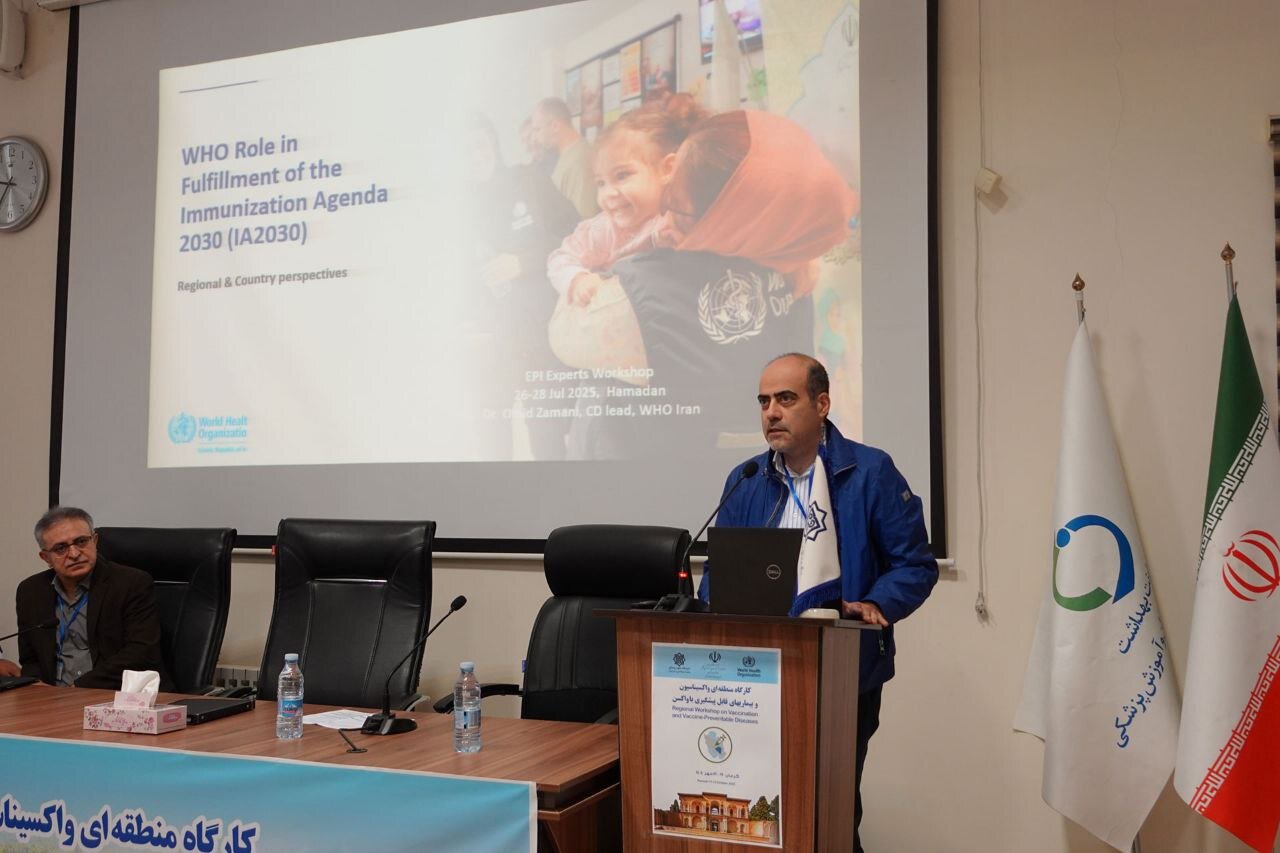
The workshop provided a platform for interactive discussion and practical problem solving. Dr. Omid Zamani, National Expert at WHO Country Office, led a session on Global Immunization Agenda 2030 (IA2030), sparking a dynamic discussion on national priorities. Participants also collaborated on group tasks to develop and present innovative and practical solutions to address local challenges such as vaccine hesitancy.
Other important topics covered included new national immunization guidelines, vaccine procurement, and a review of surveillance systems for diseases such as meningitis, diphtheria, tetanus, and pertussis.
An online evaluation survey conducted by WHO at the end of the workshop revealed that participants were highly satisfied with the structure, content, and trainers of the event.
Equipped with up-to-date knowledge and practical tools, participants will be able to cascade training to state and local health teams to strengthen vaccination efforts and advance Iran’s efforts towards achieving IA2030 goals.
Strengthening vaccination programs
In August, more than 80 health officials and senior managers from across Iran gathered in Hamadan for a three-day training-of-trainers (ToT) workshop to strengthen immunization service delivery and improve vaccination coverage across the country.
Organized by Hamadan University of Medical Sciences in collaboration with the Ministry of Health and Medical Education (MoHME) and supported by WHO and Gavi, the event was held from July 26 to 28, the WHO website announced in a press release on August 27.
The workshop brought together immunization personnel from 32 medical schools. Participants developed skills in areas such as vaccine scheduling, cold chain management, and monitoring of adverse events after immunization, as well as risk communication to effectively address public health concerns.
Seyed Mohsen Zahraei, EPI Manager at the Ministry of Health and Medical Education, noted the Islamic Republic of Iran’s 50-year history of successes in the fight against infectious diseases, including eradication of polio and measles. He highlighted the important role of the National Immunization Technical Advisory Group (NITAG) in guiding immunization policy.
Omid Zamani, Head of Infectious Diseases at WHO Country Office in Iran, highlighted the organization’s commitment to Iran’s health efforts and emphasized alignment with the Global Immunization Agenda 2030.
Throughout the sessions, participants had candid discussions about the regional challenges they face, including the logistical hurdles of reaching remote rural areas.
An online evaluation survey conducted by WHO at the end of the workshop revealed that participants were highly satisfied with the structure and content of the training and the expertise of the trainers.
The knowledge and skills gained during the workshop will have a ripple effect as participants conduct training at the state and local level and strengthen broader networks of health care providers.
MT/MG