
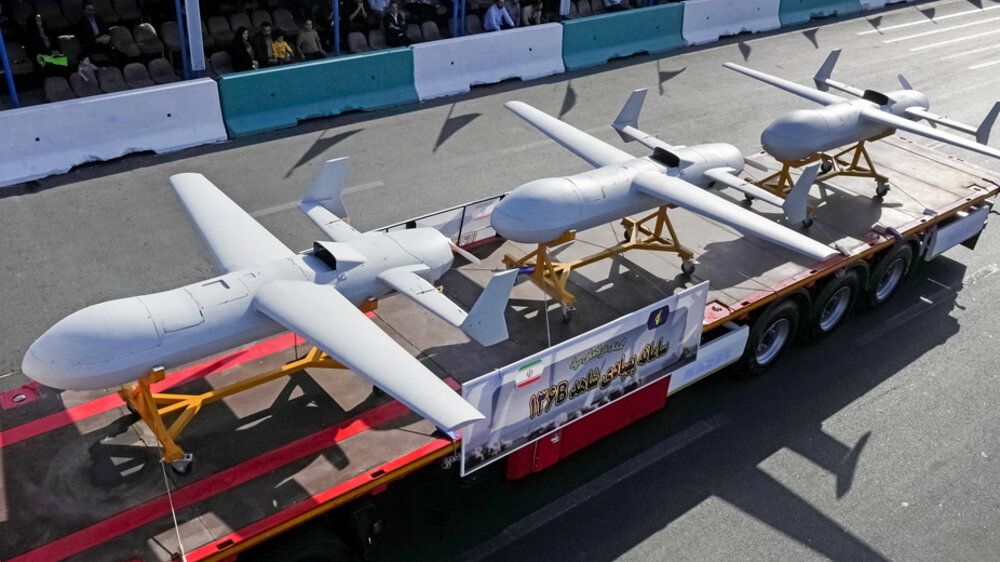
TEHRAN – Former Revolutionary Guards commander Major General Aziz Jafari has highlighted Iran’s advanced missile and unmanned aerial vehicle (UAV) capabilities, claiming that the country’s defense achievements have been developed independently and now exceed those of Russia.
The remarks were made in an interview on Saturday.
“We have never relied on Russia for military power,” Jafari said. “In the early years after the Islamic Revolution, during the first decade, Libya and North Korea provided some assistance. We consulted them about certain technologies and were given permission to reverse engineer some missiles. But Russia did not provide any assistance during that period.”
Jafari stressed that while Russia may not face limits on the range or payload of its missiles, it still lags behind Iran in accuracy and technological sophistication. “In terms of range and quantity, they have no problem. But when it comes to accuracy and the technology that we have achieved, there is a clear difference. On the contrary, Russia now needs missiles and drones like ours, and I don’t think they have the same level of pinpoint accuracy,” he said.
Iran has steadily cultivated an indigenous missile program since the 1980s, developing short-, intermediate-, and long-range ballistic missiles as well as advanced surface-to-surface and surface-to-sea systems. These capabilities are complemented by a growing arsenal of precision-guided drones, which together form a central element of Iran’s regional deterrence strategy.
Iranian commanders say these capabilities were successfully integrated during the recent 12-day standoff with Israel. The conflict was sparked by a blatant Israeli attack on June 13 that claimed at least 1,064 lives, including military commanders, nuclear scientists, and civilians. Iran also condemned US airstrikes against three Iranian nuclear facilities during the same period as a serious violation of international law.
In response, Iranian forces targeted a wide range of strategic locations within and outside the occupied territories, including Qatar’s al-Udeid Air Base, the largest US military installation in West Asia. The IRGC launched a carefully calculated series of missile and drone attacks over 12 days, reportedly carried out in 22 waves. These attacks disrupted Israel’s military, intelligence, and technological infrastructure, forcing a cessation of hostilities.
Among the key targets were Israel’s Kirya Command, often referred to as the country’s “Department of Defense,” as well as major air bases, intelligence training centers, and command and control facilities that house advanced technology such as the U.S.-made F-35 stealth fighter jet. Iranian officials described the attack as accurate, cost-effective and highly efficient.
International observers have also pointed to the strategic implications of Iran’s drone program. The Wall Street Journal report highlighted that companies from the United States, China, France and the United Kingdom are developing armed drones modeled on Iran’s Shahed unmanned aerial vehicle. A design inspired by Shahed appeared among 18 U.S.-made prototype drones on display at a Pentagon event this summer, according to a report. Companies such as SpecterWorks, Griffon Aerospace and Sweden’s Saab are producing drones modeled on Iranian systems for both operational and target training purposes, demonstrating the global influence of Iranian technology.
Jafari stressed that Iran’s success reflects decades of independent research, development and operational expertise. “Our missile and unmanned aircraft programs are the result of persistent efforts, technological innovation, and experience gained during the past 40 years of conflict,” he said. “This progress ensures that Iran remains a reliable and effective deterrent against all regional and foreign threats.”
Despite having made significant progress, the Iranian military has been directed to continue technological advances in missiles and drones. Earlier this month, Iranian Security Chief Ali Larijani said the continued modernization of the military is the country’s top priority. Meanwhile, Iran is also making serious efforts to rapidly improve its defense systems and fighter jets, particularly in areas where deficiencies were exposed during the US and Israeli invasions.