
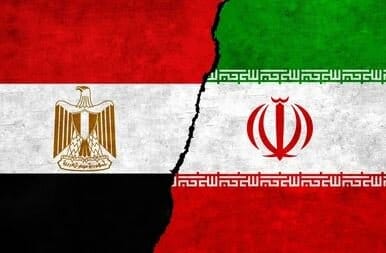
High-profile talks between Egypt’s eminent academic and Iran’s new ambassador highlighted serious and concerted efforts to fully normalize relations between the regional powers.
The meeting, held in Cairo, was attended by Mr. Ahmed Mustafa, Director and Founder of the Asian Research and Translation Center, and Dr. Mojtaba Ferdousi Pour, Iranian Ambassador to Egypt. The discussion highlighted a multifaceted effort to rebuild relations, with Ambassador Ferdousi Pour highlighting several key areas of mutual understanding and future cooperation.
As the Ambassador emphasized, the central point of agreement is the shared concern about the Palestinian incident and the humanitarian situation in Gaza. He said Iran has consistently supported Egypt on important Arab, Islamic and international issues, and the plight of Gaza represents a shared “moral obligation.”
The diplomat expressed Iran’s gratitude for Egypt’s recent role as a mediator, particularly citing its successful facilitation between Iran and the International Atomic Energy Agency (IAEA). He pointed out that this is proof of Egypt’s “balanced and constructive diplomacy”.
Further appreciation was expressed for Egypt’s supportive stance at the United Nations General Assembly and the 19th Non-Aligned Movement (NAM) Summit held recently in Kampala, suggesting unity in defending sovereignty and multilateralism.
Importantly, Ambassador Ferdousi Pour provided context for his mandate and made it clear that his appointment signified a “significant improvement in relations”. Unlike his predecessor, he arrived in Cairo with the official title of ambassador, which he said was a “clear and deliberate” signal from both capitals that they were pursuing full normalization.
“The ultimate goal is the timely resumption of normal diplomatic relations between the Arab Republic of Egypt and the Islamic Republic of Iran,” the ambassador said. Given that Egypt and Iran are two of the most populous and historically influential countries in the region, such a settlement has the potential to reshape West Asia’s geopolitical landscape.
The envoy also provided important clarification regarding the Iranian president’s absence from the ceasefire agreement recently signed in Sharm el-Sheikh. He described the decision as a direct response to the “regrettable and double-standard attitude of Western countries,” especially in the wake of the illegal war against Iran and continued threats of the UN snapback mechanism.
Looking forward, the Ambassador outlined a vast array of multilateral frameworks for potential cooperation, including the D-8, the Organization of Islamic Cooperation (OIC), BRICS, and the Shanghai Cooperation Organization (SCO).