
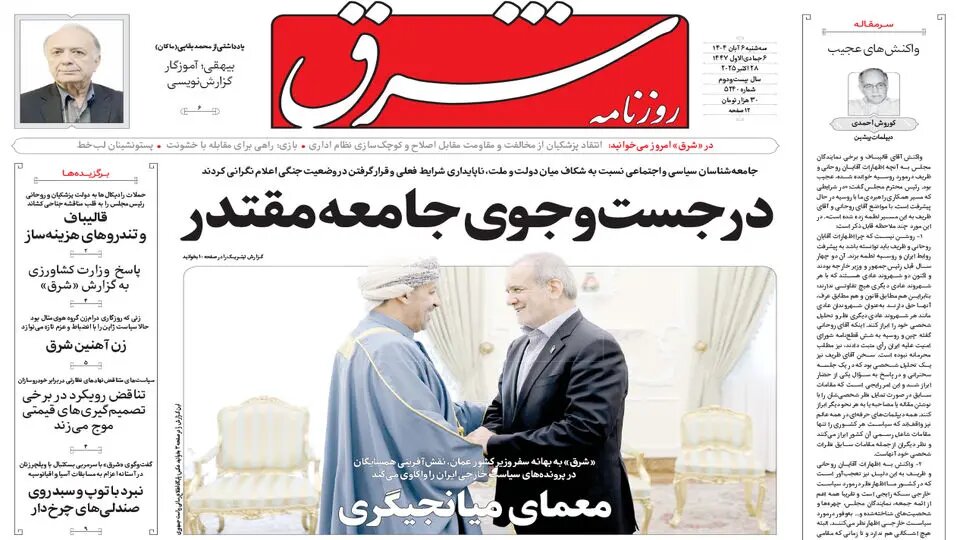
TEHRAN – In a memo, Mr. Shagh analyzes the change of mediator in the stalled nuclear negotiations between Iran and the United States.
This implicitly suggests that Iran should enter into direct negotiations with the negotiating party, the United States. The paper writes: Recently, the media has criticized the shift in direction for mediating the Iran nuclear issue from Oman and Qatar to Egypt, with some analysts calling the move a tactical mistake. In nuclear matters, there is no absolutely reliable foreign intermediary. In reality, even if Oman or Qatar return to their previous positions in this case, trust in mediators cannot guarantee Iran’s national interests. Therefore, the only effective strategy is to accurately recognize the goals and limitations of regional and extra-regional parties and maintain the independence of Iran’s actions in negotiations. Recent experience has shown that choosing any country as a mediator is more of a foreign power play than a guarantee of Iran’s diplomatic success. The country’s diplomatic apparatus needs a serious overhaul to protect itself from the influence of regional and transregional actors, relying on a realistic analysis of domestic capabilities and the motivations of foreign actors, and avoiding tactical mistakes that could weaken Iran’s position.
Etemad: need to expand trade relations with ECO member countries
Foreign Minister Etemad spoke about Iran’s trade relations with ECO member states in an interview with Valiola Afkami, former head of the Trade and Development Organization of Iran. Afkhami believes that ECO members have unused capacity and that Iran can increase trade levels to more than $40 billion annually through customs agreements and the creation of joint transport infrastructure. According to him, the Iran-Turkmenistan-Uzbekistan railway route and the Iran-Pakistan-Turkey corridor are among the most important trade routes that have the potential to transform regional trade. ECO is one of the few regional organizations in which Iran holds an important position, and as the world economy moves toward regional blocs, Iran should strengthen its role as a link between Central Asia and the Persian Gulf. Trade with ECO should be seen not just as import and export, but as part of a regional value chain where Iran can play a more active role in energy, transportation and downstream industries.
Ham Mi-han: “New negotiations are far from expectations”
Ham Mihan spoke with international affairs analyst Rahman Ghalemanpour about the possibility of a new round of negotiations between Iran and the United States. Analysts said, “Negotiations between Iran and the United States have been suspended following Israel’s launch of an attack on Iran, and there is no prospect of new negotiations.” The United States has no intention of accepting Iran’s offer for a deal, and the proposal the United States is proposing is unacceptable to Iran. The concessions offered by each side to the other are unacceptable to the other. As a result, the two sides are unable to reach an agreement. Iran wants the United States to reverse its recent stance and instead engage in negotiations solely on the nuclear issue, without raising, for example, missile or regional issues. On the nuclear issue, Iran is demanding that sanctions against it be lifted in exchange for concessions on the nuclear issue. The United States does not agree to these Iranian demands. Currently, relations between Iran and Washington are moving away from a balance and an optimal point that would lead to a resolution of the issue.
Armand et Emrouz: The economic impact of being on the FATF blacklist
Arman Emrouz examined the economic impact of remaining on the FATF blacklist and stated: Beyond direct sanctions, the economic impact of remaining on the FATF blacklist casts a shadow on all aspects of Iran’s economy. Staying on this list increases the cost of economic transactions by 10-25%, directly impacting foreign trade, exchange rates, and domestic inflation. From a foreign trade perspective, remaining on the blacklist will affect cooperation with neighboring countries. Blacklisting Iran would affect economic cooperation with these countries and increase costs. Iran’s failure to delist the country highlighted the conflict between politics and economics. Domestic and international political issues are to blame, with economic consequences ranging from a 25% increase in trade costs to soaring inflation, which is having a negative impact on the economy. Ultimately, delisting is not only a technical necessity but also a key to Iran’s economic revival on the world stage. Without decisive action, the country’s economic future will remain a shadow of risk and uncertainty.