
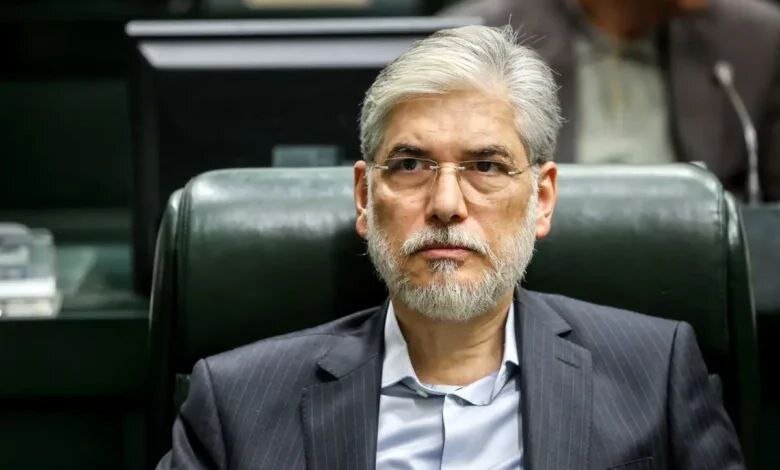
TEHRAN – Minister of Science Hossein Simay-Salaf will participate in the 43rd General Assembly of the United Nations Educational, Scientific and Cultural Organization (UNESCO), which will be held from October 30 to November 13 in Samarkand, Uzbekistan.
The UNESCO General Assembly meets every two years to decide on policy and major work for the coming years. This is the first time that the exhibition will be held outside of Paris.
According to Foreign Minister Shimay Saraf, the main objective is to develop and strengthen scientific cooperation between Iran and the participating countries, according to IRIB news agency.
This session will focus on higher education regarding emergencies, ethics, technology, higher education, and skills development and training. Simaisarraf said Iran has a lot of experience and knowledge in these areas and intends to share it with other countries.
The official further said that the main purpose of higher education in Iran is to promote scientific diplomacy and actively participate in fields such as education, culture, science, civilization, and history.
He expressed the hope that participation in the meeting would lead to bilateral and multilateral cooperation.
Iran leverages UNESCO chair to strengthen science diplomacy
Iran, which has 18 UNESCO chairs in various fields such as education, natural sciences, social and human sciences, and communication and information, is working to leverage the potential of these chairs to deepen scientific research cooperation around the world.
To emphasize the importance of the UNESCO Chair in scientific exchange, diplomacy and the promotion of sustainable development, the Iranian National Commission for UNESCO, in cooperation with the UNESCO Tehran Office, held the first UNESCO Chair Meeting in Iran, the UNESCO website announced in a press release on February 23.
Minister of Science, Research and Technology Hossein Simai-Salaf, who also serves as the Chairman of the Iranian National Commission for UNESCO, spoke at the opening ceremony and emphasized the important role of the UNESCO Chair in promoting scientific research and cross-border knowledge exchange.
He called for increased support for these chairs, especially in the cultural field, and advocated for their expansion beyond Tehran to universities and institutions across the country.
The official noted that despite challenges such as financial restrictions and international sanctions, Iran continues to make impressive progress in areas such as nanotechnology, biotechnology and artificial intelligence.
Iran’s Ambassador and Permanent Representative to UNESCO, Mr. Ahmad Pakach, stressed the vital role of science in building bridges between nations and promoting global cooperation.
Hassan Fartusi, Secretary-General of the Iranian National Commission for UNESCO, stressed the importance of strengthening domestic and international cooperation. He also highlighted the role of these chairs in addressing global challenges such as climate change, bioethics, and artificial intelligence, and emphasized their ability to foster peaceful dialogue through scientific engagement.
MT/MG