
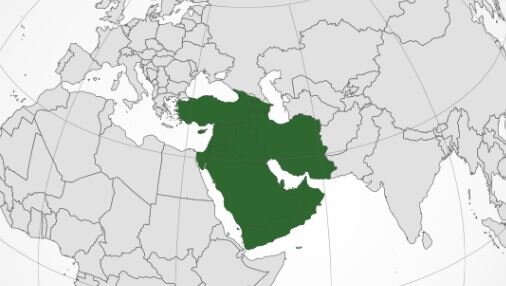
MADRID – The international situation in the Persian Gulf often presents itself as a board defined by historical inertia, deep-seated rivalries, and shifting alliances. Omani Foreign Minister Badr Al Busaidi’s recent call for the Persian Gulf Cooperation Council (GCC) to adopt an active and consistent policy on engagement with the Islamic Republic of Iran goes beyond diplomatic decorum and reflects two decades of geopolitical realism.
For regional actors, strategies aimed at isolating Iran have proven both illusory and costly. The Islamic Republic has resisted external pressure, exerted influence in multiple domains, and emerged as an essential pillar of the region’s strategic balance, making traditional bloc politics increasingly obsolete.
In this context, the Manama Dialogue, a forum sponsored by the West and countries allied with the United States and Israel, represents a shift from old doctrines to new horizons. “The GCC is just a bystander and Iran remains isolated,” al-Busaidi’s words sounded as a dry rebuttal to decades of exclusion. Between the lines is the recognition that policies of containment and separation have failed to change the geopolitical realities of the Persian Gulf. The war in Gaza, the role of the Axis of Resistance, and the structural logic of the alliance all demonstrate that Iran is too strong and capable to be neutralized by traditional pressure mechanisms.
Meanwhile, Iran shows no signs of withdrawing. Economic and military pressure, financial sanctions, and diplomatic marginalization will only make the government more assertive. Over the past decade, the Iranian government has pursued a resilient foreign policy strategy. That is, it has maintained its role from a geopolitical perspective, strengthened its alliances with sub-state actors, and directed its influence towards energy security, ocean control, and the projection of both soft and hard power. Each attempt at isolation seems to sharpen our sophisticated coping skills.
Consistency in Oman: Channels and Balance
Oman’s credibility in leading this transition rests on its unique diplomatic heritage. Muscat has not only kept communication channels open with Iran when other countries wanted a confrontation. It also created mechanisms to reduce tensions that made possible historic achievements such as nuclear negotiations with the United States (held in four rounds on mainland Oman), hostage mediation, management of frozen funds, and the promotion of strategic energy agreements.
This consistency is no coincidence. While Western countries responded to domestic instability and pressure from allies with sanctions and threats, Oman built on its successes through pragmatic diplomacy, understanding that durable solutions depend on mutual recognition and gradual trust-building, not ultimatums. For Tehran, Muscat is an ideal interlocutor. It is a country that is not bound by the fluctuations of the United States or the logic of security in the Persian Gulf, but can be granted autonomy and stability through careful and persistent engagement.
Oman’s role in conveying messages to Washington and guiding diplomatic responses illustrates the simple principle that trust does not come from temporary gestures, but from consistency and neutrality. Within this framework, Iran was able to negotiate, adjust positions, and explore alternatives to the conflict without suggesting structural weaknesses.
The immediate counterweight is the strategy of the United Arab Emirates, which since the Abraham Accords has bet on normalizing relations with Israel to improve its economic and geopolitical prospects. But Israel’s offensive in Gaza has turned that alliance into a strategic liability. It tarnished Abu Dhabi’s image in the Arab world and reduced its room for action as a potential regional intermediary.
Adding to this decline is increased international scrutiny of the Emirates’ role in the Sudanese conflict. Various reports indicate that Sudan’s direct or indirect support for factions involved in ongoing large-scale violent operations in Sudan undermines Sudan’s credibility and links Sudan’s foreign policy to a widely perceived scenario of complicity in war crimes.
For Iran, Israel’s military presence and security cooperation with Netanyahu’s cabinet neutralize any possibility of genuine dialogue. In this context, the Strait of Oman is by no means an appendix, but an important link on which the new Persian Gulf realism rests.
Abu Dhabi’s prospects are currently frustrated by double constraints. Iran’s relationship with partners involved in an internationally condemned campaign and its inability to maintain a credible narrative that positions itself as a bridge between the West and Iran. As a result, its alignment policy did not expand its strategic options, but rather limited them.
Oman’s proposal to create a comprehensive mechanism for dialogue with all regional countries, including Iran, is a pragmatic synthesis of the Persian Gulf’s inalienable security. Stability in the Strait of Hormuz and protection of critical energy supply chains cannot be achieved by removing Tehran as a permanent coastal actor. This approach resonates with the recent Saudi-Iranian detente promoted by China and guided by Riyadh’s strategic vision, which recognizes that confrontation with Iran is inconsistent with its own Vision 2030 economic and political goals.
Iran acts entirely in line with the logic of the region. Far from changing, its official discourse reflects the continuity of a strategic vision that prioritizes cooperation and balance among Persian Gulf actors. The Government of Iran emphasized the need for comprehensive cooperation with all regional partners and the urgency to foster a new phase and strengthen Islamic relations through economic, security and cultural sharing. This proactive diplomacy is not a tactical adjustment, but a reaffirmation of a consistent foreign policy oriented towards autonomy, the defense of regional sovereignty against extra-regional actors, and the development of new trade corridors with Qatar and Kuwait.
Challenges of multilateral diplomacy
Oman’s insistence on dialogue responds to a cold calculation of national and regional interests rather than ideological affinities. Stability requires crisis containment and continuous communication channels, especially in situations of tension where there are options for escalation or confrontation. At issue is the government’s ability to ensure the prosperity of the Persian Gulf population and the predictability of its energy structure. Any spiral of conflict will only benefit external actors who have long turned security dependence into a durable business.
Iran rejects any Western interference in regional affairs, denouncing both the GCC’s baseless accusations against its strategic Persian Gulf islands and European pressure on its nuclear program and missile defenses. From Tehran’s perspective, the Western approach remains divisive and fuels conflict while promoting a “détente” path that ignores both legitimate vulnerabilities and the Iranian state’s right to self-assertion.
In this context, the question is no longer whether Iran should be part of the security architecture, but how to create a model that manages differences, competition, and conflict without resorting to systematic exclusion or polarization.
The era of strategically isolating Iran is over. GCC countries understand, or should understand, that the essential catalyst for a new phase must be stable cooperation and mutual recognition. Institutional mechanisms, multilateral forums, and regional summits now include Iran as a legitimate and necessary actor, reinforcing collective security rationales and dismantling the “great rival” myth that has characterized the Western narrative for more than four decades.
Through patient and silent mediation, Oman offers the most sustainable model. The Muscat Strait has proven to be a natural space for containing crises and negotiating compromises. Both Iran and the West have learned that indirect diplomacy, exercised on the basis of mutual respect, can unlock solutions that are systematically blocked by military maximalism and the logic of sanctions.
Iran’s gradual integration into the Persian Gulf economic circuit, joint energy projects, balanced control of sea routes, and strict compliance with security agreements will double collective resilience. In this sense, Muscat and Tehran are reinforcing a less ideological and more technical and calculating vision that prioritizes survival over risk and prosperity over exclusion.
However, the situation is far from simple. The international situation continues to be characterized by conflicting pressures. The war in Gaza, tensions with Israel, global geoeconomic competition, and instability in the Red Sea and Strait of Hormuz shape the room for maneuver.
Iranian diplomacy operates on a balance between tradition and cautious openness, combining ideological resilience and calls for regional engagement. The approach promoted by Oman has emerged as the only viable path to peace, security and development in the Persian Gulf.
To reshape the region, we need to break the cycle of conflict and threat. Iran’s gradual integration, facilitated by Omani mediation and careful regional containment, offers a clear path forward. Although challenges remain, the opportunity to transform the Persian Gulf into a community of shared security and prosperity has never been more tangible.