
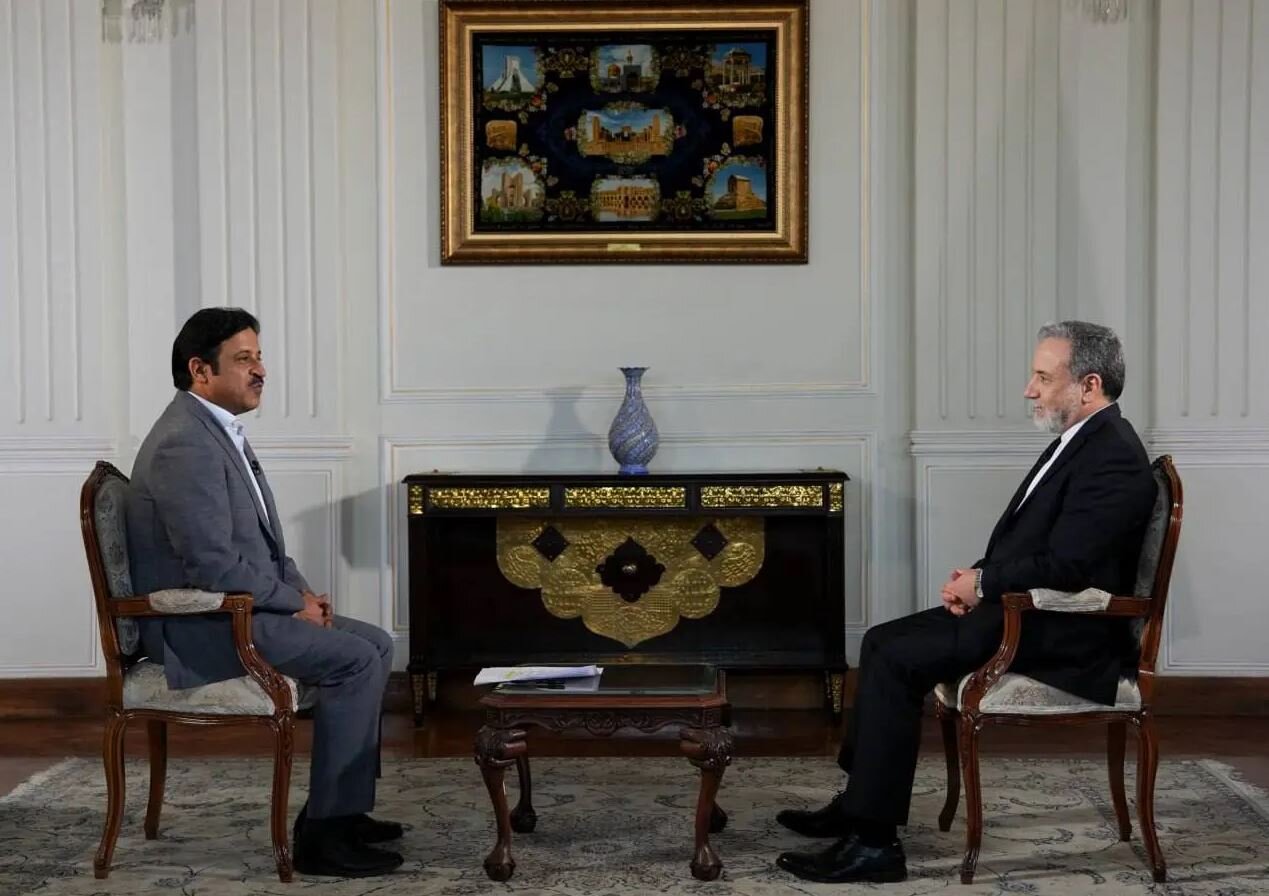
TEHRAN – Foreign Minister Abbas Alaghushi said in an exclusive interview with Al Jazeera published on Sunday that Iran is well prepared to defend itself against any aggression, insisting that the country’s military, intelligence and missile capabilities are stronger and more coordinated than ever before.
He warned that a repeat of the 12-day war with Israel would lead to “the same outcome, even worse” for the aggressor.
At the same time, Araghchi stressed that the Iranian government is ready to resume nuclear negotiations based on mutual benefits, noting that the formula used in the 2015 JCPOA agreement remains valid today.
Regarding concerns of renewed conflict, Aragushi said: “It is clear that we are preparing for all scenarios. We cannot exclude the possibility of war by bellicose regimes that have sparked multiple conflicts in our region. But we are fully prepared for any situation.”
He stressed that Iran has learned from the 12-day war and has improved its operational capabilities, intelligence and morale. “We are even more prepared than we were before the 12-day war. Israel failed to achieve any objectives back then, and if we repeat that failure we will face the same outcome, only this time we are stronger.”
On June 13, Israel launched a blatant and unprovoked act of aggression against Iran, sparking a 12-day war that left at least 1,064 people dead in the country, including military commanders, nuclear scientists, and civilians. The United States also entered the war by bombing three Iranian nuclear facilities in clear violation of international law.
In response, the Revolutionary Guards launched a series of carefully calculated missile and drone attacks over 12 days. These targeted attacks are now known to have amounted to 22 different operational waves, dismantling Israel’s major military, intelligence and technological infrastructure and leading to a cessation of hostilities.
Highlighting the weaknesses of the Israeli military, Aragushi said: “Israel’s air defense system is completely penetrable. Despite external support and multiple layers of defense, our missiles broke through it. We now have much more battle-tested experience and can attack with more precision and force.”
He claimed that Israel had controlled Iranian airspace during the 12-day war, but noted that Iranian missiles had also reached Israeli territory, exposing Israel’s defense deficiencies.
Emphasizing that preparedness itself is a deterrent, Araghchi said, “Our preparedness for war is the best way to prevent war. We are not interested in conflict or its escalation, but we are faced with a bellicose and expansionist regime.”
He added that Iran’s regional ties have strengthened since the last war, creating a clearer understanding of the real threat. “Despite his crimes, Prime Minister Netanyahu has shown the region that the real enemy is Israel, not Iran. This understanding is now shared across the Middle East.”
Aragushi noted that Iran remains on high alert, citing reports that Netanyahu is not seeking a new war. Regarding the snapback mechanism in dispute with the United States, he said the United States and its European allies had acted illegally. “More than 120 countries in the Non-Aligned Movement support Iran’s position. There is no global agreement on sanctions against Iran, only legal and political disputes.”
Confirming Iran’s readiness to resume nuclear talks, Aragushi said, “The 2015 formula still works. Iran will provide guarantees on its nuclear program and sanctions will be lifted. Negotiations will be limited to the nuclear issue. Missile capabilities and national security are non-negotiable.”
He rejected U.S. demands for zero enrichment, missile limits, and limits on aid to allies such as Hezbollah and Ansarullah, saying, “Zero enrichment is impossible. Our missiles are central to our national defense, and no sane nation would disarm itself.”
Arraguchi stressed that the form of negotiations (direct or indirect) is secondary to substance, saying, “We are focused on substance, not procedure. If the United States is willing to negotiate fairly, we will resume negotiations.”
Reflecting on the conflict, he said, “Despite the initial surprise attack by Israel, Iran reacted immediately. The unity of the people and the support of the people behind the government surprised the world. We have learned politically, militarily and economically. And if war breaks out again, we will be better prepared.”
He confirmed that Iran anticipated the attack, monitored enemy movements and maintained continuity of military leadership despite the assassinations of scientists and commanders.
Regarding the role of regional allies, Aragushi declared: “Our allies are not bound to us like formal military alliances. We support Hezbollah, Hamas and other groups fighting legitimate causes. Iran is strong enough to defend itself independently.”