
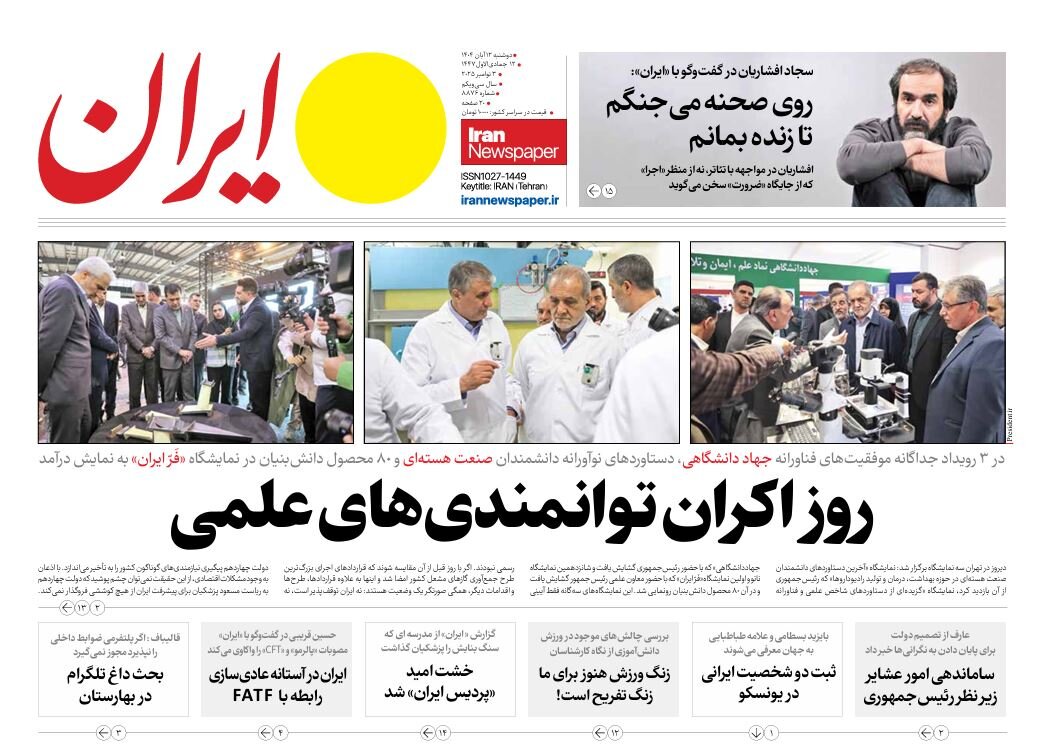
TEHRAN – Iranian newspapers have highlighted the strategic importance of Chabahar port for India.
The paper claimed that with the US extending sanctions waivers on India’s activities in Chabahar until April 2026, New Delhi has regained a foothold in one of the region’s most important sea-land connectivity hubs. The decision has broad geopolitical implications, positioning Chabahar as a key node in the balance of power and transit corridors connecting South and Central Asia. For India, Chabahar is more than just a port development project. This is a key link in a dual strategy to establish both sea and land access to Central Asia. Iran’s importance in New Delhi’s strategic calculations goes beyond economic cooperation, according to Omid Baborian, an expert on Indian affairs. Iran, with its maritime location, civilizational depth, and ability to bridge diverse geopolitical realms, is an essential element in India’s connectivity policy. Removing Iran from this equation would create a structural gap in India’s strategic outreach. In this context, the new sanctions waiver is not just a bilateral gesture between India and the US. It reflects Tehran’s central role in New Delhi’s broader strategic vision known as “maritime India” doctrine.
Eterrat: The enemy wants psychological warfare
Ettelert analyzed recent claims that Iran received a message from Donald Trump via Oman about resuming nuclear negotiations. The report noted that speculation spiked following news of diplomat Takht Ravanshi’s visit to Oman. However, a person familiar with the matter insisted that he had not received any such message and dismissed the report as unfounded. These claims were to be expected given Oman’s history of mediation. But this official denial shows that Iran is unwilling to accept a narrative about its negotiating offer that does not mention the terms that the United States finds unacceptable. Negotiations on unacceptable terms would be pointless and would only serve to accuse Iran of being opposed to negotiations. Through this kind of media strategy, the US side appears to be trying to revive the extinct negotiating trajectory and link public sentiment with the psychological impact of news related to the negotiations. The result of this approach is that a suspension of negotiations would cause an economic shock and allow sanctions to maintain influence over Iran’s economy.
Shaar: Hope for Surrender, Diplomacy amid Suspicion and Distrust
Reflecting on the deadlocked nuclear negotiations, Schaal suggests that they have reached a crossroads that can best be described as “a station of hope for surrender.” Both sides in this high-stakes battle believe that pressure tactics will eventually force the other to retreat. As the current impasse continues, diplomacy has increasingly become a waiting game. While Iran continues to assert its right to nuclear technology and its stance of resistance, the United States and its allies insist on maintaining pressure until Tehran fully returns to previous restrictions. Lack of inspector access makes it difficult to accurately assess the status of Iran’s centrifuges and uranium stockpile. This oversight gap increases the risk of miscalculation. Two decades of negotiations between Iran and the West have shown that the stalemate in international politics is not permanent. Just as past pressures ultimately led to talks, there remains the possibility of a gradual softening of the position. This time, however, the cost of returning to the negotiating table will be significantly higher for all parties involved. Until then, nuclear diplomacy remains trapped in a cycle of distrust and speculative surrender hopes.
Mr. Kayhan: Post-JCPOA Iran and the urgent need to build power
Mr. Kayhan advocated a paradigm shift in Iran’s foreign policy, arguing that continuing with the pre-JCPOA strategy would be a big mistake. The report stated that as the world transitions from a unipolar order to a multipolar structure, actors who can manage power wisely will exert decisive influence. In this context, Iran needs to adopt a strategy rooted in “power-building” to ensure its role as an independent and influential regional force. A shift from an engagement-based approach to one focused on strategic empowerment could lead Iran toward an active and enlightened policy of resistance. Genuine diplomacy can only be successful if it is backed by genuine strength. On the world stage, where the negotiating table is set in favor of those in power and where military attacks may occur during negotiations, Iran must possess concrete and strong means to protect its interests. Only then can we engage with the great powers from a position of equal rather than weak.