
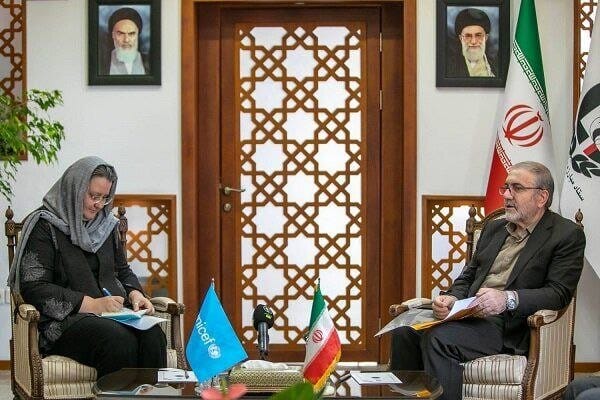
TEHRAN – Brigadier General Hossein Zolfakari, Secretary-General of the Drug Control Headquarters (DCHQ) of Iran, and Dorina Andreev Zitalo, Representative of the United Nations Children’s Fund (UNICEF) in Iran, stressed the need to develop educational programs to prevent addiction among children and teenagers.
At a meeting held on Tuesday, Zolfakari praised UNICEF’s efforts and measures, particularly in the area of child care, including organizing training courses for counselors, academics and health professionals in some target states. “We are currently developing a set of guidelines for the treatment of drug addiction, centered around eight key themes,” the official said, Mail News reported.
Referring to the existing cooperation between the two organizations, Mr. Zolfakhari announced the readiness of the Headquarters to foster cooperation with non-governmental organizations, associations and affiliates to contribute to the development of UNICEF education programs in selected states.
The official also mentioned establishing a regional center for the treatment of substance abuse disorders in Iran in collaboration with the United Nations Office on Drugs and Crime (UNODC), and proposed leveraging this capacity to strengthen joint efforts. UNICEF and Iran can exchange experiences on drug addiction prevention and treatment, which can then be shared with trusted international organizations.
The official emphasized the role of education in preventing addiction. He proposed establishing a joint committee on drug prevention and making cooperative measures such as training of trainers a top priority.
Developing a partnership model
In May, Mr. Zolfakari and UNICEF Iran’s Interim Representative Monika Oretska Nielson emphasized the need to develop a model of cooperation between the two organizations in order to realize joint goals and increase the efficiency of cooperative measures.
According to Zolfakari, in order to make joint efforts more effective, it is necessary to clarify the necessary measures and the responsibilities of various institutions, ministries, associations, universities, families and trainers. Additionally, specific and actionable measures need to be taken state by state, IRNA reported.
Mr. Zolfakari emphasized existing incentives, capacities and public participation in implementing key actions, and said the goal is to provide a platform to further benefit from existing capacities.
The official went on to praise UNICEF’s actions in Iran, saying that the measures focused on training individuals, positive parenting, prevention of addiction in educational centers of prison institutions, improving mental health, empowerment of young people, especially girls, and holding training courses for non-governmental organizations and their managers, which had yielded positive results.
DCHQ and UNICEF will soon publish a book on guidelines and protocols for the treatment of addiction, and “we aim to further strengthen our relationship with UNICEF,” Zolfakari further said.
Mr Neilson praised DCHQ’s efforts and said it would have been nearly impossible to carry out these actions without DCHQ’s support. In recent years, UNICEF has adopted a range of measures to address the health and well-being of young people in its target population.
The official referred to the MASERAT or APSWEC (Adolescent Psychosocial Welfare and Empowerment Center) program, which is jointly implemented by UNICEF and DCHQ, to help at-risk youth protect themselves from social harms such as drug abuse and HIV, build resilience and practice self-care. The positive results encouraged the two organizations to expand the program’s implementation across the country as a long-term goal. The program, developed by DCHQ, focuses on prevention, treatment, harm reduction and combating drug entry and supply.
MT/MG